Table of Contents
If you are planning a driveway, parking pad, or building base, 22A gravel is a product you will likely encounter-especially in Michigan and the Upper Midwest. Here is what you need to know before you order.
Quick Overview: What 22A Gravel Usually Is
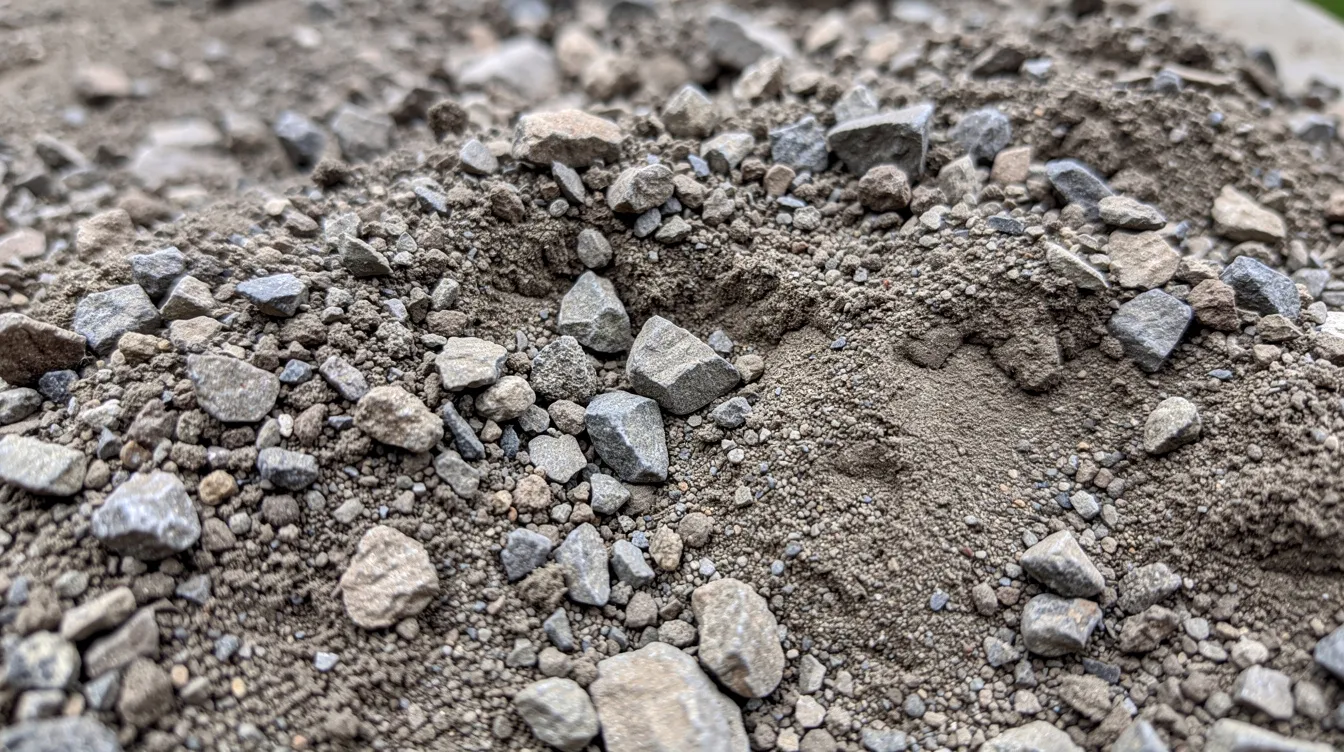
22A gravel is a well-graded aggregate blend composed of crushed stone, sand, and fine particles. It usually consists of stone fragments ranging from fine dust up to about 1 inch and is commonly associated with Michigan Department of Transportation 22A dense-graded aggregate specifications for road, driveway, and base use. The material compacts tightly and packs densely, which is why contractors commonly choose it as a base under driveways, roads, and slabs.
That said, the exact gradation, color, and mix vary by state, quarry, and supplier. Other regions use different labels-Class 5 in Minnesota, crusher run elsewhere-for similar compactable aggregates. Before ordering, you can use the Gravel Calculator to estimate cubic yards, tons, and rough cost for your project.
What Is 22A Gravel Made Of?
22A gravel is typically a 1 inch minus blend of:
- Crushed stone or natural stone (limestone, granite, or crushed concrete)
- Sand filling mid-range voids
- Fines-silt, clay, or stone dust passing small sieves
22A gravel includes fine material, often called fines, that helps fill voids between larger stone particles and allows the aggregate base to lock together under compaction. These fines may include stone dust, silt-sized particles, or other material passing the #200 sieve, but the exact percentage depends on the supplier’s current gradation sheet and project specification. Before ordering, ask your supplier for the #200 passing value, fines content, and whether the material meets the required 22A gravel specification for your driveway, road base, or parking pad.
It is often a brown gravel according to MDOT specifications, though the color of 22A gravel varies from gray to tan depending on the quarry. Many 22A products are treated as 1-inch minus or similar dense-graded material, while some supplier listings describe MDOT 22A as 3/4-inch down. Always confirm the listed top size on the supplier’s current gradation sheet.
Common Uses for 22A Gravel
22A gravel is not decorative stone-it is a structural base material. Construction uses of 22A gravel include driveway bases and road subbases. It is used for stable, compacted bases under driveways and walkways, parking areas, parking lots, pole barn pads, shed foundations, and private roads.
22A gravel can lock together tightly under proper compaction to form a firm, durable base that helps support paved surfaces like asphalt and concrete. It creates a firm surface that resists rutting and settling, even under heavy trucks. Because 22A gravel contains a mix of crushed stone and fine particles that compacts into a dense base, it works well where strength matters more than drainage.
However, because 22A contains fines, it does not drain like clean washed stone and is not usually chosen for decorative surfaces. For drainage projects, washed stone or clean crushed stone is the better choice.
22A vs 23A, 21A / 21AA, Class 5, and Crusher Run
These names describe similar compactable road gravel products, but they are not identical:
- 23A often has more clay and fines, so it can get muddier when saturated. 22A usually has a bit more crushed stone and less clay.
- 21A / 21AA in some Midwestern areas is a premium dense-graded base, often preferred under concrete or asphalt. 22A may be slightly coarser-though this is subject to regional variation.
- Class 5 fills a similar role in Minnesota and the Dakotas: commonly 3/4-inch minus stone with fines, often estimated around 1.4 tons per cubic yard.
- Crusher run or “3/8-inch minus” is an informal term for a similar product. Availability and grading depend on your location.
Always ask your supplier for a gradation sheet so you know what you are getting. For help choosing the right driveway base layer, compare these options side by side.
22A Gravel vs 22A Crushed Concrete
In many markets, 22A is available as natural stone or recycled crushed concrete:
- Natural stone 22A tends to have more consistent color and long-term stability.
- Crushed concrete 22A is often more economical per ton and slightly more sustainable. The residual cement paste can help the base lock even tighter, though texture may be less uniform.
Ask your supplier whether their 22A is natural stone, crushed concrete, or a blend.
When to Use Clean Crushed Stone or Washed Stone Instead
22A is not usually suitable where free-draining clean stone is required. For French drains, foundation drains, or behind retaining walls, washed stone-where fines are removed-lets water move freely. Common clean sizes include 3/8-inch and 3/4-inch washed stone.
Some homeowners build a compacted 22A base, then add a thin top layer of clean crushed stone for a neater, less dusty surface.
How Much 22A Gravel Do You Need?
Estimating quantity matters. Short loads mean extra delivery fees; too much means leftover piles.
Typical depths:
- Light car driveways: often 4–6 inches compacted
- Clay soils or heavier loads: 6–8 inches or more
Quick example: A 12 ft × 50 ft driveway at 6 inches deep = 300 cubic feet ÷ 27 ≈ 11.1 cubic yards. At roughly 1.3–1.6 tons per cubic yard, that is about 14–18 tons. Add 5–10% for waste.
Use the Gravel Calculator to enter your area dimensions and see estimated cubic yards, tons, and approximate cost before calling suppliers.
Step-by-Step: Installing 22A Gravel for a Driveway or Pad
- Site prep: Strip sod, organic topsoil, and soft spots. In wet or clay areas, consider geotextile fabric to separate sub grade soil from gravel.
- Shape the subgrade: Grade so water sheds away from structures. Aim for a slight crown or cross-slope.
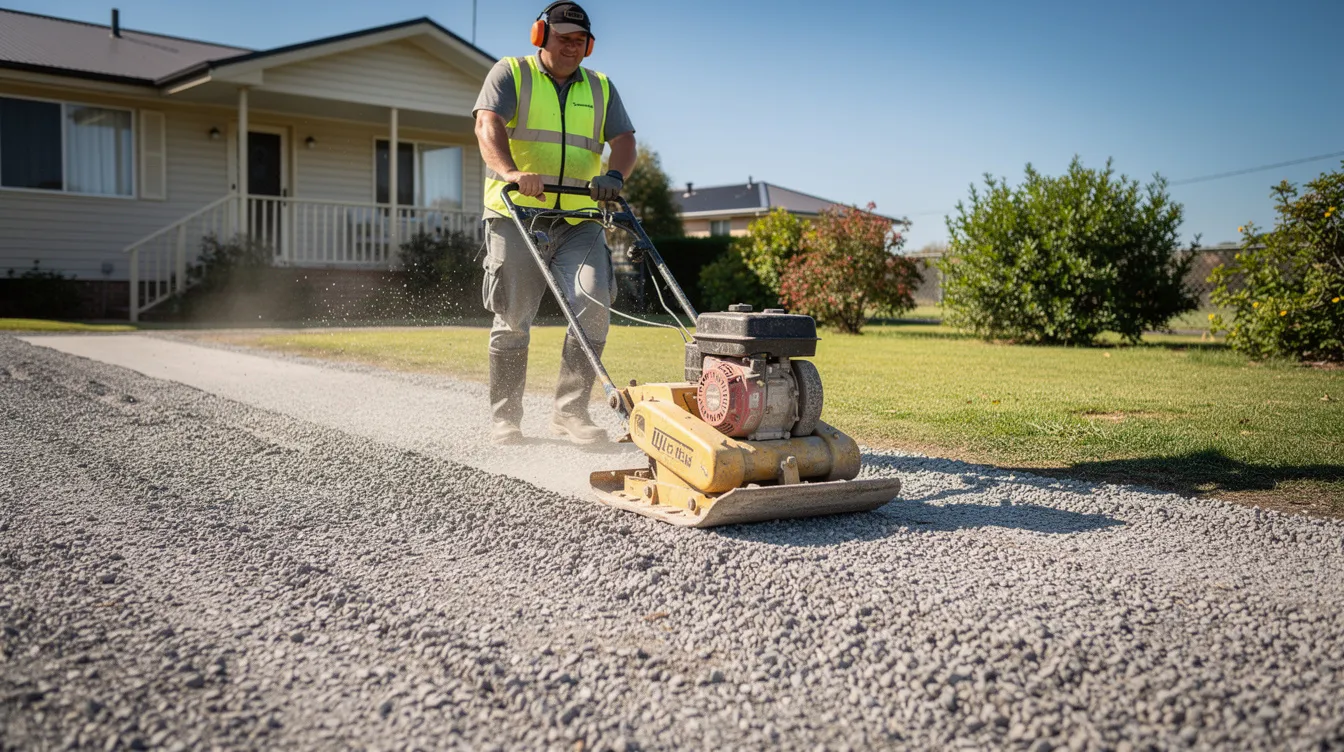
- Place in layers: Spread 22A gravel in lifts of 4 to 6 inches. Compact each layer of 22A gravel to achieve maximum density before adding the next lift.
- Moisture matters: Slightly damp material compacts better-moisture in 22A gravel fines aids in compaction. Too wet and it may pump or rut.
- Finish: Shape the surface with a gentle crown. Optionally top with a thinner layer of smaller stone for a smoother ride.
- Safety: Keep heavy delivery trucks on firm ground. Call 811 to mark underground utilities before you dig.
For a more detailed walkthrough, see the Gravel Driveway Installation Guide.
Regional Variations: Why 22A Isn’t the Same Everywhere
22A is strongly associated with MDOT specs, but even within Michigan, private pits sell “22A road gravel” that only roughly follows the standard. Other states use entirely different naming: Class 5, 21AA, or simply “crusher run.”
Stone type, fines content, and color change by quarry. If your project must meet a local road agency requirement, ask for a copy of the spec. Photos on supplier websites are only approximate-always confirm in person or request a sample.
Key Questions to Ask Your Gravel Supplier Before Ordering
About the material:
- Is your 22A natural stone, crushed concrete, or a blend?
- Is this 1 inch minus or another top size?
- How much fines or clay does it typically contain?
About performance:
- Is this ideal for my project type (driveway, parking pad, paths)?
- Would you recommend a different base gravel for my soil conditions?
About quantity and delivery:
- How many tons per cubic yard do you use for 22A?
- What are your delivery fees, minimum order, and maximum tons per load?
About pricing:
- What is the current price per ton or per cubic yard?
- Does the listed price include delivery, tax, and fuel surcharges?
Bring your Gravel Calculator estimate when you call so you can compare coverage numbers.
Typical Cost Ranges for 22A Gravel
Pricing for 22A gravel varies by location and supplier, and numbers can change with fuel costs and seasonal demand. As a rough guide:
- Some online aggregate marketplaces list 22A gravel in very wide ranges, such as about $21 to $325 per ton or cubic yard when delivery and location are factored in. Local material-only prices can be much lower, so always confirm whether the quote is per ton or per cubic yard and whether delivery, taxes, fuel surcharges, and minimum order fees are included.
- For larger delivered orders, some supplier listings show total order prices reaching around $1,326, but that is usually a delivered order total rather than a material-only per-ton price.
- Regional pricing varies widely: rural pickup may be under $30 per ton, while delivered urban loads cost considerably more.
What drives cost:
- Material type (virgin crushed stone vs recycled crushed concrete)
- Delivery distance and load size
- Local demand and seasonal availability
Some suppliers quote by cubic yard and others by ton. Knowing both figures-easy to get from the Gravel Calculator-helps you compare quotes. For broader crushed stone cost benchmarks, check current per-ton averages by type and region. Always get at least 2–3 quotes.
Common Mistakes Homeowners Make With 22A Gravel
- Too-thin base: Using 2–3 inches on soft or clay soils leads to ruts within months.
- Skipping compaction: Without compacting each lift, 22A will settle unevenly.
- Wrong material for drainage: Choosing 22A for a French drain instead of washed stone will clog pipes.
- No surface grading: Without a crown or slope, water pools and creates potholes.
- Ordering blind: Buying by “truckload” without knowing yards or tons often means surprise shortages.
Quick fixes: add more compacted 22A to problem spots, improve drainage with ditches or culverts, and plan for periodic light maintenance grading on long gravel driveways.
How Our Gravel Calculator Helps You Plan Your 22A Project
Crushed Stone Calculator is a free site with tools to help homeowners and contractors estimate material needs. To plan a 22A project, enter your length, width, and planned depth into the Gravel Calculator. You will see estimated cubic yards, tons, and approximate cost. Adjust depth or add a waste factor to see how totals change.
The calculator gives planning-level numbers only-actual weights and pricing must be confirmed with your local supplier because 22A density and gradation vary by quarry.
Summary: Is 22A Gravel Right for Your Project?
- 22A gravel is commonly used as a compactable road gravel and driveway base, typically 1 inch minus crushed stone with sand and fines.
- Exact gradation, name, and performance vary by state, quarry, and supplier-always verify before you build.
- Choose 22A for driveways, parking pads, and building pads. Consider washed stone for drainage, 23A for unpaved surface roads, or 21AA for premium pavement base.
- Use the Gravel Calculator before requesting quotes to reduce the risk of over- or under-ordering and to budget with more confidence.
Date last reviewed: July 2026. Prices, specs, and availability are estimates and may vary by region. Always confirm with your local supplier.