Find out how much pea gravel to order for a path, patio, garden bed, or playground. Get cubic yards, tons, bags, and cost in one place, for a new install or a top-up.
Choose Your Project
Area to Cover
Gravel & Depth
Order & Cost optional
Already have pea gravel? See how much area it covers
How deep should pea gravel be?
Playground depth follows the CPSC Public Playground Safety Handbook (9 in compressed minimum; loose fill compresses 25% or more). CPSC advises avoiding loose fill for toddler play areas. Use edging to keep rounded gravel in place.
How much does pea gravel cover?
| Depth | 1 Ton Covers | 1 Cubic Yard Covers |
|---|---|---|
| 2 in | ≈ 125 sq ft | ≈ 162 sq ft |
| 3 in | ≈ 83 sq ft | ≈ 108 sq ft |
| 4 in | ≈ 62 sq ft | ≈ 81 sq ft |
At 1.30 tons per cubic yard, before order allowance.
Formula Used
All measurements are converted to feet first. 1 cubic yard = 27 cubic feet.
About This Calculator
Built and maintained by Sanket Dhanawade for CrushedStoneCalculator.com, an independent project that makes aggregate estimating simple for US homeowners, DIYers, and small contractors.
Pea gravel uses 1.30 tons per cubic yard (about 2,600 lbs), the same planning value as our other calculators. Delivered weight can vary about ±10% by size, source, and moisture. Bags are rounded up to whole bags.
Last reviewed: October 2026
Helpful Guides
Whether you’re laying a garden path, refreshing a patio, or filling in around fire pits, knowing exactly how much pea gravel you need saves money and eliminates guesswork. This guide walks you through our free pea gravel calculator, the formulas behind it, worked examples for common projects, and everything you need to confidently order the right amount of material for your next outdoor project.
How to Use Our Pea Gravel Calculator
Crushed Stone Calculator offers a free pea gravel calculator that helps you estimate cubic yards, cubic feet, tons, bags, and gravel cost for any landscaping project — no sign-up required. Gravel calculators provide estimates in cubic feet, cubic yards, or tons, so you can order in whichever unit your supplier prefers.
Here’s what you’ll see on the page and how to get your estimate in under a minute:
- Pick your project type — choose New Install or Top Up Existing, then tap a project (garden bed, walkway, patio, or playground) to fill in a typical depth.
- Enter project dimensions — choose a rectangle, circle, triangle, or a known area in square feet, then type in your measurements. Feet, inches, yards, meters, and centimeters all work. Use “Add Another Area” for layouts with more than one zone.
- Set the gravel and depth — the calculator uses a typical pea gravel density of 1.30 tons per cubic yard. If your supplier gives you a different number, choose Custom Density.
- Add a price — enter your local price per ton, per cubic yard, or per bag, plus an optional delivery fee, so the tool calculates cost alongside volume.
- Review results — the calculator displays calculated volume in cubic feet and cubic yards, estimated weight in US tons, a bag count, coverage per ton, and your estimated gravel cost.
The tool adds a 10% order allowance (waste factor) by default, so you don’t run short from spillage, uneven ground, or small measuring errors. You can switch it to 0%, 5%, 15%, or a custom value up to 50%. It is an ordering buffer, not a compaction factor.
How to Measure Your Space and Enter Area Dimensions
Accurate area dimensions are the single biggest factor in getting a reliable estimate. A measurement off by even a foot on a large patio can swing your order by hundreds of pounds — and that means extra trips to the rock yard or leftover material you don’t need.
Calculating the amount of pea gravel requires finding the total volume of the area, which starts with measuring the surface area correctly.
- Rectangular or square areas: use a tape measure to record length and width in feet. Round to the nearest inch if the edge isn’t perfectly straight.
- Irregular shapes: break them into basic shapes — rectangles, triangles, or circles — and measure each one. Irregularly shaped areas should be broken down into smaller geometric shapes for accurate measurement. Enter each shape as its own area in the calculator above, and it adds them together for you.
- Multiple zones: if your project includes a pea gravel path plus a small patio in the same yard, click “Add Another Area” in the calculator. Enter each area’s dimensions independently and the tool adds them together for a single material estimate.
- Circle areas: measure the diameter, divide by two for the radius, and use πr² to find the surface area in square feet before applying depth. In the calculator, just choose Circle and enter the diameter.
Step‑by‑Step: How Much Pea Gravel Do I Need?
Calculating the volume of gravel involves multiplying length by width by depth. Once you have volume, you convert units and apply density to find weight. Here’s the full process.
The formula for a rectangular area is straightforward:
Volume (cubic feet) = Length (ft) × Width (ft) × Depth (ft)
Then divide by 27 to convert to cubic yards, because one cubic yard equals 27 cubic feet. To calculate cubic yards, multiply area by depth and divide by 27.
Converting common depths to feet:
- 2 inches = 0.167 ft
- 3 inches = 0.25 ft
- 4 inches = 0.333 ft
These conversions matter because even a one-inch change in depth can increase your order by 30–50%.
Converting cubic yards to tons:
Pea gravel weighs about 1.3 tons per cubic yard (about 2,600 lbs) when loose and dry, which is the planning value our calculator uses. Actual weight can vary about ±10% by size, source, and moisture, so use your supplier’s number if they give you one. Crushed stone runs a little heavier on average — about 1.40 tons per cubic yard (roughly 1.3 to 1.55 depending on the stone) — which raises the estimated weight for the same volume.
As a coverage reference, one ton of pea gravel covers about 120 to 130 square feet at 2 inches deep, according to HomeGuide (about 125 square feet at 1.30 tons per cubic yard).
Add about 10% extra gravel to cover spillage, uneven ground, and measuring error. For irregularly shaped or sloped areas, bump that buffer to 15%.
Worked Examples: Pea Gravel for Common Projects
Seeing real numbers helps you sanity-check the calculator’s results and understand how much material a project actually uses.
Example 1: Garden Path (30 ft × 4 ft at 2 inches deep)
- Depth in feet: 2 ÷ 12 = 0.167 ft
- Volume: 30 × 4 × 0.167 ≈ 20 cubic feet
- Cubic yards: 20 ÷ 27 ≈ 0.74 yd³
- Weight: 0.74 × 1.30 ≈ 0.96 ton
- With 10% extra: order ~0.82 cubic yards (~1.06 tons), or about 44 bags of 0.5 cubic feet
Example 2: Pea Gravel Patio (14 ft × 14 ft at 3 inches deep)
- Depth in feet: 3 ÷ 12 = 0.25 ft
- Volume: 14 × 14 × 0.25 = 49 cubic feet
- Cubic yards: 49 ÷ 27 ≈ 1.81 yd³
- Weight: 1.81 × 1.30 ≈ 2.36 tons
- With 10% extra: order ~2.00 cubic yards (~2.60 tons)
- A cubic yard of gravel typically covers about 108 square feet at 3 inches deep, which aligns with this result (14 × 14 = 196 sq ft ÷ 108 ≈ 1.81 yd³).
- At HomeGuide’s $45–$80 per cubic yard (December 2025), the 1.85 cubic yards a 200 square foot patio needs at 3 inches deep costs about $83–$148 in material, before delivery.
For a smaller patio, a 10×12 patio at 3 inches deep needs approximately 1.11 cubic yards (about 1.22 cubic yards with 10% extra).
Example 3: The Same 14 ft × 14 ft Area With Crushed Stone at 4 Inches Deep
- Depth: 4 ÷ 12 = 0.333 ft
- Volume: 14 × 14 × 0.333 ≈ 65.3 cubic feet → ~2.42 cubic yards
- Weight (crushed stone at ~1.40 tons/yd³): 2.42 × 1.40 ≈ 3.39 tons
- With 10% extra: ~2.66 yd³ / ~3.73 tons
Each example can be quickly recreated in the pea gravel calculator by entering your own area dimensions and desired depth. Adjust the numbers, and the tool recalculates pea gravel quantities and cost estimates instantly.
Choosing the Right Gravel Layer Depth
The desired depth depends entirely on how the space will be used. Choosing too shallow a layer means the gravel layer wears through to soil; too deep wastes money and makes walking uncomfortable.
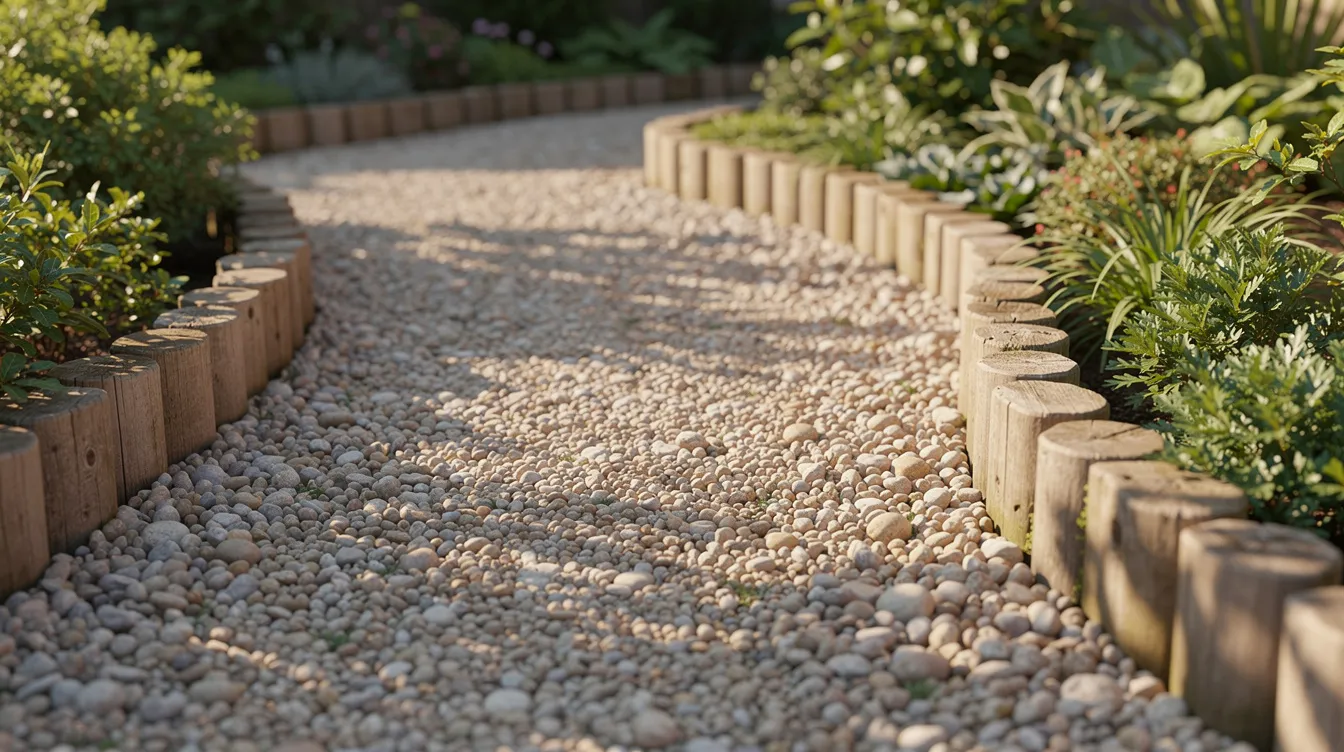
- Light-use garden paths and garden borders: 2 inches deep is sufficient for decorative purposes and light foot traffic.
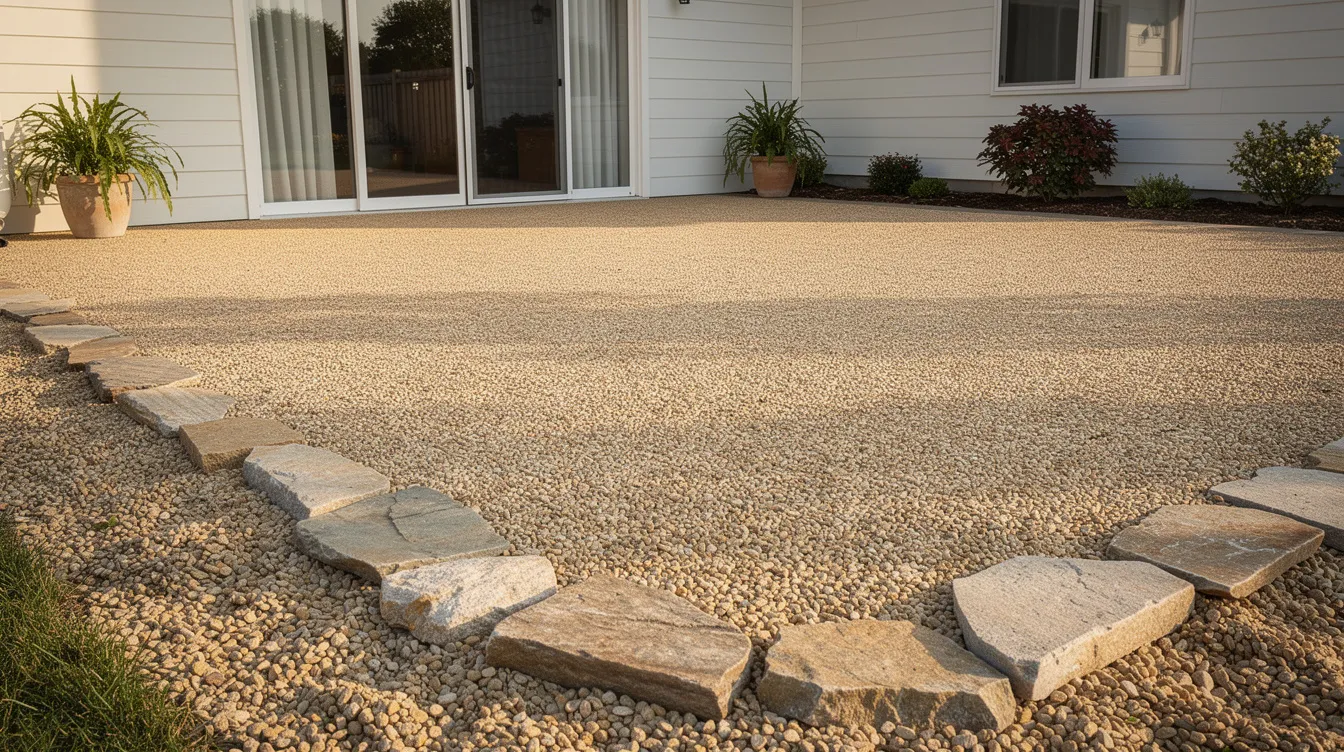
- Pea gravel patios and seating areas: a depth of 2 to 3 inches is standard for patios. Pea gravel typically requires a depth of 2 to 3 inches for walkways as well.
- Dog runs and higher-traffic footpaths: 3–4 inches deep provides a durable ground cover that holds up to regular use.
- Play areas and playground zones: the CPSC Public Playground Safety Handbook lists at least 9 inches of compressed pea gravel for equipment with falls up to 5 feet. Loose fill compresses about 25% or more over time, so fill to about 12 inches and top it up as it settles. CPSC also advises avoiding loose fill in play areas built for toddlers.
- Driveways: loose pea gravel shifts and ruts under vehicle tires, so it is not a good choice as the only driveway layer. Angular crushed stone or crusher run performs far better here. If you want the pea gravel look, use it as a thin top layer over a compacted crushed stone base — see our gravel driveway installation guide for a better approach.
- Shallower is often smarter: a thinner pea gravel surface over a compacted base of crushed stone usually outperforms an excessively deep loose bed, providing a more stable surface at lower cost.
Changing depth from 2 inches to 3 inches increases your gravel needed by 50% — and your gravel cost rises proportionally. Double-check your choice before ordering.
From Cubic Feet and Cubic Yards to Tons and Bags
Suppliers price pea gravel differently: some quote per cubic yard, others by the ton, and home improvement stores sell bags measured in cubic feet. Converting between these units is essential for comparing prices and figuring out how much material to order.
- The calculator shows results in cubic feet, cubic yards, and estimated US tons using a typical pea gravel density of 1.30 tons per cubic yard (about 96 lb per cubic foot).
- Bag count formula: divide your total cubic feet by bag size. Most store bags are 0.5 cubic feet, but check the label. For example, if you need 27 cubic feet (one cubic yard), that’s 27 ÷ 0.5 = 54 bags.
- Bags vs. bulk comparison: 1 cubic yard = 27 cubic feet = about 54 bags at 0.5 cubic feet each. Bagged pea gravel costs about $4–$6 per 0.5 cubic foot bag according to HomeAdvisor (June 2026) and $5–$8 according to HomeGuide (December 2025). At $5 per bag, 54 bags would run $270, versus about $15–$80 per cubic yard in bulk across the same two guides, plus delivery.
- For projects over about 1 cubic yard, bulk delivery is usually more economical than buying dozens of bags. Very small projects — a single flower bed border, for instance — might favor bags for convenience. Check minimum orders too: HomeGuide notes most companies won’t deliver less than 2 tons.
- How many bags you need depends on the specific material and your bag size, but the calculator handles this math automatically once you input the right numbers.
Estimating Gravel Cost with the Calculator
Crushed Stone Calculator lets you enter a local price per ton, per cubic yard, or per bag to estimate total gravel cost instantly alongside your volume and weight figures.
Typical US pea gravel prices from two national cost guides (checked October 2026):
| Source (Date) | Per Ton (Bulk) | Per Cubic Yard (Bulk) | 0.5 cu ft Bag |
|---|---|---|---|
| HomeGuide (Dec 2025) | $30–$55 | $45–$80 | $5–$8 |
| HomeAdvisor (Jun 2026) | $10–$50 | $15–$75 | $4–$6 |
Local landscape yards often charge more than these national ranges. For example, State Crushing in Auburn Hills, Michigan lists pea gravel at $59 per cubic yard (April 2026), and Georgia Landscape Supply in Marietta, Georgia lists #7 pea gravel at $130 per ton (October 2026). Prices vary by region, material, quantity, and delivery distance, so confirm with a local supplier. Our pea gravel prices guide has more detail.
Quick cost example: a 1.2 cubic yard project at $50 per cubic yard = $60 in materials. Add 10% waste buffer (1.32 yd³ × $50) = $66. Delivery is extra: HomeAdvisor puts it at about $5 per mile and up, and some yards charge a flat fee instead (Georgia Landscape Supply lists $125–$300), so factor that into your total cost.
Enter your supplier’s delivery fee in the calculator to see an estimated total. Labor is not included, so contact local suppliers for current delivery fees and scheduling before finalizing your budget.
Pea Gravel vs. Crushed Stone and Decomposed Granite
Choosing the right material changes how much gravel you need, how deep to spread it, and what it costs. Rounded pea gravel, angular crushed stone, and fine decomposed granite each serve different roles.
Pea gravel consists of small, smooth rounded stones. Pea gravel typically measures around 3/8 of an inch in diameter, with common sizes including 1/4-inch, 3/8-inch, and 1/2-inch variants. It’s available in plain and colored varieties, giving it a natural appearance for decorative purposes. Pea gravel’s rounded shape prevents tight compaction, which aids drainage but means it shifts underfoot more than angular alternatives. It works best for garden paths, patios, and areas where a smooth texture matters.
Crushed stone (such as #57 or road base) features angular pieces that interlock under pressure, creating a stable surface ideal for gravel base for pavers, driveways, and patio base layers. Compacted base materials are often necessary beneath gravel for stability in driveways and areas supporting weight. Density runs slightly higher — around 1.40 tons per cubic yard — so tonnage increases for the same volume.
Decomposed granite is very fine, compacts into a semi-solid surface, and works well for firm, natural-looking paths. Its density (about 1.40 tons per cubic yard for natural DG) and typical depths differ from pea gravel, so use our Decomposed Granite Calculator for DG projects.
This calculator uses 1.30 tons per cubic yard for pea gravel. If your supplier gives a different number, choose Custom Density and enter it in tons per cubic yard (pounds per cubic yard ÷ 2,000), improving accuracy for whatever local aggregate you’re using.
Typical Uses for Pea Gravel and Recommended Depths
Pea gravel works best for decorative and light-duty functional applications around homes and gardens. Here are the most common uses with recommended depths:
- Garden paths and walkways: 2–3 inches deep. Pea gravel is commonly used for walkways and garden paths because it’s comfortable underfoot and drains quickly.
- Patios and seating areas: 2–3 inches deep over a compacted base. The smooth texture feels pleasant for bare feet.
- Dog runs: 3–4 inches deep. Easy to rinse clean and provides good drainage.
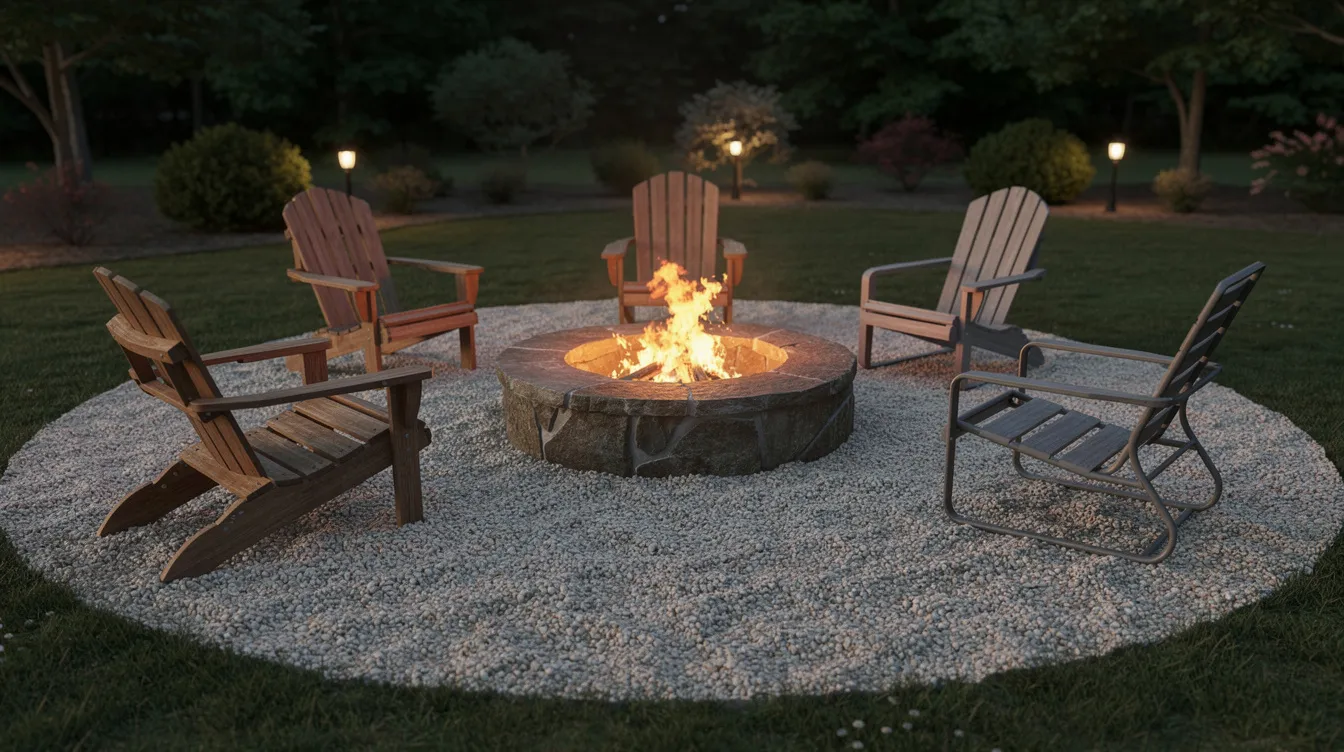
- Fire pits and pool decks: 2–3 inches deep. Pea gravel creates comfortable surfaces around pool decks and fire pits with a clean, natural look.
- Playground zones: fill to about 12 inches so the surface stays at 9 inches or more after it compresses. CPSC lists 9 inches of compressed pea gravel for falls up to 5 feet.
- French drains: most designs, including our French drain gravel guide, use clean, washed No. 57 stone in a 12–18 inch trench. Washed pea gravel is sometimes used around the pipe because its rounded shape lets water flow between stones, but follow your drain design.
- Garden beds and flower beds: 2 inches as a ground cover layer. Over landscape fabric, it helps hold back weeds in garden beds, reducing maintenance.
- Dry creek beds: 3–4 inches for visual effect and water channeling during storms.
For structural or drainage-critical work — like shed pads, driveway layers, or road construction bases — angular crushed gravel or coarse gravel is usually a better choice than rounded pea gravel.
Preparing the Base Before Spreading Pea Gravel
A properly prepared base reduces maintenance and ensures the calculated amount of gravel performs as expected. Skipping base prep is the most common reason homeowners end up needing more material than planned.
- Clear and grade the site: remove sod, roots, and debris. Slope the surface 1–2% away from buildings so water drains properly rather than pooling.
- Add a compacted base when needed: for patios, high-traffic paths, or under sheds, spread about 4–6 inches of crusher run or crushed stone and compact it in thin layers with a plate compactor. This creates the stable, compacted base that prevents the pea gravel surface from sinking into soft soil.
- Install a weed barrier: landscape fabric should be laid over compacted soil before spreading pea gravel. Landscape fabric under gravel helps prevent soil mixing and weed growth while still allowing water to pass through for proper drainage.
- Set solid edging: steel, aluminum, plastic, pavers, or timber edging keeps pea gravel from migrating into lawns or garden beds and maintains your designed gravel layer thickness over time.
Frequently Asked Questions About Pea Gravel Calculations
How do I convert square feet and depth to cubic yards?
Multiply your square footage by depth in feet, then divide by 27. For example, 200 square feet at 3 inches deep: 200 × 0.25 = 50 cubic feet ÷ 27 = 1.85 cubic yards.
How many cubic yards are in a ton of pea gravel?
At 1.30 tons per cubic yard, one ton of pea gravel is about 0.77 cubic yards. HomeGuide lists 1.3 to 1.5 tons per cubic yard, which works out to roughly 0.67–0.77 cubic yards per ton. Moisture and stone type change this number — wet gravel weighs more.
How much gravel do I need for a 10 ft × 20 ft area at 3 inches deep?
10 × 20 × 0.25 = 50 cubic feet ÷ 27 = 1.85 cubic yards, weighing about 2.4 tons. With 10% extra for spillage and uneven ground, order about 2.04 cubic yards (about 2.65 tons). The calculator helps estimate this in seconds.
How many bags of pea gravel do I need?
Divide total cubic feet by your bag size (typically 0.5 cu ft). For 1 cubic yard (27 cu ft), you’d need about 54 bags. The bags needed count appears automatically in the calculator output.
Can I use the calculator on my phone at the job site?
Yes. The pea gravel calculator is mobile-friendly, so DIY homeowners and small contractors can plug in precise measurements on-site and get instant materials needed estimates before driving to the supplier.
What’s the difference between how much pea gravel and how much crushed stone I need for the same area?
The volume is identical for the same dimensions, but the recommended depth may differ. Crushed stone driveways need thicker layers, and the higher density (about 1.40 vs. 1.30 tons per cubic yard) means each cubic yard is heavier, so you need more tons for the same area.
Does river rock or lava rock use the same formulas?
Yes, the volume math is identical. You’d just adjust the density — river rock is a little heavier and lava rock is significantly lighter per cubic foot. Our Rock Calculator has both built in.
About Crushed Stone Calculator
Crushed Stone Calculator is a free online tool and information resource built for DIYers and small contractors across the United States. The site offers multiple calculators for pea gravel, crushed stone, gravel, landscape rock, decomposed granite, crushed concrete, and stone weight — all free with no sign-up required.
The main benefits: fast cubic yard and ton estimates, built-in waste allowances, gravel cost estimates based on your local pricing, and straightforward guidance on depth coverage and material choice for any home improvement or landscaping project.
Bookmark the pea gravel calculator and explore related tools whenever you’re planning your next project — whether it’s a driveway, patio, drainage trench, or decorative garden border.
Related Calculators and Guides
- Crushed Stone Calculator — estimate cubic yards, tons, and cost for any crushed stone or aggregate project.
- Gravel Calculator — estimate crushed or pea gravel for driveways, drainage, and paths, with multiple areas and delivery.
- Sizes of River Rock — compare rounded stone sizes for beds, borders, and dry creek beds.
- Waste Factor for Stone Projects — how much extra to order for different layouts and materials.
Pairing these tools with the pea gravel calculator helps you move from a simple decorative layer to a fully designed outdoor project — base, surface, and edging all accounted for.