Table of Contents
Introduction: How to Use an Aggregate Gravel Size Chart
An aggregate gravel size chart is a reference table that matches common stone names and grades to approximate particle size ranges in inches, typical applications, and drainage or compaction behavior. If you are planning a driveway, French drain, patio, shed pad, or landscaping project, this chart helps you pick the right material before you call a supplier. Aggregate gravel is a crucial construction material used in various applications, and gravel sizes range from fine, pea-sized stones to large stones over 4 inches.
Most U.S. suppliers reference standardized crushed stone grades like #57 stone or #8 stone rather than exact dimensions. These grading numbers or sieve sizes categorize aggregate gravel by size, and the classification between fine aggregates and coarse aggregates is based on the 4.75 mm sieve size. Gravel aggregate is classified by particle size and uniformity, which directly affect drainage and compaction. Common aggregate gravel sizes include #1 stone, #3 stone, #5 stone, 57 stone, and #67 stone, while the Gravel Size Gradation Chart lists sizes from 4 inches down to 3/16 inch.
This article provides a practical gravel stone size chart with approximate stone sie range values in inches, common applications for driveways, french drains, patios, hot mix asphalt bases, and shed pads, plus guidance on when to choose each size. Exact gradation and density can vary by supplier and region, so always confirm local specs. Once you know which size stone you need, the Gravel Calculator can help you estimate cubic yards, tons, depth, waste factor, and approximate cost.
Crushed Stone vs. Gravel: Why Size and Shape Matter
Understanding the difference between crushed stone and natural gravel is the first step to choosing the right material for your project.
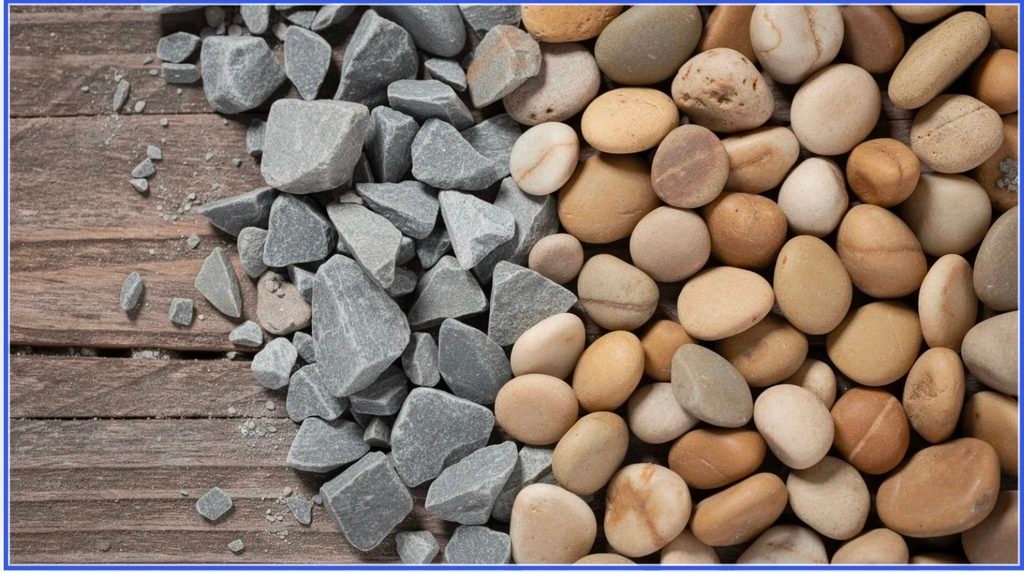
- Crushed stone is man-made from larger rocks. Quarries mechanically break down rock such as limestone, granite, or trap rock, then screening equipment sorts it into size grades. The result is angular particles with sharp, fractured faces.
- Gravel is a naturally occurring aggregate from riverbeds and glacial deposits. These rounded stones have smoother surfaces from water and ice abrasion. Pea gravel and river rock are common examples.
Particle shape matters because angular crushed stone provides superior interlocking characteristics for heavy-load areas. Crushed stone has angular edges for better compaction and locks together under load. Gravel is smoother and allows for better drainage but tends to shift, rut, and lose stability under traffic. Most U.S. driveway base, road base, and french drain installations use crushed stone grades, while decorative landscaping beds and some walkways often use natural gravel stone.
When you order, ask your aggregate supplier whether the materials are crushed stone or natural gravel. Suppliers may label everything as “gravel,” but the performance difference is significant.
Understanding U.S. Aggregate & Gravel Size Systems
Gravel sizes in the U.S. are commonly described using two systems:
- Numerical stone sizes (#57, #8, #67, #2, etc.), typically based on ASTM D448 and AASHTO M-43 standards.
- Descriptive names such as pea gravel, crusher run, stone dust, riprap, and screenings.
Key principles to keep in mind:
- Smaller ASTM numbers usually indicate larger size stone (e.g., #2 stone is much larger than #57 stone).
- A single grade contains a range of sizes between two sieve openings; it is not perfectly uniform.
- Coarse aggregate is generally the material retained on the 4.75 mm (No. 4) sieve, while fine aggregate generally passes the 4.75 mm sieve.
- Gravel is categorized into fine aggregate and coarse aggregate based on size.
This guide uses common U.S. naming and approximate ranges in inches, but dimensions may vary slightly by quarry and region. If your project requires engineering-grade accuracy, ask suppliers for a written gradation or spec sheet referencing ASTM D448, ASTM C33, or your state DOT specification.
Aggregate Gravel Size Chart (Quick Reference Table)
Below is a planning-level aggregate gravel size chart covering the most common types of aggregates available from U.S. suppliers. Use it as a starting point, then confirm local naming, gradation, and density before ordering.
| Aggregate Name / Grade | Approx. Size (inches) | Common Applications | Drainage vs. Compaction | Usually Avoid For… |
|---|---|---|---|---|
| Stone Dust / Screenings (#9–#10) | 3/8″ down to 3/16″ (smallest on chart) | Paver base leveling layer, fill between flagstones, filter material | Packs very tight; poor drainage | French drains, deep base layers, exposed surfaces |
| Pea Gravel (typically around 3/8″) | ~3/8″ to 3/4″ (rounded) | Garden paths, decorative landscaping, play areas, light drainage | Excellent drainage; poor compaction | Structural bases, steep driveways, under heavy loads |
| #8 Stone | 3/8″–1/2″ | Paver bedding, concrete mixes, pervious concrete, decorative | Good drainage; limited interlock | Heavy vehicle base; sole base layer |
| #67 Stone | 1/2″–3/4″ | Concrete aggregate, hot mix asphalt, smoother surfaces | Moderate drainage; moderate compaction | Coarse base under heavy traffic |
| #57 Stone | 1 inch to 3/8 inch | Driveways, french drains, drain fields, pipe bedding, base layers | Balances drainage and load support | Fine finish surfaces; steep slopes without containment |
| #3 Stone | 1″–2″ | Heavy road base, parking pads, subbase under smaller stone | High void ratio; good for heavy loads | Walking surfaces; thin surface layers |
| #2 Stone | 1½″–2½″ | Commercial pads, heavy equipment yards, permeable pavement base | Excellent drainage; minimal compaction | Residential driveways; walkable surfaces |
| Crusher Run | 3/4″ minus (blend with fines) | Driveway surface, road base, compacted base under concrete blocks or slabs | Compacts well; limited drainage | Drainage systems; around perforated pipes |
| Riprap | 4″ and larger | Erosion control, culvert outlets, shoreline stabilization | Open voids; non-compressible | Any surface meant for walking or driving |
Screening stones range from #9 to #10, about 3/8 inch to 3/16 inch, and the smallest gravel size on the chart is 3/16 inch. Pea gravel is commonly sold around 3/8 inch, although actual size ranges and supplier labels can vary. Note that clean stone generally contains minimal fines and is commonly used where open void space and drainage are important.
The No. 57 stone appears here as the most common “all-rounder” for residential driveways and drainage. Keep this chart handy when using the Crushed Stone Calculator so you can plug in the correct material and depth.
Common Aggregate Sizes and Their Best Uses
Here is more practical detail on the most common types of aggregate sizes, grouped from fine material to large rock.
Fines and screenings:
- Stone dust and screenings pack extremely tight and create smoother surfaces but provide less drainage. They are ideal as a final leveling layer under pavers or as part of crusher run blends. Screening stones are often used as base or filter material. Avoid using them in dedicated drainage zones.
Small aggregates:
- Pea gravel (around 3/8 inch) is commonly used for landscaping and drainage, garden paths, and decorative beds. Rounded stones are comfortable to walk on but may roll and rut on slopes. Drainage performance varies with aggregate size, affecting compaction capability.
- No. 8 stone (3/8 inch to 1/2 inch) is used for bedding layers under pavers, in concrete mixes, and for pervious concrete. It offers good drainage but limited interlock for heavy loads.
Planning a decorative rock or river-rock area? Use our Rock Calculator to estimate how much material you need from the area and planned depth.
Medium aggregates:
- No. 57 stone (3/4 inch to 1 inch) is ideal for drainage systems, residential driveways, foundation drains, and as a stable base. It balances water flow and load-bearing support.
- #67 stone (1/2 inch to 3/4 inch) is often suited for concrete and hot mix asphalt where a smoother, more uniform texture is needed.
Larger base and erosion sizes:
- #3 stone (1 inch to 2 inches) handles heavy loads as a coarse subbase under roads or parking areas.
- No. 2 stone (1½ inch to 2½ inch) serves as a stable base for heavy equipment yards and large commercial pads. These larger stones are generally too coarse for most residential surfaces.
- Riprap (4 inches and up) handles serious erosion control along culverts, ditches, and shorelines.
Smaller stones like pea gravel are not suitable alone under a shed pad. Large #2 stone makes a poor walking surface. Screenings alone fail as drainage material.
Driveways, Parking Pads & Walkways: Picking the Right Gravel Size
Driveways and parking pads need both strength and drainage. Using the wrong gravel sizes commonly causes washouts, potholes, or mud. Gravel is often used for driveways, drainage systems, and landscaping projects, but the right stone size for each layer matters.
A typical driveway section looks like this:
- Deep base layer: Larger crushed stone (#3 or #2) on weak soil provides a strong, draining foundation-usually 6–10 inches thick.
- Main base layer: #57 stone or similar 3/4-inch crushed stone for most residential driveways and parking pads; provides solid load-bearing support and good drainage.
- Surface layer: Crusher run (a blend of 3/4-inch stone with fines) compacts into a smoother, firmer driving surface, though it drains less than open-graded #57 stone.
For walkways and patios using pavers:
- Base: 3/4-inch crushed stone (#57), 4–8 inches thick depending on climate and load.
- Paver base leveling layer: about 1 inch of screenings or stone dust, then sand and pavers.
Typical mistakes to avoid:
- Using only pea gravel on a slope (leads to sliding and ruts)
- Using only fine stone dust for a driveway (poor drainage, frost heave risk)
- Skimping on base depth, which causes early failure and instability
Drainage, French Drains & Erosion Control: Sizes That Actually Work
Drainage systems need open voids between stones so water can move freely, allowing water to reach pipes or infiltrate the ground. Compaction is less important than water flow and long-term performance.
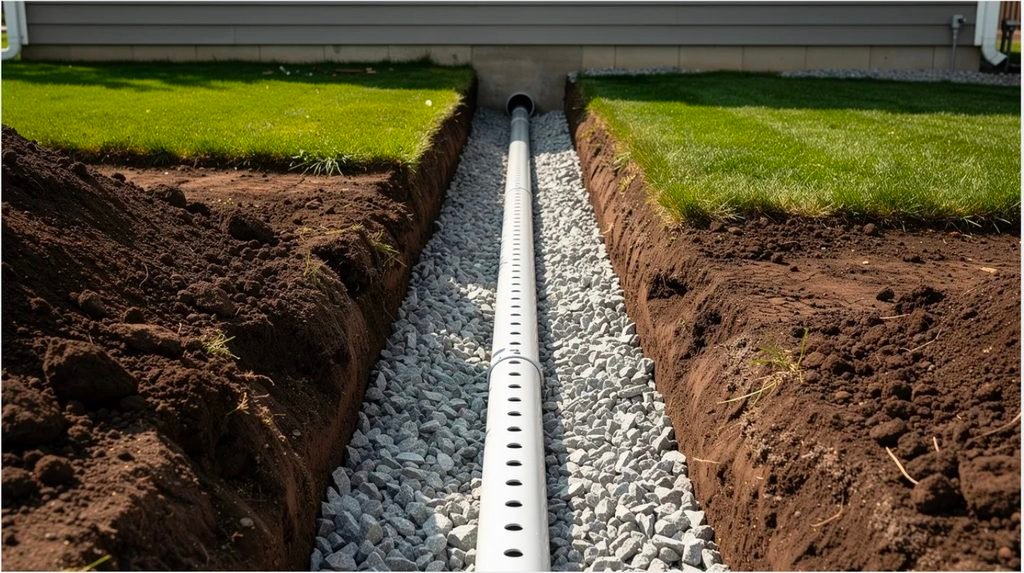
- French drains: No. 57 stone is commonly used for drainage applications around perforated pipe. The size is large enough to resist clogging but small enough to support soil and pipe.
- Foundation and curtain drains: Usually #57 or similar 3/4-inch clean crushed stone, often wrapped in filter fabric.
- Dry wells and infiltration trenches: Clean, washed #57 stone or even larger #3 stone to maximize water storage volume.
- Downspout splash areas: Pea gravel or 3/4-inch crushed stone; choose rounded gravel where barefoot comfort or a softer look is desired for decorative landscaping.
Important cautions:
- Avoid using screenings, stone dust, or tightly compacted crusher run around french drains or perforated pipes because they restrict water flow.
- Lava rock and marble chips may look attractive but are not typically specified for structural drainage applications.
For erosion control, larger size stone like #3, #1, and riprap (4–12 inch pieces) line ditches, culvert outlets, and steep slopes. Sizing is often specified by local DOT or an engineer. Drainage performance is highly site-specific-soil type, rainfall, and slope all matter-so consult local codes or a professional for critical foundation or hillside work.
Gravel Sizes for Concrete, Hot Mix Asphalt & Structural Bases
Concrete and hot mix asphalt rely on well-graded aggregate blends. Aggregates can influence the performance of concrete in terms of strength and drainage, and using the correct size stone helps achieve the right balance of workability and durability.
- Concrete: Typical coarse aggregate for residential concrete is around 3/4-inch nominal (#57 or #67 stone meeting ASTM C33). Smaller #8 stone may be used for thin sections or decorative exposed aggregate finishes. Larger aggregates improve concrete economy but require thicker sections. Always follow the mix design from your ready-mix supplier.
- Hot mix asphalt: HMA mixes often use smaller aggregates (#8 or similar) for a smooth, compacted asphalt surface. The underlying base course may use larger crushed stone such as #57 stone or crusher run to support traffic in road construction.
- Structural bases: #2 and #3 stone serve as subbase layers under heavy commercial slabs, truck yards, or permeable pavement systems. Well-graded base aggregates like crusher run distribute loads under concrete or asphalt. Concrete blocks and retaining walls also benefit from properly graded base layers.
Engineered projects should use stone sizes and specs from the plans. This guide is for planning-level discussion with suppliers.
How to Read Supplier Labels and Ask for the Right Material
Different quarries and landscape yards may use slightly different names for similar aggregate sizes. Here is how to navigate the confusion:
- Look for numbers (#57, #8, #67, #2) or descriptive terms like pea gravel, crusher run, screenings, washed gravel, or clean stone.
- “Clean” generally means stone with minimal fine material; washed stone is commonly used where better drainage and open void space are desired.
- “Road base,” “crush and run,” or “dense graded aggregate” usually indicates a mix of different types of stone and fines designed for compaction.
Sample phrases to use when calling your aggregate supplier:
- “I need about 10 tons of clean #57 stone for a French drain.”
- “I’m looking for crushed stone, about 3/4 inch, to use as a driveway base.”
- “Do you carry pea gravel around 3/8 inch for pathways?”
Ask the supplier for the approximate stone size range in inches, whether the material is crushed or natural, and whether it meets any relevant ASTM or state DOT standard. Cone crushers and jaw crushers produce slightly different particle shape characteristics, which can affect compaction, so knowing the source helps.
Estimating Quantity and Cost with Crushed Stone Calculator
Estimating quantity correctly matters: under-ordering creates delays, and over-ordering ties up cash with leftover piles of stone.
Here is the basic process using the Crushed Stone Calculator:
- Measure your project dimensions in feet (length × width × planned depth).
- Enter dimensions into the calculator to convert to cubic yards.
- Select a material type (e.g., #57 stone, pea gravel, crusher run) so the tool can estimate weight in tons using typical density values. For reference, #57 stone weighs roughly 2,700 lb per cubic yard (~1.35 tons).
- Add an order allowance (often around 5–15%, depending on the project) for spillage, uneven subgrade, and minor material loss. Account for required compaction separately based on the material and project specifications.
The calculator provides a planning-level estimate. Actual tonnage may vary with stone density and moisture content. Call local suppliers with your yard and ton estimate to get delivered price per ton, delivery fees, and lead times. For complex or critical structural projects, have a professional review your quantity estimates against project plans.
Key Takeaways: Matching Gravel Size to Your Project
- Always match gravel size and type-crushed stone vs pea gravel vs crusher run-to your project’s needs for drainage, compaction, stability, and aesthetics.
- #57 stone is commonly the “all-rounder” for driveways, french drains, and general drainage or base layers.
- Pea gravel and decorative gravel like river rock are best suited for comfort and looks, not for heavy-duty structural bases.
- Fines and screenings are excellent under pavers and as part of base blends but usually poor in dedicated drainage zones.
- Larger stones (#2, #3, riprap) are reserved for heavy loads, erosion control, and construction subbase-not typical residential surfaces.
- All sizes and ranges in this chart are approximate. Confirm actual gradation, availability, and pricing with your local aggregate supplier.
Use the Crushed Stone Calculator to plan quantities for your project, then talk with a local supplier or contractor to finalize the right material and thickness for your specific site conditions.