Table of Contents
If you are planning a driveway, drainage project, walkway, patio, or shed pad, you have probably seen products labeled “gravel 1,” “1-inch gravel,” “1 gravel,” or “#1 gravel.” These terms show up on supplier websites, at landscape yards, and in contractor quotes, but they do not always mean the same thing. This guide breaks down what these labels usually refer to, the common types available, best uses, how to estimate quantity, and what to ask your supplier before ordering.
What “Gravel 1”, “1-Inch Gravel”, and “#1 Gravel” Usually Mean
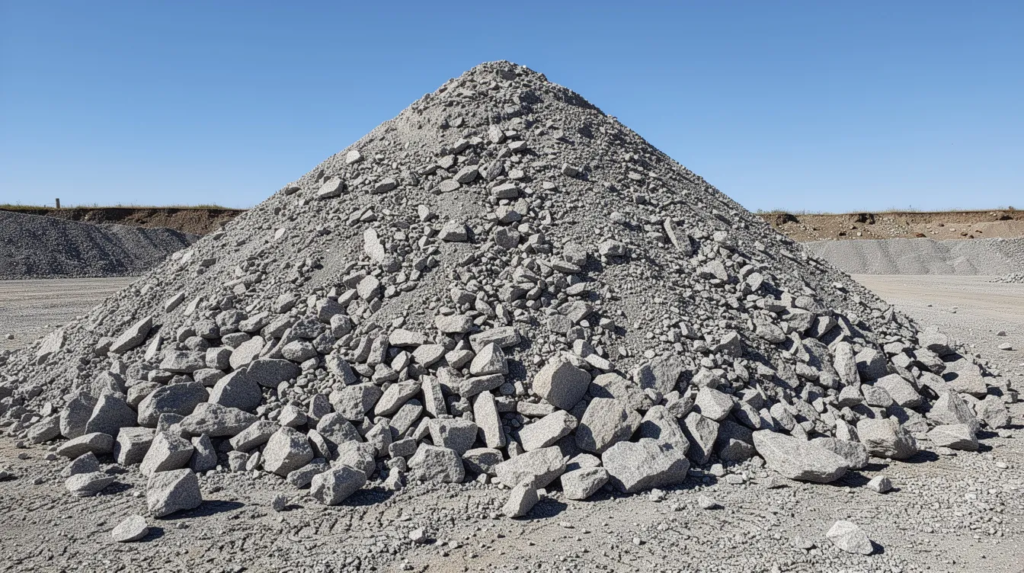
The terms “gravel 1,” “1-inch gravel,” “1 gravel,” and “#1 gravel” can be confusing because suppliers do not always use them the same way. In many homeowner searches, “1-inch gravel” means stone around 1 inch in size. But in some construction gradation systems, “#1 stone” can mean a much larger aggregate, often closer to 2–4 inches. Always confirm the actual size range with your supplier before ordering.
Typical Size Range
Products sold as “1-inch gravel” usually contain rock fragments ranging from about 3/4 inch to 1-1/2 inches in diameter. Some suppliers offer a more strictly graded “1-inch clean” stone that stays closer to a uniform 1-inch size. Meanwhile, material labeled “#1 gravel” or “#1 stone” can refer to something much larger in certain grading systems, sometimes stones in the 2-inch to 4-inch range, depending on location and local DOT specifications.
Broadly speaking, gravel particles range from 2 mm to 80 mm in size, and gravel is classified by its shape, size, and composition. A “1-inch” product sits in the middle of that range, which is why it is such a popular item for a wide variety of residential and commercial applications.
Shape and Source
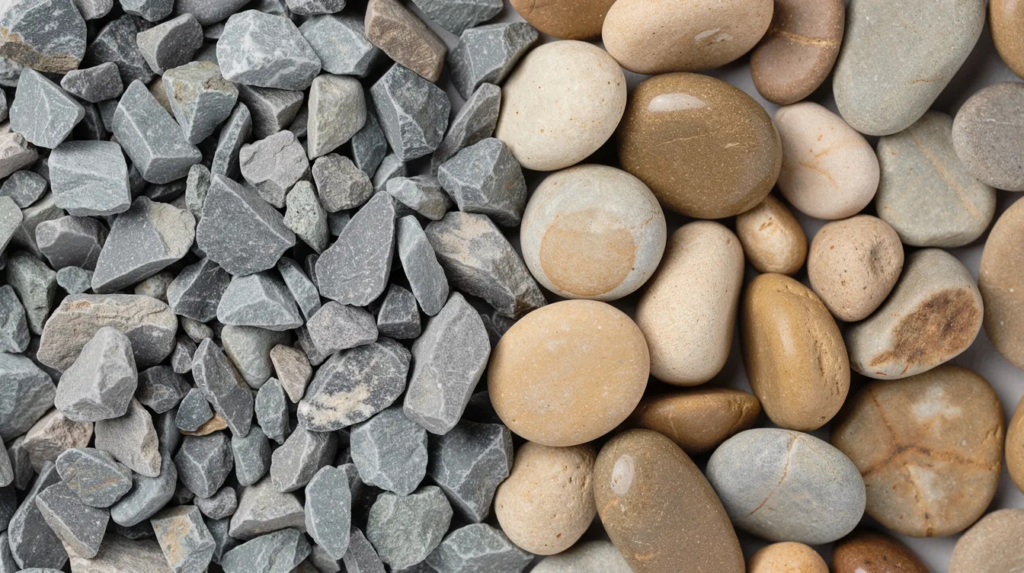
Gravel comes in natural rounded and crushed angular types, and the distinction matters for your project. Natural gravel consists of loose rounded rock particles over 2 mm in diameter, shaped by water erosion in riverbeds or glacial deposits. Natural gravel is formed by weathering and water movement, while crushed stone is produced by mechanically crushing rock into angular pieces with jagged edges.
Common parent rock types include limestone, granite, and traprock. The mineral composition depends on the local rock source and may include limestone, granite, quartzite, basalt, or other rock types. Color depends heavily on the source: light gray for limestone, darker tones for granite or basalt, and mixed earth tones for river gravel.
Density for Planning
For most 1-inch crushed gravel products, bulk density in the loose state falls roughly in the range of 1.3 to 1.6 tons per cubic yard. A common planning figure for clean angular crushed stone is about 1.4 to 1.5 tons per cubic yard, depending on the rock type, gradation, moisture, and supplier. Rounded river rock may have similar density but with more variability due to void space. Always confirm the actual density with your local supplier before finalizing your order quantity.
Why the Terminology Gets Confusing
Numbered gradations like #1, #3, #57, and #8 reference sieve sizes used during screening. In many grading systems, lower numbers mean larger stone. So “#1 stone” can mean 2-to-4-inch pieces for erosion control, while “#57 stone” is roughly 3/4-inch to 1-inch. A separate “1-inch gravel” product at the same quarry might be labeled “#5 stone” or simply “1-inch clean.”
Here is a real-world example of how this plays out: at a Midwestern quarry, “#1 limestone crushed” might be sold as stones ranging from 2 to 4 inches, intended for erosion control. A separate “1-inch limestone” product at the same location will be strictly around 3/4 to 1 inch, clean stone with minimal fines, sometimes labeled as “3/4-1 clean” or “#5 stone.” The numbers alone do not tell you the size. You need to ask.
According to USGS, the United States produced about 960 million tons of construction sand and gravel in 2020, valued at about $9.2 billion. That scale helps explain why aggregate product names and gradation labels can vary so much by quarry, region, and specification. A homeowner asking for “1-inch gravel” may mean a practical stone size, while a quarry, contractor, or DOT-style spec may use numbered labels such as #1, #5, #57, or #8 in a more technical way.
Common Types of 1-Inch Gravel and How They Differ
Multiple products fall into the “1-inch gravel” category, and each one performs differently for drainage, compaction, and appearance. Understanding the differences helps you pick the right item for your project.
Crushed Gravel / Crushed Stone
Angular 1-inch crushed gravel is made by mechanically breaking larger rock into jagged pieces. Crushed gravel has sharp edges that interlock to form a stable surface, which makes it resist shifting under light vehicle traffic and foot traffic better than rounded stone. It is commonly available in limestone, granite, or traprock depending on your location. This is the type most often used as a driveway topping over a compacted foundation or as a drainage layer around structures.
#1 Crushed Gravel
Be careful with the label “#1 gravel.” At some landscape yards, a salesperson may use “#1” casually to describe a 1-inch clean stone. But in many construction or DOT-style gradation systems, #1 stone can mean a much larger aggregate, often closer to 2–4 inches. If you need stone around 1 inch, ask for the actual size range in inches before ordering. Depending on the supplier, the product may be called “1-inch clean stone,” “3/4–1 inch clean gravel,” “#5 stone,” “#57 stone,” or something else locally. The name alone is not enough — confirm the gradation with your supplier.
Pea Gravel vs. 1-Inch Gravel
Pea gravel is typically 3/8-inch to 1/2-inch, smoother, and more rounded. It behaves differently underfoot and under tires. Natural gravel contains smooth stones that do not compact well, which means pea gravel will shift and roll more than angular 1-inch stone. Pea gravel is ideal for garden paths, patios, and decorative landscaping where comfort underfoot matters more than load-bearing strength. For driveways or areas with vehicle traffic, 1-inch angular crushed gravel is usually the better choice.
1-Inch Limestone Gravel
Crushed 1-inch limestone gravel is an angular stone commonly used for driveways, drainage layers, walkways, and landscape projects in many parts of the U.S. It usually locks together better than rounded river gravel, but clean 1-inch limestone still does not compact like crusher run or other dense-graded base material with fines.
Use clean 1-inch limestone where drainage is important, and use crusher run, road base, or another dense-graded aggregate where compaction and load support are the priority. Product names vary by supplier, so confirm whether the limestone is clean, washed, or mixed with fines.
Washed vs. Unwashed (Clean vs. With Fines)
“Clean” or washed 1-inch gravel has most fines (sand, stone dust) removed. This creates more void space between stones and allows better water flow. Washed gravel is ideal for drainage and landscaping around foundations. On the other hand, unwashed or “minus” mixes include fine particles that aid compaction and create a denser surface but reduce permeability.
- Clean 1-inch stone → use around French drains, sump discharge lines, and anywhere you need reliable water flow
- 1-inch stone with fines → use under a shed pad or patio base where compaction and leveling are priorities
Various gravel sizes can be used to meet specific needs. Choosing the right one comes down to whether your project prioritizes drainage or stability.
Appearance and Color
Depending on your region, you may see tan river gravel, dark basalt, bluish granite, or white limestone. A variety of colors and textures are available, so homeowners should view samples or photos from their supplier before ordering a large quantity. What looks great in an online photo may not match the actual stone available at your nearest pit.
Best Uses of 1-Inch Gravel in Real-World Projects
One-inch gravel is a versatile size for U.S. DIY projects, but it is not ideal for every situation. Gravel is often used in construction and landscaping projects ranging from simple garden borders to full driveway installations. Here is where 1-inch stone works well and where you might want something different.
Driveways and Parking Surfaces
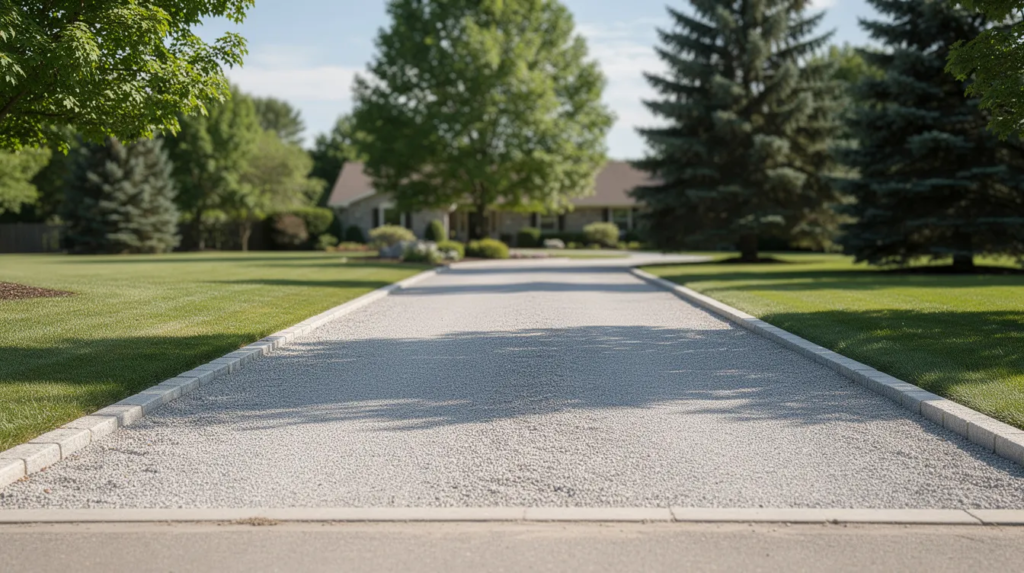
Angular crushed gravel often works well as a driveway topping when it is placed over a properly compacted base. A 2-to-3-inch layer of angular 1-inch stone over a properly compacted base (such as crusher run or 21AA limestone) handles light vehicle traffic effectively. A gravel base can help reduce rutting from vehicular traffic when compacted. For a more detailed breakdown of layering options, see this guide to the best gravel for driveways.
Gravel provides an affordable and highly permeable base for driveways and pathways, and it offers excellent drainage compared to solid surfaces like asphalt. Keep in mind that smaller top sizes (3/8 to 3/4 inch) may feel smoother under car tires, so some homeowners prefer a finer surface layer.
Base Layers and Pads
For shed pads, hot tubs, or patios, 1-inch gravel may work as part of a layered base system, but the right setup depends on the structure, soil, drainage, frost conditions, and manufacturer instructions.
Many traditional bases use compacted crusher run or road base because the fines help create a dense, stable layer. Clean 1-inch stone may be used as a drainage layer or in some open-graded systems, but it should not be assumed to be the correct leveling layer for every patio, hot tub pad, or shed pad.
Proper site preparation, drainage, and compaction are important for a long-lasting gravel base.
Drainage and French Drains
Clean 1-inch crushed gravel is often chosen to surround 4-inch perforated pipe in French drain installations. Crushed gravel aids in drainage around pipes, and it is commonly used for pipe bedding because its void space allows water to pass freely. Clean limestone gravel can provide good drainage when it is properly sized and installed as part of the right driveway or drainage system.
Clean 1-inch stone does not absorb water like a sponge. Instead, the open spaces between the stones allow water to move through the gravel layer toward a pipe, swale, dry well, or other outlet. For French drains, use clean, washed stone recommended for your drainage design, wrap the trench with suitable filter fabric where appropriate, and make sure the system has a safe outlet.
Walkways and Paths
Gravel is commonly used for landscaping features such as walkways and garden paths, but 1-inch stone can feel loose and awkward underfoot. Smaller pea gravel (3/8 to 1/2 inch) or fine crushed stone often provides a more comfortable walking surface. If you do use 1-inch gravel on a walkway, angular crushed stone will stay in place better than rounded material.
Landscaping and Erosion Control
One-inch stone works well around foundation perimeters, downspouts, and swales. It makes an effective mulch alternative in planting beds, though be aware that rock beds may increase soil heat and reduce moisture retention in hot climates. For erosion-prone slopes, larger stone (2 to 4 inches) may be needed.
Restrictions and Cautions
One-inch gravel usually does not compact into a perfectly smooth, hard surface. It works best either as a drainage layer or as a topping over a well-compacted base. Using it as the only layer in a high-traffic driveway without proper base preparation will likely lead to rutting and displacement.
Coverage, Depth, Cubic Yards, and Tons for 1-Inch Gravel
Estimating quantity correctly is critical. Ordering too little means extra delivery fees and project delays. Ordering too much wastes money. Here is how to measure what you need.
Depth Guidelines
Typical planning depths for common projects:
- Driveway resurfacing with 1-inch gravel over an existing sound base: about 2 to 3 inches
- New light-duty driveway (total base plus surface): 4 to 6 inches or more depending on soil conditions
- French drains: use clean, washed, free-draining stone around the pipe as specified by the drainage design. Trench depth, stone depth, pipe size, slope, fabric, and outlet location vary by site.
Coverage Ranges
These are planning-level estimates, not exact figures:
- At 2-inch depth, 1 cubic yard covers roughly 160 to 180 square feet
- At 4-inch depth, 1 cubic yard covers approximately 80 to 90 square feet
Actual coverage depends on gradation, compaction, and stone shape.
Cubic Yards to Tons
For most 1-inch crushed gravel products, the conversion falls in the range of 1.3 to 1.6 tons per cubic yard. Many suppliers quote around 1.45 to 1.50 tons per cubic yard for clean angular stone. Always verify the actual weight per yard with your supplier’s data, because moisture content and rock type affect the number.
Using the Gravel Calculator
The Gravel Calculator lets you enter your project length, width, gravel depth, material type, waste factor, and optional price to estimate cubic yards, cubic feet, US tons, bags, and total cost. For 1-inch gravel, choose a close material type such as crushed gravel, #57 stone, limestone gravel, granite gravel, or enter a custom density from your supplier.
Waste Factor
Add around 5 to 10 percent extra material to account for compaction, grading adjustments, and minor measurement error. Sloped driveways, curved borders, and irregular shapes may need even more.
Worked Example
Say you need 1-inch gravel for a 12-foot by 50-foot driveway topping at 2 inches deep:
- Area: 12 × 50 = 600 square feet
- Depth: 2 inches = 0.167 feet
- Volume: 600 × 0.167 = about 100 cubic feet, or roughly 3.7 cubic yards
- Weight: 3.7 yd³ × 1.45 tons/yd³ = about 5.4 tons
- With 10% waste: order approximately 4.1 cubic yards or about 6 tons
Plug your own dimensions into the Gravel Calculator to get a quick estimate tailored to your project.
Cost, Ordering Tips, and Supplier Questions for 1-Inch Gravel
Gravel cost and availability vary widely by region, material type, haul distance, and order size. What you pay at a quarry in rural Ohio may be very different from what a landscape yard charges in suburban California.
Typical Cost Ranges
As a planning-level starting point, many U.S. gravel and crushed stone prices fall into broad ranges like these, but local quarry pricing, delivery distance, fuel surcharges, and minimum-load fees can change the final cost.
| Cost Factor | Typical Range |
|---|---|
| Standard 1-inch crushed stone (at the pit) | $15–$35 per ton |
| Delivered price (including haul) | $30–$60 per ton |
| Decorative or washed stone | $40–$75+ per ton |
| Per cubic yard (delivered) | $30–$90 depending on material |
These are ballpark figures only. For a more detailed breakdown by stone type and region, see this crushed stone cost guide.
Delivery and Minimums
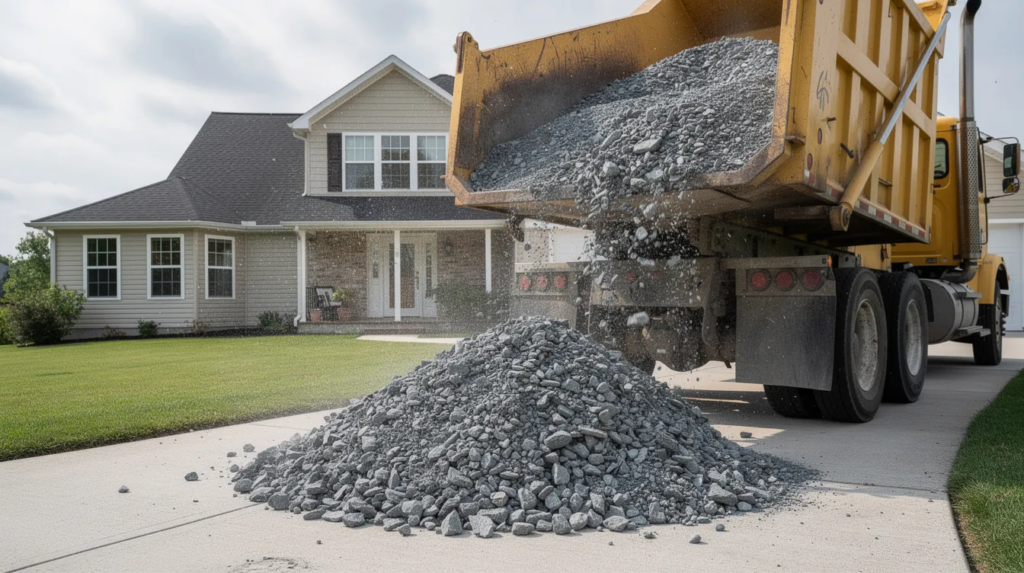
Most suppliers require minimum order quantities for dump truck delivery, often 5 to 10 tons or several cubic yards. Smaller loads usually cost more per ton. Fuel surcharges, access restrictions, and multiple-trip fees can add to the total. Ask about all fees upfront so you can budget accurately.
Key Questions to Ask Your Supplier
Before you place an order, ask these questions to make sure you are getting the right product for your project:
- What is the actual size range (in inches) for your “1-inch” or “#1” product?
- Is it crushed (angular) or natural (rounded)?
- Is it clean (washed) or does it contain fines?
- What is the weight per cubic yard for this material?
- Is this product suitable for my intended use (driveway surface, French drain, patio base)?
- What is the minimum order, and what are the delivery charges to my location?
These questions help you confirm the quality and suitability of the material before it shows up at your door.
Planning with the Gravel Calculator
Use the Gravel Calculator to prepare a supplier-ready estimate in cubic yards, cubic feet, US tons, bags, and optional cost before requesting quotes. Having your numbers ready makes it easier to compare per-ton, per-yard, and bag pricing across multiple suppliers.
Site Preparation and Scheduling
A few practical considerations before the truck arrives:
- Make sure there is enough space for a dump truck to access and unload safely
- Choose a delivery spot that avoids damaging lawns, walls, or septic fields
- Schedule deliveries during dry weather so you can grade and compact the material promptly
- Ensure proper subgrade grading and base compaction are done before placing the 1-inch stone
Regional and Specification Differences
Local DOT specs, subdivision rules, or engineer drawings may require specific gradations instead of generic “1-inch gravel.” For example, your driveway installation plan might call for #57 stone or 21AA limestone rather than a loosely defined “1-inch” product. Always confirm project requirements with your contractor or local building department before ordering.
Final Takeaway
One-inch gravel is a flexible, widely available aggregate that works well for driveways, drainage, landscaping, and base layers when matched to the right application. But final decisions on exact product, quantity, and installation details should always be confirmed with your local supplier or a qualified professional. Tools like the Gravel Calculator give you a strong planning foundation, but they are not a substitute for supplier-specific data on gradation, density, and pricing at your location.
Get your estimate, ask the right questions, and confirm before the truck rolls.