Table of Contents
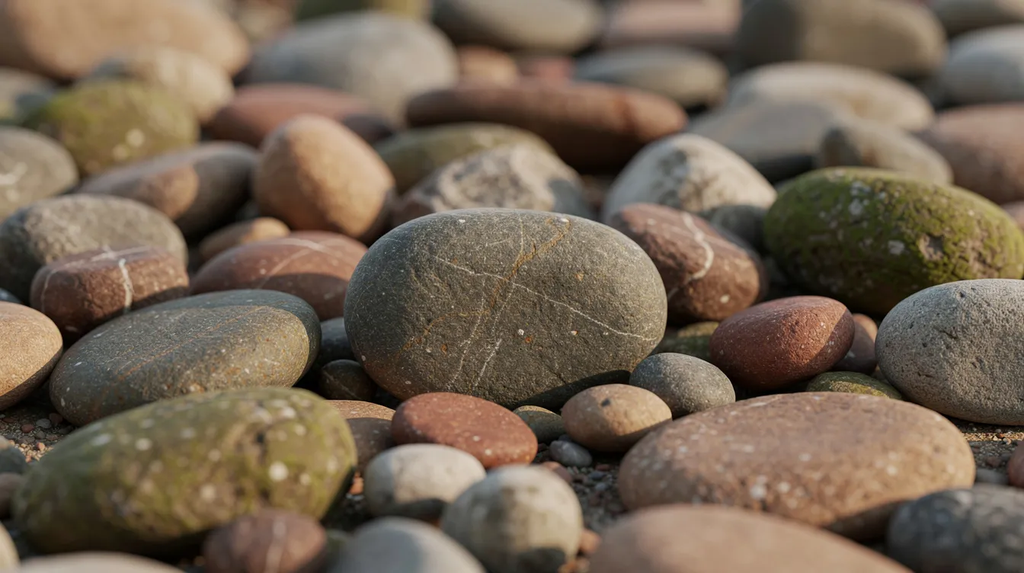
How much is river rock a yard? If you’re planning a landscaping project with river rock, find out before you place an order or browse your local landscape supply yard, so you know what you’re actually going to spend. This guide breaks down current pricing, shows you how to calculate the right quantity, and helps you avoid common ordering mistakes.
Quick Answer: River Rock Cost Per Cubic Yard in 2026
River rock costs between $45 and $140 per cubic yard for standard landscaping material (the smooth, rounded stones most homeowners buy in bulk) in 2026, according to Lawn Love (updated October 2026). HomeGuide lists a similar $50 to $160 per cubic yard, or $45 to $130 per ton.
Many suppliers quote river rock per ton instead of per cubic yard. One cubic yard weighs about 1.35 tons, so multiply a per-ton price by about 1.35 to compare it with a per-yard price. If you’re after polished decorative pebbles or premium colors like deep black or jade green, expect to pay much more: HomeGuide lists Mexican beach pebbles at $475–$800 per ton.
To find out exactly how much river rock your project needs, use the free Rock Calculator from Crushed Stone Calculator – just enter your project size and local price per yard.
River Rock Cost Breakdown: Per Yard, Per Ton, and Per Bag
Suppliers quote prices in different units depending on whether you’re buying in bulk or picking up bags at a retail store. Here’s what the numbers look like in 2026:
- Per cubic yard (bulk): $45–$140 for basic landscaping river rock (Lawn Love)
- Per ton (bulk): $45–$130 for standard river rocks (HomeGuide)
- Per 0.5 cubic foot bag (retail): about $6–$19 at big-box stores
One cubic yard equals 27 cubic feet, and one cubic yard of river rock usually weighs between 2,400 and 2,700 pounds, or about 1.20–1.35 tons, according to HomeGuide. This guide and our Rock Calculator use 1.35 tons per cubic yard, the top of that range, so you don’t come up short.
Buying river rock in bulk is far more economical than purchasing bags. It takes about 54 half-cubic-foot bags to equal one cubic yard. Ace Hardware lists a 0.5 cu ft bag of landscape rock at $5.99, and Home Depot’s Vigoro river pebbles work out to about $19 a bag on a 32-bag pallet (both checked November 2026). That’s about $325–$1,020 per cubic yard, several times what the same amount costs in bulk. Bulk pricing typically starts at 1–2 cubic yards.
Pea gravel sits at or below the low end of the range per cubic yard, while polished Mexican beach pebbles and specialty river rocks sit well above the high end. To convert between cubic yards and tons automatically, the Rock Calculator on Crushed Stone Calculator lets you enter length, width, and depth – it handles the rest.
River Rock Cost Estimator by Project Size
Total cost scales directly with project size and depth. More cubic yards means higher material, delivery, and labor costs. Here are typical 2026 scenarios (rock only, at $45–$140 per cubic yard, before the 10% extra):
- Small beds (100–150 sq ft at 2–3″ depth): about 0.6–1.4 cubic yards; materials ~$30–$195 depending on rock type
- Medium areas (250–400 sq ft at 2–3″ depth): about 1.5–3.7 cubic yards; materials ~$70–$520
- Larger spaces (600–800 sq ft at 3″ depth): about 5.6–7.4 cubic yards; materials ~$250–$1,040
A useful rule of thumb: 1 cubic yard of river rock covers about 108 square feet at 3″ deep, and a ton of river rock covers roughly 80 square feet at 3 inches deep (about 120 square feet at 2 inches). Landscape fabric, edging, and delivery are extra, so add them to your material-only cost.
Over about 1 cubic yard, ordering in bulk almost always wins on price versus bags. The savings only grow as your project gets larger.
How to Calculate How Many Cubic Yards of River Rock You Need
Getting the cubic yard calculation right means you won’t over-order and waste money or under-order and pay for a second delivery. Here’s the step-by-step method:
- Measure your project length and width in feet – measure length times width to get square footage.
- Decide on depth: 2–3″ for decorative cover, 3–4″+ for drainage or erosion control.
- Convert depth to feet (3″ = 0.25 ft, 4″ = 0.33 ft).
- Multiply: cubic feet = length × width × depth in feet.
- Divide by 27 to get cubic yards.
Example: A 10 ft × 10 ft garden bed at 3″ depth: 10 × 10 × 0.25 = 25 cubic feet. Divide by 27 = 0.93 cubic yards. Add 10% extra for transportation or installation loss, settling, and irregular shapes: 0.93 × 1.10 = about 1.02 cubic yards, so order about 1 cubic yard.
River rock weighs about 1.35 tons per cubic yard, so that order is about 1.38 tons (1.02 × 1.35). Smaller river rock like pea gravel packs tighter but weighs similarly per cubic yard, while chunkier stones leave more voids.
Rather than doing hand-math, you can use the Crushed Stone Calculator Rock Calculator – enter dimensions and depth, and instantly get cubic yards, tons, and a waste-adjusted order number.
What Affects River Rock Price Per Yard?
Not all river rock costs the same. Here are the main factors that push the price up or down.
Rock type and finish. Standard local natural stone in gray or brown is cheapest. Imported or polished pebbles – like black polished stones or Mexican beach pebbles – cost significantly more per cubic yard. Specialty colors and premium stones can significantly increase the cost.
Size. River rock ranges from small pebbles about 3/8 inch in diameter up to large cobbles. Smaller stones generally cost less than larger cobbles when purchasing river rock, because bigger sizes are harder to quarry, sort, and ship. Larger river rocks also need a deeper layer to cover the soil, so each ton covers less area. Size and color variations are two of the biggest drivers of price differences.
Location. Prices change a lot from region to region. Rock from a nearby quarry or river deposit costs less than rock trucked in from far away, so proximity to quarries or river deposits matters.
Project scope. A larger project size means more cubic yards, longer installation time, and potentially multiple truckloads. Added labor for removing old mulch, grading soil, or hauling material uphill can significantly impact the final price.
Get at least two local quotes, then plug the per-yard price into the calculator for a precise project estimate.
Typical Uses of River Rock and Recommended Depths
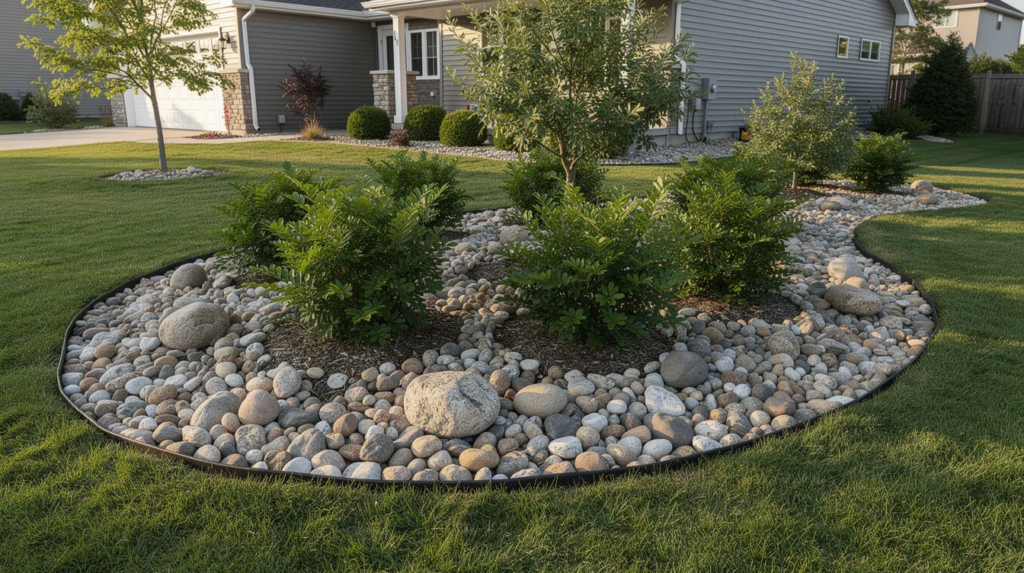
River rock is a versatile natural stone used across many landscape applications. Common river rock sizes include 1 to 3 inches for decorative work and 3 to 6 inches for functional uses. River rock is used for drainage, ground cover, and erosion control.
- Decorative ground cover: Around shrubs, trees, and garden beds as a low maintenance alternative to mulch – rock won’t decompose like organic material. Use 2–3″ depth to cover soil and suppress weeds, giving your landscape a clean natural look.
- Drainage: Most French drains use clean, washed No. 57 stone (see our French drain gravel guide). Rounded river rock works well at downspout outlets and splash areas. For drainage layers, use 3 inches or more of river rock to build functional channels and dry creek beds.
- Erosion control on slopes: Place larger cobbles and boulders over landscape fabric to stabilize soil on banks and slopes, adding natural beauty that withstands heavy rain.
- Water features and ponds: Use 1.5–3″ river rock around pond edges, fountains, and waterfalls. Deeper beds with mixed sizes help hide liners and control splashing. Larger river rocks are often used to line creek beds for a polished, decorative appearance.
- Pathways, walkways, patios, and borders: Pea gravel is often a better fit for walkways due to its smooth texture and lower cost, while chunkier river rock is ideal for borders and fire pits where you want a bolder design touch.
Both are sold in cubic yards and tons. Use the Rock Calculator for river rock and the Pea Gravel Calculator for pea gravel.
Pro Installation vs DIY: What You’ll Really Spend
Many homeowners can handle smaller river rock projects themselves, but larger jobs may justify hiring help.
DIY costs include:
- Material only (river rock by the cubic yard or ton)
- Landscape fabric, edging, basic tools (shovels, rakes, wheelbarrow)
- The rock for a small project around 100 sq ft at 2–3″ depth (0.6–0.9 cubic yards) costs about $30–$130 at $45–$140 per yard; fabric, edging, and any tool rental are extra
Professional installation typically adds:
- Labor at $40–$90 per hour, according to Lawn Love (HomeGuide lists $50–$100)
- Placing one ton (about 0.74 cubic yards) of river rock takes roughly 2 hours of labor – more if access is difficult
- Old material removal, grading, or debris hauling adds separate fees
Hire pros for large projects with 5+ cubic yards, heavy cobbles, or steep slopes where the job demands equipment. DIY makes sense for smaller beds, level ground, and smaller river rock or pea gravel that’s easy to spread by hand. Enhance your budget planning by determining cubic yards first, then request labor quotes knowing your exact material quantity.
Location, Delivery, and Using Crushed Stone Calculator
Regional pricing varies across the U.S. Areas close to quarries or river deposits deliver cheaper rock per cubic yard than regions relying on long-haul trucking.
HomeGuide puts typical river rock delivery fees at $30–$100, while Angi gives a wider $100–$600 range depending on how much you order. Common pricing structures include:
- Per-ton surcharge: about $5 to $10 per ton for the first 25 miles, plus $2–$8 per mile beyond that (HomeGuide)
- Hourly trucking: $65–$100 per hour
- Minimum-order requirements: often 1–3 cubic yards, which affects small projects
Rural properties far from suppliers may pay higher delivery charges even when material price per yard is low. Metropolitan areas can carry higher service costs overall. Always get a quote that separates material from delivery so you can find the real cost.
The Crushed Stone Calculator Rock Calculator fits directly into your planning workflow. Select your material, enter project dimensions in feet and desired depth in inches, and the calculator returns required cubic yards, tons, and a suggested overage for waste. Combine those results with at least one local supplier quote to build a realistic total budget.
Before you add anything to your cart or schedule a delivery, plug your numbers into the calculator. Knowing exactly how much river rock you need – in cubic yards and tons – keeps you from paying for material you don’t use or making an expensive second trip to the supply yard.