
Table of Contents
To fix gravel driveway potholes, clear out water and loose material, fill the hole with crushed stone that contains fines (such as crusher run or road base) in thin layers, compact each layer, and leave the patch slightly higher than the surface around it. Then fix the drainage, because potholes that hold water will come back.
This guide shows you how to find the cause, which gravel to buy, how to patch a pothole step by step, how much gravel you need, and when it is time to regrade instead. Our gravel calculator works out how much gravel or how many bags you need. If you are building a new driveway, see our gravel driveway installation guide.
Table of Contents
Quick Answer: How to Fix a Gravel Driveway Pothole
To fix potholes in a gravel driveway, use this quick repair sequence:
- Remove water, mud and loose stone until you reach firm material.
- Loosen the edges and break up the hard-packed material inside the hole so the new gravel bonds with the old surface.
- Fill with crushed stone that has fines (crusher run, road base or a similar dense-graded mix), not clean or rounded stone.
- Add thin layers and compact each one with a hand tamper or plate compactor.
- Finish slightly above the surface to allow for settling, then make sure water drains away from the spot.
Why Gravel Driveway Potholes Form
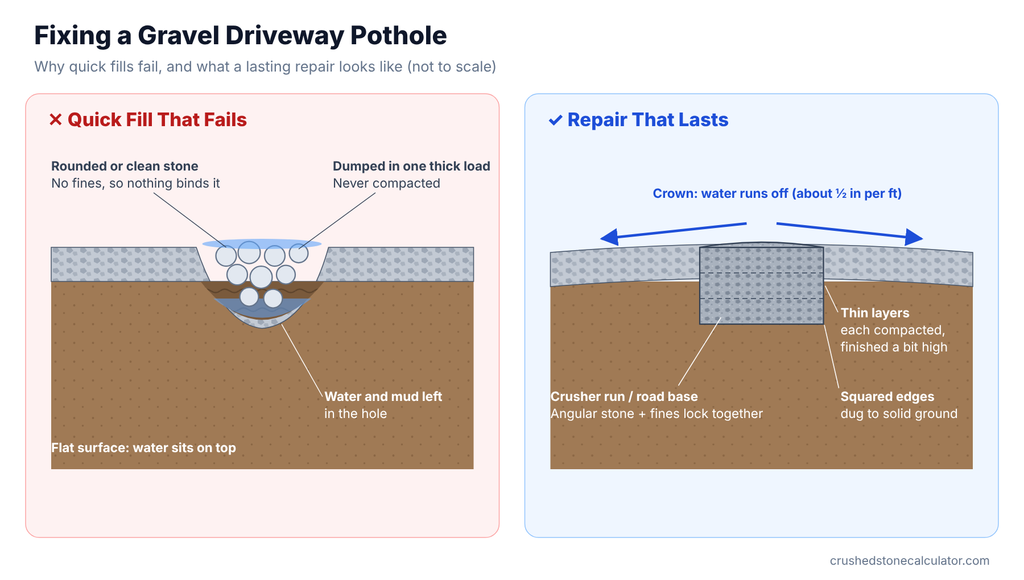
Potholes start where water sits on the surface, and most potholes begin when groundwater or poorly drained rainwater shifts the gravel before traffic worsens the spot. The FHWA Gravel Roads Construction and Maintenance Guide explains that traffic loosens surface gravel and pushes it aside, water left in the surface leads to rutting, and without a crown, potholes and ruts form. The usual causes on a driveway are:
- No crown or a low spot: water can’t run off, so it soaks in and softens the gravel.
- Gravel without fines: clean or rounded stone has nothing to bind it, so tires kick it out of the hole.
- Soft soil underneath: wet subgrade lets the stone sink, and the hole comes back.
- Freeze-thaw: water in the gravel freezes and expands, then the surface turns soft in spring.
- Traffic: heavy vehicles, turning and braking push stone aside, especially near the entrance.
Walk the driveway after rain. Note where water stands, where the ground stays soft and where gravel has been pushed onto the edges. A few holes in a firm driveway are a simple patch job. Many holes, ruts and soft spots across a section point to a drainage or base problem. The best time for repair is July to September, especially in Western Washington.
Best Crushed Gravel for Pothole Repair
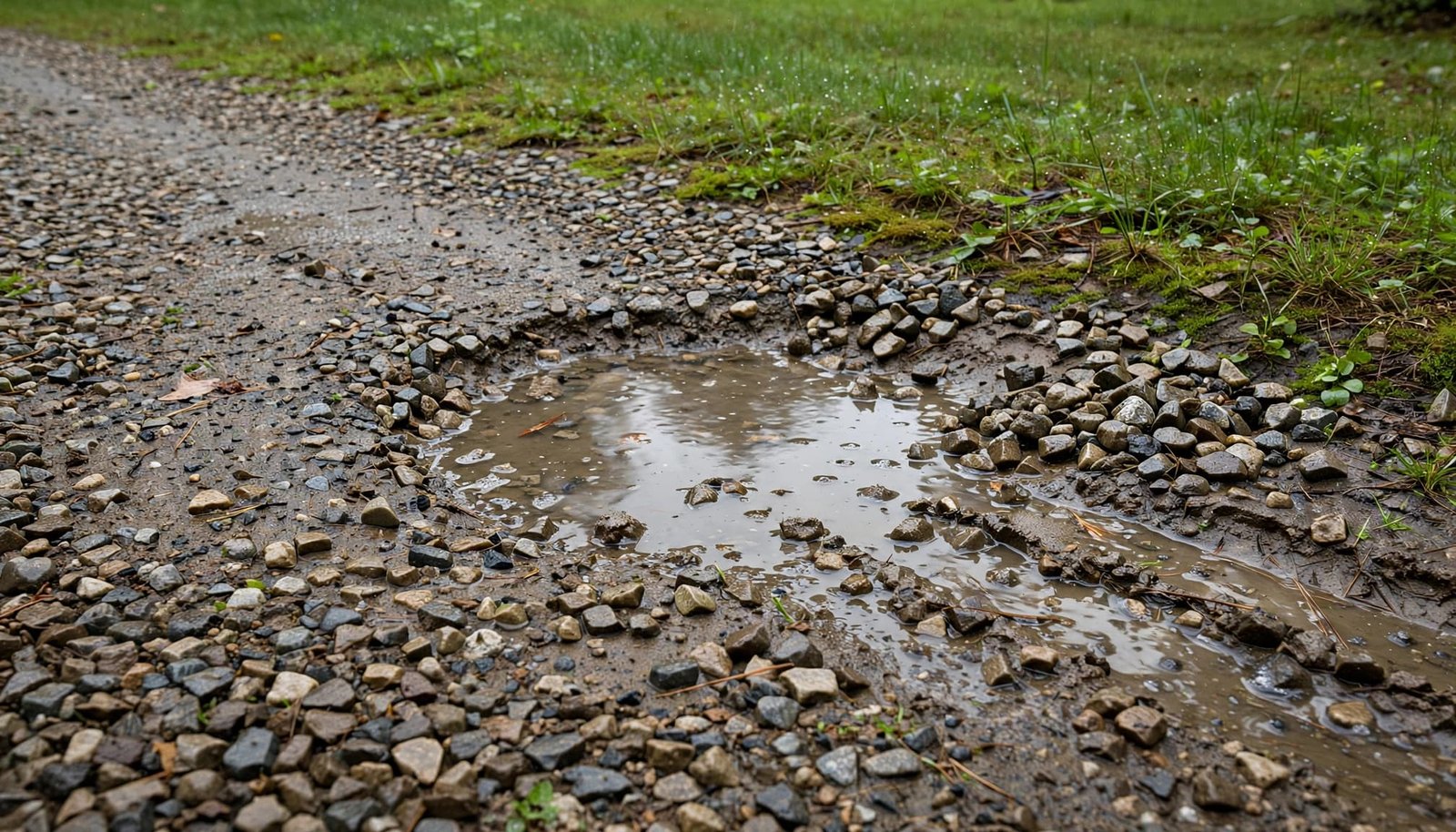
The FHWA guide puts it simply: good gravel needs the right blend of stone, sand and fines. In a driveway patch, that aggregate works because the sand fills the gaps between stones, and the fines bind everything together when you compact it. That is why the stone you use matters more than its color or price.
| Material | Has Fines? | Good for Patching? | Why |
|---|---|---|---|
| Crusher run / road base | Yes | Yes, best choice | Angular crushed stone plus fines locks together tightly and packs into a hard patch |
| Dense-graded base such as 22A (Michigan) or Class 5 (Minnesota) | Yes | Yes | Regional names for the same idea: stone and fines that lock together |
| Bagged paver base | Usually | Good for small patches | Often crushed stone with fines; check the bag |
| #57 stone (clean) | No | Not for the surface | Stones of one size don’t lock together and get kicked out by tires |
| Pea gravel or river rock | No | No | Rounded stones roll and won’t stay in the hole |
Match the patch to your driveway when you can. If your driveway has a clean stone top layer, fill most of the hole with a dense-graded mix and finish the top with the same stone so the patch blends in. For deep repairs, put coarse aggregate at the bottom before the denser top layer. For more on driveway stone, see our guide to the best gravel for driveways.
How to Fix Gravel Driveway Potholes Step by Step
You need a shovel, a rake, a hand tamper or rented plate compactor, a wheelbarrow and your repair gravel; for bigger fixes, the best tools are whatever you already have that can both rip and grade. Work when the ground is thawed and not soaked.
1. Clear the Hole
Bail out standing water. Shovel out mud, leaves, loose gravel, and any soft dirt until you reach a firm, compacted base, then loosen and tear up the area around the hole to at least double the visible pothole size before moving on. Lowe’s repair guide says to dig deep enough to reach solid material, but not so deep that you weaken the area around the hole.
2. Loosen and Square Up the Edges
Break the hard-packed gravel at the bottom and around the edge of the pothole, including the firm edges, rather than just loosening the top inch with a pick or the corner of a shovel. This helps disperse compaction so the pothole does not quickly return. Straight, firm sides hold the patch better than a smooth bowl, and the loosened stone helps the new gravel bond. If you keep finding soft, muddy soil, stop and deal with the water problem first. On larger driveways, scarifiers on a box blade should dig deep enough to break up potholes.
3. Fill in Thin Layers and Compact Each One
Add a thin layer of repair gravel, spread it evenly, and compact it before adding more, bringing the fill up to the final grade as you pack each layer. A thick layer only gets packed on top and settles later. As a guide, Unilock’s paver installation guide compacts gravel base with a plate compactor in 2- to 3-inch layers. With a hand tamper, keep layers on the thin side. Tamp from the edges toward the center.
Deep holes can start with coarser stone, then be topped with smaller material that will pack tightly.
Slightly damp gravel compacts better than dry gravel with stone dust or fine dust in the mix. Lowe’s suggests lightly wetting the patch to help it settle, but avoid soaking it.
4. Overfill Slightly and Finish
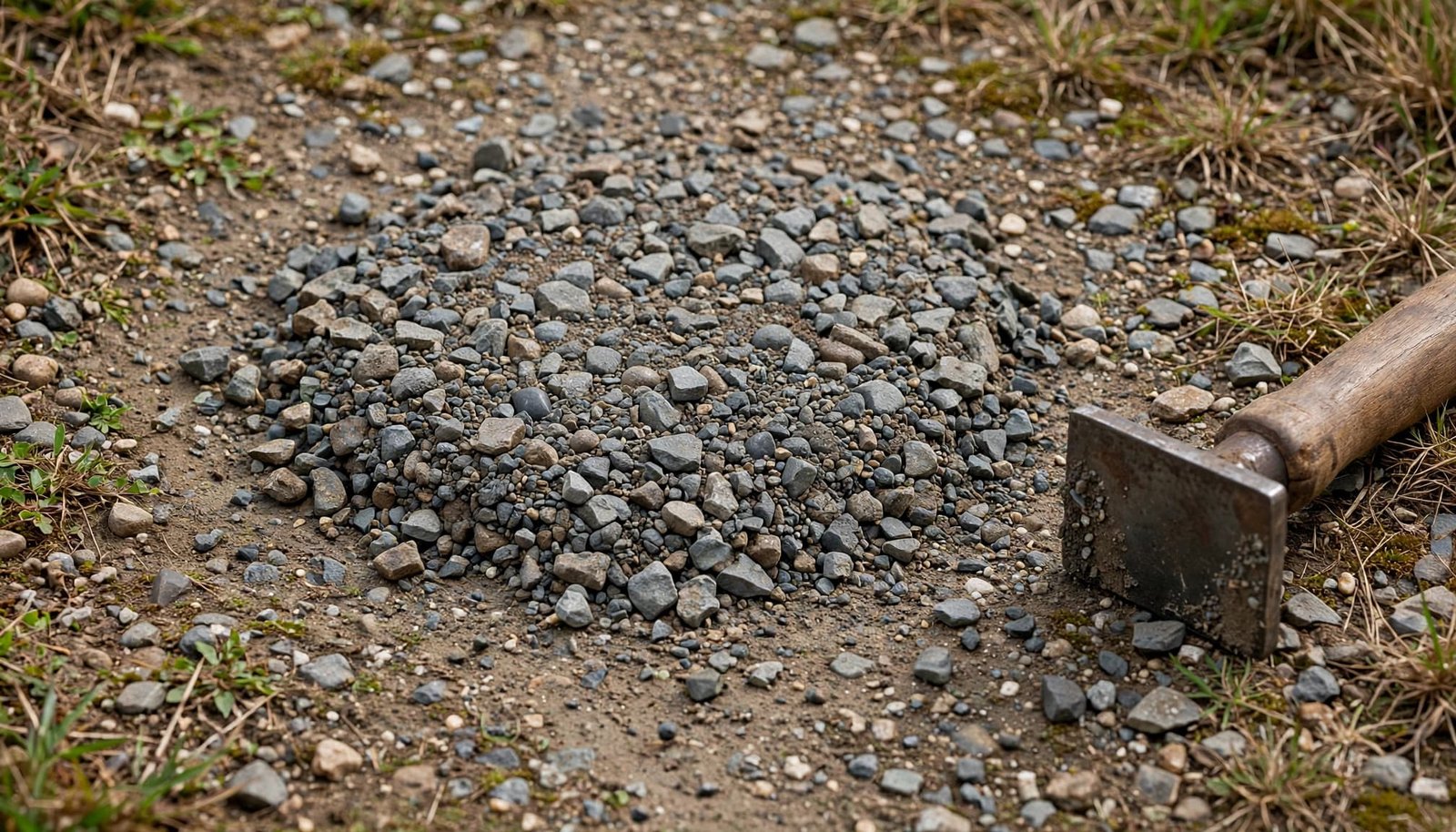
Bring the last layer a little higher than the surrounding surface so it ends up level after traffic packs it down. Don’t leave a big hump, because that can trap water on the uphill side. Rake loose stone back onto the driveway, not into the lawn.
5. Check the Patch
Lowe’s recommends checking the repair every couple of weeks, since a quick fill can look fixed for a few weeks before the pothole returns if the underlying problem was not corrected. If it dips, add a little more gravel and compact it again. A patch that keeps sinking or holding water means the problem is underneath, not in the gravel you added.
Tip: if you only dump gravel into the hole without compacting it, rain and traffic will usually push it right back out.
How Much Gravel You Need per Pothole
Measure each cleaned-out hole, then use:
Cubic feet = length (ft) × width (ft) × depth (in) ÷ 12
Crusher run weighs about 1.5 US tons per cubic yard (our calculator preset), which is about 111 lb per cubic foot. So one 50-lb bag fills about 0.45 cubic feet.
| Example | Volume | Weight | 50-lb Bags |
|---|---|---|---|
| One pothole, 2 ft × 1½ ft, 4 in deep | 1.0 cu ft | About 111 lb | 2.2, so buy 3 |
| Five potholes that size | 5.0 cu ft | About 556 lb | 11.1, so buy 12 |
Buy a little extra as an order allowance for overfilling, spills and uneven holes; our guide to the waste factor for stone projects explains how much. For bigger jobs, bulk gravel by the ton is easier than dozens of bags. The gravel calculator works out volume, weight and bags from your measurements, and our guide to how much a yard of gravel weighs lists weights for other stone.
When to Regrade the Entire Driveway Instead of Patching
Patching works for a few separate holes. If potholes cover a whole section, the crown is gone, or you have deep ruts, patching one hole at a time won’t last. Even on public gravel roads, the FHWA guide says that where potholes become severe, the gravel needs to be cut out and relaid rather than patched.
Regrading means loosening the surface first, then grading it back to a crown, adding new gravel where it is thin, and compacting the whole area. When there is a good base, a box blade, land plane, or similar tool can handle this kind of gravel driveway maintenance on longer driveways. A TR3 Rake uses scarifier teeth for pothole repair, and gauge wheels help keep a consistent working depth. A Ditch Witch can be used for pothole repairs, though it is usually not the ideal tool compared with equipment made to rip and grade. In many cases, it makes more sense to rework the entire driveway surface than to keep filling individual holes. If the base is soft or the driveway stays wet, a contractor may need to fix drainage or rebuild the base first.
Gravel Driveway Maintenance: How to Keep Potholes From Coming Back
Restore the Crown
A crown keeps the center of the driveway higher so water runs off both sides, and when runoff is managed this way, well-graded aggregate can compact very hard, in some cases nearly like concrete. The FHWA guide recommends about ½ inch of crown per foot of width (about 4%) and says not to exceed 6%. On a 12-foot driveway with the crown in the middle, that puts the edges about 3 inches lower than the center. A flat or dished driveway holds water, and that water makes new potholes.
Give Water Somewhere to Go
Keep ditches, swales and culvert openings clear of gravel, leaves and silt, because when water has nowhere to go it can displace aggregate and even dirt from the surface. Don’t let gravel pile up into ridges along the edges, and where gravel meets asphalt, avoid a raised lip that traps water at the transition. If one spot stays wet even with a good crown, a French drain may help; see our guide to French drain gravel.
Fall and Spring Checklist
- Fall: patch holes, restore the crown and clear ditches before the ground freezes, and maintain the driveway instead of waiting for pot holes to spread.
- Winter: plow carefully with the blade slightly raised so you don’t scrape off gravel.
- Spring: wait until the ground firms up, then drag the surface back into shape or back-drag loose gravel from the edges, patch new holes and top up thin areas.
- After heavy rain: look for standing water and fix low spots early.
Gravel Driveway Pothole FAQ
Can you just fill a pothole with gravel?
You can, but loose gravel on its own usually washes or gets kicked out. Use crushed stone with fines, put it in thin layers and compact each one. Clear out water and soft material first.
What is the best gravel for potholes?
Crusher run or another dense-graded road base with fines, such as 22A or Class 5. The mix of angular stone and fines packs into a hard patch. Avoid clean #57 stone, pea gravel and river rock for the surface of a patch.
Can you fix gravel driveway potholes in winter?
Not properly while the ground is frozen or soaked, because the gravel won’t compact. For safety, you can fill a deep hole temporarily and do a proper repair once the ground thaws and firms up.
How often should you regrade a gravel driveway?
There is no fixed schedule. It depends on traffic, weather and how well the driveway drains. Check it each fall and spring, and regrade when potholes spread, ruts form or the crown flattens out. If the repaired spots and the rest of the driveway are failing the same way, regrade instead of patching isolated holes.
Fix the Water, Then the Hole
Lasting pothole repair comes down to three things: clean the hole down to firm material, fill it with crushed stone and fines in compacted layers, and give water a way off the driveway. Do that, and you can fix gravel driveway potholes once instead of every spring.
Last reviewed: October 2026