Table of Contents
River rock is smooth, rounded stone shaped by years of water erosion in rivers and streams. Unlike crushed or angular gravel, these stones have soft edges and a natural polish that makes them a go-to material for everything from garden beds to drainage channels. River rock can be harvested from river beds and banks, and it comes in a wide range of smooth sizes suited for various tasks, from pea-sized pieces smaller than a dime to boulders that weigh hundreds of pounds.
Different sizes of river rock have specific applications in landscaping and construction. The size you choose affects how the finished project looks, how well it drains, how stable the stones stay under foot traffic or water flow, and what the total cost will be. Making a size decision before you start ordering prevents expensive mistakes: too-small rock washes out of a drainage swale, too-large rock turns a walkway into an obstacle course.
River rocks are used in pathways, decorative features, and drainage applications across U.S. residential properties. Common projects include:
- Ground cover around foundations and shrubs
- French drains and downspout outlets
- Dry creek beds and rain garden swales
- Pool surrounds and fire pit borders
- Decorative mulch alternatives in flower beds
Once you know which size fits your project, the Crushed Stone Calculator can estimate how many cubic yards and tons you need based on your area dimensions and chosen depth, so you order once and avoid a second delivery run.
Common River Rock Sizes and What They’re Used For
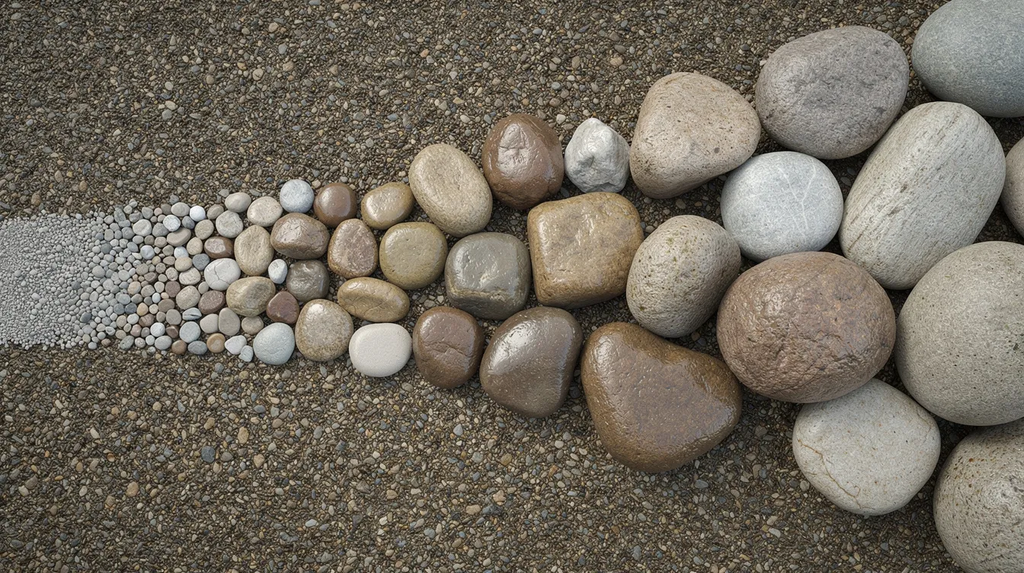
Suppliers describe river rock by approximate diameter in inches or by common names like “pea gravel,” “egg rock,” or “1-3 inch river rock.” Some construction aggregates follow specified sieve gradations; for a general reference, see this gravel size chart. A decorative river rock label does not by itself establish compliance with ASTM D448. Because these stones are naturally shaped, no two pieces are identical. Ask the supplier what its advertised size range means and what variation to expect. The small, medium, and large categories below are comparison groups for this guide, not universal supplier grades.
River rock sizes typically range from 1 inch to 3 inches for general landscape use, but the full spectrum runs from fine pea gravel all the way up to boulders. Common river rock sizes include 3/4 inch and 1 inch, which land in the sweet spot between decorative appeal and functional drainage. Aggregate size affects strength, durability, and workability of materials in both landscaping and construction contexts, so picking the right range matters beyond just appearance. Here are the main categories and what each one does well.
Pea gravel / pea river rock (1/8″ to 3/8″)
Pea gravel is about 1/8 inch to 3/8 inch in size, roughly the diameter of a green pea. It is commonly used for walkways, some playground surfacing systems, dog runs, and filling gaps between pavers. Comfortable underfoot. Light enough to rake smooth. The tradeoff: pea gravel migrates easily under rain or foot traffic, so it needs solid edging (metal, stone, or plastic) to stay in place. On slopes or in runoff paths, it can migrate or wash out. For planning, the Crushed Stone Calculator currently uses about 1.30 tons per cubic yard for pea gravel, but actual bulk density varies by supplier, gradation, and moisture.
Small river rock (1/2″ to 1″)
Small river rocks range from 1/2 inch to 1 inch in size. These work for decorative beds, light drainage around AC units and foundations, and as a visual transition between mulch and hardscape. Smaller river rocks work well as decorative ground cover and improve foot traffic areas where pea gravel would scatter too freely. More stable than pea gravel, less bulky than medium stone. Still manageable by hand with a shovel and wheelbarrow.
Medium river rock (1″ to 2″)
This is one of the most popular landscape sizes. Stones in this range, sometimes called “egg rock,” show off their colors and texture while staying put in most bed applications. Use them for flower beds, around shrubs, pool edging, and moderate drainage features like clean stone fill in French drains. Medium river rock is generally less prone to scattering than pea gravel because the pieces are larger and heavier, though edging may still help contain it. Not comfortable barefoot; fine for areas with occasional foot traffic in shoes.
Large river rock (2″ to 5″)
Large river rocks range from 2 inches to 5 inches in size. These are commonly used in dry creek beds, swales, landscape beds, and some erosion-control features, but the right stone size for flowing water depends on site conditions and runoff velocity. Larger river rocks are used for erosion control and visual accents. They create bold visual contrast in landscape beds and look natural along drainage channels. Walking on them is awkward at best; keep them out of paths and barefoot zones. Heavier to haul and place, typically requiring a wheelbarrow or equipment for larger quantities.
Cobbles and boulders (5″ and up)
Very large stones or boulders are 5 inches and up in size. These serve as focal points, border accents, retaining features, or heavy erosion barriers at drainage outlets. River boulders are used in natural landscape settings where visual weight and permanence matter. Suppliers often sell cobbles and boulders by the piece or by the ton rather than by the cubic yard. For individually placed cobbles and boulders, coverage depends heavily on stone dimensions and the planned layout. Expect to need equipment for placement; a single 12-inch river boulder can weigh 50 to 80 pounds.
A note on names: “Mexican beach pebbles” usually refers to uniformly smooth, polished stones in the 1- to 3-inch range, sold at a premium for their consistent shape and dark colors. “River pebbles” and “egg rock” are regional labels for medium rounded stone. These names overlap between suppliers, so always ask for a sample bucket or photo before adding products to your cart. What one yard calls “1-3 inch river rock,” another may grade differently.
Rounded natural gravel can be used as concrete aggregate when it meets the required mix specifications, although angular crushed stone generally provides stronger mechanical bond with the cement paste. For landscape and drainage work, gradation and fines content are more important to water movement than roundness alone.
How to Choose the Right River Rock Size for Different Projects
The best size of river rock depends on the application, foot traffic, and drainage needs of the specific area. A stone that is perfect for a garden bed will fail in a high-flow drainage channel. Here is how to match size to project type.
- Walkways and patios: Choose pea gravel (3/8″) or small river rock up to 1/2 inch. These sizes can be comfortable underfoot when properly contained, but rounded gravel does not compact or interlock like angular crushed stone. Install metal or plastic edging to prevent scatter, and lay the stone over a properly prepared gravel base to help keep the surface level. Stones larger than about 3/4 inch generally create more uneven footing.
- Flower beds and foundation plantings: 1- to 2-inch river rock is the standard recommendation here. It showcases stone color, stays in place without edging in most flat beds, and pairs well with landscape fabric underneath. River rocks are popular for retaining moisture and suppressing weeds in garden beds, making them a durable alternative to wood mulch that won’t decompose. Avoid very small sizes near lawn edges; pea gravel migrates into grass and becomes a mower hazard.
- French drains and downspout outlets: A range around 3/4-inch to 1-1/2-inch stone is commonly used. Clean, washed stone allows water to move through the voids between particles, while fines can migrate into those voids and reduce drainage over time. For details on selecting drain-specific stone, see our French drain gravel guide. Washed stone with minimal fines or dust is generally preferred for drainage applications.
- Dry creek beds and swales: Combine medium (1-2 inch) and large (2-3 inch) river rock for the bed, with occasional cobbles or small boulders placed at bends and transitions to break water flow. This mix mimics a natural streambed and reduces washout during heavy rain. Larger river rocks enhance drainage in landscaping applications by creating wider channels between stones for runoff. Layer landscape fabric beneath the rock to prevent soil from migrating upward.
- Erosion control on slopes: Stone size should match the slope, expected runoff, soil conditions, and water flow. Steeper grades or high-flow areas may require larger stone or engineered riprap rather than decorative river rock. For steep, unstable, or high-flow areas, consult a landscape contractor or engineer before choosing material; geotextile or other filter and bedding materials may be needed as part of the installation.
- Pool areas and barefoot zones: If you use loose river rock in poolside or barefoot areas, smoother, smaller sizes such as pea gravel or small river rock are generally more comfortable underfoot than larger stone. Loose stone close to the coping can be kicked or washed into the pool. As a practical planning example, some pool landscapes keep the first 12 to 18 inches beside the coping as a simple, clear zone, but the appropriate distance depends on the pool design and surrounding layout. Use edging or a fixed hardscape transition to help contain loose stone. Dark-colored stones can absorb more solar heat and may become hotter underfoot than lighter-colored stones in full sun.
- Maintenance tradeoffs: Smaller rock is easier to rake smooth and blow leaves off of, but it shifts under foot traffic and rain. Larger rock holds its position but traps leaves in the gaps between stones, making cleanup harder. Weeding among cobbles requires hand-pulling or careful herbicide application because rakes and hoes catch on the stone.
Before you order, ask your supplier two questions: “Can I see a sample of your 1-2 inch river rock?” and “Is this washed or unwashed?” Regional naming varies enough that trusting a label alone can lead to a mismatch between what you planned and what arrives on the truck. Once you confirm the size and depth you need, use the Crushed Stone Calculator to generate a volume and weight estimate.
Estimating Quantity, Coverage, and Cost by River Rock Size
Different sizes of river rock may require different installed depths or placement methods, but at the same average depth, one cubic yard covers the same area regardless of stone size. Coverage per ton can vary with the product’s bulk density. Understanding this relationship before you request a price quote helps prevent both over-ordering (wasted money) and under-ordering (a second delivery fee).
Coverage rules of thumb at 2-inch depth:
- Pea gravel and small river rock (up to 3/4 inch): at a uniform 2-inch average depth, one cubic yard covers about 162 square feet.
- Medium river rock (1-2 inch): at the same uniform 2-inch average depth, one cubic yard also covers about 162 square feet.
- Large river rock (2-5 inch): a 2-inch layer may not be practical for stones this large, so calculate coverage using the actual planned installed depth.
- Cobbles and boulders: when used as individual accent pieces, these are better estimated from the planned layout and the number or dimensions of the stones.
As depth increases, coverage per cubic yard decreases: at 3 inches deep, one cubic yard covers about 108 square feet, and at 4 inches deep, about 81 square feet. Depth is the single biggest factor in total volume, so decide on it before requesting quotes. Our guide on how to calculate crushed stone quantity walks through the math step by step.
Converting between cubic yards and tons: River rock does not have one universal weight per cubic yard. Bulk density varies by source, gradation, moisture, and supplier, so use your supplier’s stated density when available. For planning, the Crushed Stone Calculator uses material-specific estimating densities; pea gravel is currently estimated at about 1.30 tons per cubic yard. These densities let you translate a volume estimate into an estimated weight order, which is how many bulk suppliers quote aggregate. For a deeper explanation of that conversion, see cubic yards vs. tons for gravel.
Rough U.S. bulk price ranges before delivery:
| Size Category | Approximate Price Per Ton |
|---|---|
| Pea gravel | $30 to $90 |
| Medium river rock (1-2″) | $80 to $220 |
| Large river rock / cobbles | $85 to $220+ |
| Premium (Mexican beach pebbles) | $350 to $750+ |
These ranges shift by region, supplier, and color. For broader context on aggregate pricing, see our crushed stone cost per ton breakdown. Specialty stones with uniform shape and specific colors command a premium because of sorting and sourcing costs.
In construction contexts beyond landscaping, both fine and coarse aggregates are important components of concrete mixes. Aggregate size, gradation, shape, strength, and surface texture all affect workability and concrete performance. Rounded natural gravel can be used as concrete aggregate when it meets the required specifications; its smooth shape can improve workability, while more angular crushed aggregate generally provides stronger mechanical bond with the cement paste. Understanding these differences helps when comparing products at a supply yard.
Waste factor: If you want a buffer for measurement uncertainty, irregular edges, low spots, or handling loss, consider adding 5 to 10% extra material. Use a larger allowance only when your project conditions or supplier guidance justify it rather than automatically adding a fixed percentage for slopes or dry creek beds.
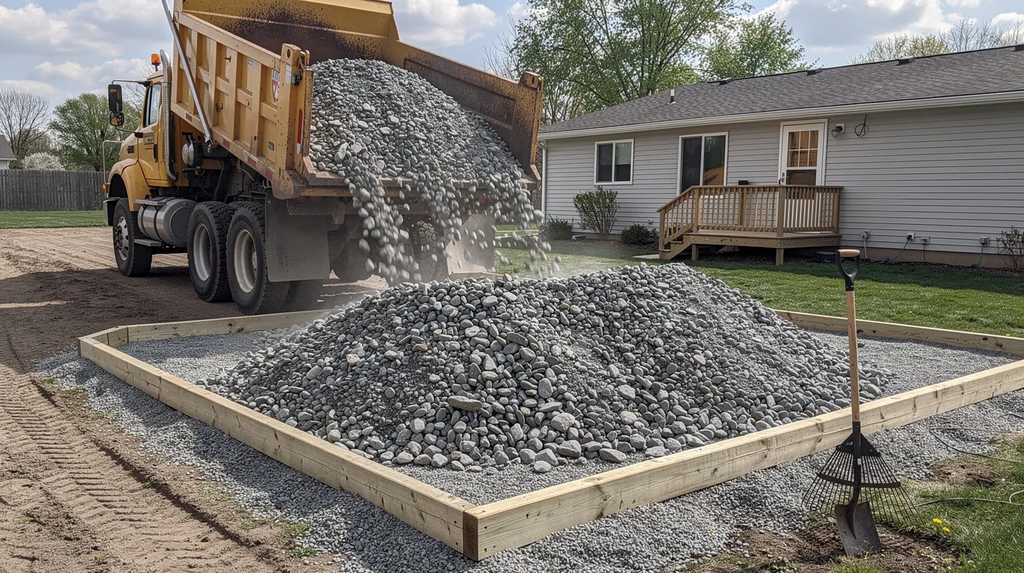
Delivery logistics: Larger rock sizes increase per-piece weight and often require a dump truck with clear access to your property. For example, some full aggregate truckloads carry around 15 to 20 tons, although actual capacity varies by truck type, material, supplier, and local weight limits. A full load may cost less per ton than a partial load because the delivery cost is spread over more material. Protect your driveway surface if the truck will dump directly; large stones dropped from height can crack asphalt or concrete. For smaller orders, some suppliers sell by the bag or let you load a pickup at the yard.
Before you call a supplier:
- Enter your project shape (rectangular, circular, or triangular), dimensions in feet, and chosen depth in inches into the Crushed Stone Calculator to get estimated cubic yards, tons, and optional cost
- Confirm that the supplier’s listed size (e.g., “1-2 inch river rock”) matches what you planned for when making your quantity estimate; a different actual size may affect the installed depth you need and the price per square foot.
- Ask about delivery fees, minimum order quantities, and whether the stone is washed or contains fines
Choosing the right river rock size is the first decision. The amount to order and total project cost also depend on your project dimensions, installed depth, material density, supplier pricing, and delivery. Get the size right, let the calculator handle the math, and you will order with confidence instead of guesswork.