Table of Contents
If you are planning a driveway, private road, or parking area, you have probably seen “Class 5 gravel” on supplier price sheets or contractor quotes. But what exactly is it, and is it the right fit for your project? This guide breaks down what class five gravel is, how it varies by region, when to use it, how it compares with other options, and how to estimate the right amount before ordering.
Quick Answer: What Is Class Five Gravel and When Should You Use It?
Class 5 gravel is a well-graded, compactable base material commonly used under driveways, gravel roads, and parking areas across the United States. It contains a balanced mix of crushed rock and sand, blended with a small percentage of fine particles that help the material lock together when compacted. The result is a firm base with strong load-bearing capacity that requires proper grading to manage water runoff.
“Class 5” is a grading and specification label, often originating from a state DOT or county road standard. It is not a single nationwide product or brand. The exact gradation, stone type, and particle sizes are supplier-specific and should always be confirmed with your local quarry or aggregate yard.
Common uses include:
- Residential driveways and walkways
- Private gravel roads and township roads
- Parking areas and parking pads (RV pads, boat storage, extra car spots)
- Shed foundations and patio bases
- Base layers under asphalt or pavers
Class 5 gravel is often an excellent choice for many residential and commercial projects because it is cost-effective for construction and landscaping work. Before ordering, you can use the Gravel Calculator to estimate cubic yards, tons, and rough cost so you are prepared when calling for quotes on delivered material.
How Class Five Gravel Is Defined (And Why It Varies by Region)
“Class Five” is often part of a state, city, county, or DOT aggregate specification. For example, MnDOT Specification 3138 covers aggregate for surface and base courses, and many Minnesota city specifications refer to MnDOT 3138 Class 5 aggregate base. South Dakota-style Class 5 base course specifications may use their own gradation tables and local requirements. Wisconsin and other Upper Midwest states may use similar dense-graded base materials under different names.
Some regions say “Class 5 gravel,” others say “Class 5 aggregate,” “Class 5 base,” or “Class Five limestone.” Neighbors might just call it “road bases” or “driveway base.” Class 5 gravel is commonly specified for roads, driveways, and foundations in the Upper Midwest, but similar products exist under different names in other states.
In upper Midwest states, Class 5 is commonly a ¾-inch minus blend with enough fines to lock together under compaction. The source materials may include limestone, granite, processed pit gravel, or recycled asphalt where permitted by the applicable specification and are commonly used in road construction. Always request the current Class 5 spec or product sheet from your own supplier, because requirements can change over time.
Typical Composition of Class Five Gravel
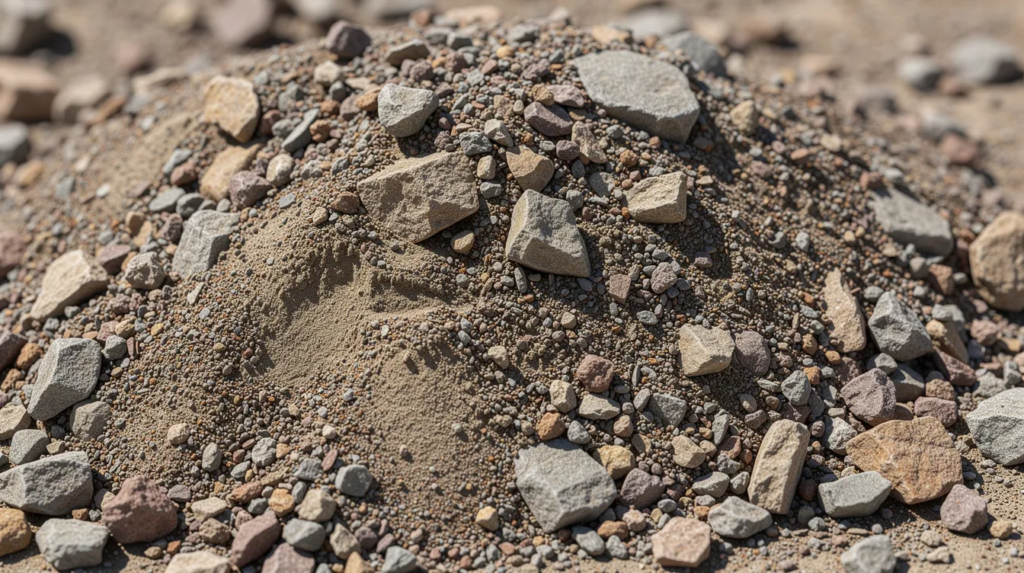
Most Class 5 products are “well-graded,” meaning they include a range of particle sizes from coarse crushed rock down to stone dust and clay fines. Class 5 gravel consists of graded coarse aggregate, sand, and fines in proportions designed so the varied particle sizes help the material interlock and form a stable foundation.
Class 5 gravel’s maximum stone size varies by specification; some Class 5 base specifications allow material up to 1½ inches. It typically features stones ranging from ¾ inch to dust, with fine particles passing the No. 200 sieve commonly limited to about 3–12% by weight in many state specs. This controlled amount of fines acts as a binder so the material can compact tightly to create a stable surface, although the fines can restrict water movement.
The top stone size and fines percentage may differ depending on whether the supplier uses crushed limestone, granite, or mixed gravel. Suppliers may also produce Class 5 in various sizes depending on local spec. This affects color, hardness, and long-term performance. Ask your supplier whether their Class 5 is a limestone class, granite-based product, or pit-run rock, because each behaves slightly differently under traffic and weather.
Limestone Class Five vs Other Crushed Stone Types
Crushed limestone is one of the most common source materials for Class 5 in areas with accessible quarries. A limestone class version typically compacts very firmly and produces a lighter-colored, slightly softer aggregate. For a deeper comparison of how these stone types differ in cost, strength, and best uses, see our limestone vs granite gravel guide.
Granite-based Class 5 may offer higher long-term hardness and a different color palette, which can matter for visual appeal on exposed driveways and parking pads. Some regions sell multiple Class 5 options side by side: limestone Class 5, granite Class 5, or recycled “Class 5 recycle” that mimics the same gradation using crushed concrete.
Some suppliers also sell other local base classes, such as Class 1, Class 2, or recycled base products. These names can vary by state and supplier, so do not assume one class is automatically stronger, cleaner, or better-draining than another without checking the gradation chart and intended use. For residential driveways, Class 5 is commonly chosen because it is widely available as a compactable base material in many Upper Midwest markets.
If appearance matters for your specific project, ask local suppliers for small sample buckets or photos before ordering several tons of all delivered material.
Common Uses in Residential and Commercial Projects: Driveways, Roads, and Parking Areas
Class 5 is designed as a base material, not usually the final decorative surface layer, even though some rural driveways and township gravel roads leave it exposed.
- Under asphalt driveways, 4–8 inches of compacted Class 5 is commonly used as the structural base in many residential installations. Our gravel driveway installation guide covers layer-by-layer depth recommendations.
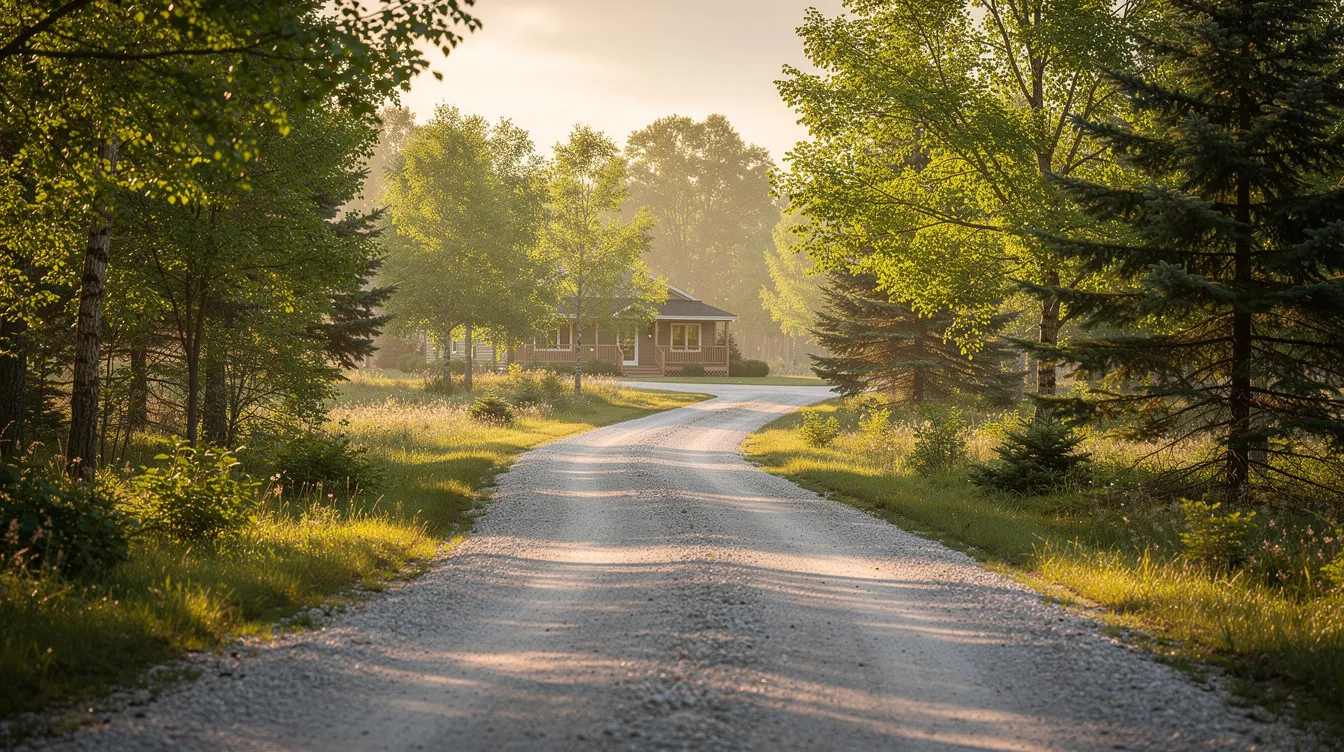
- On pure gravel roads and private drives, Class 5 forms the structural base and sometimes the running surface under car and truck traffic. It is ideal for driveways and paths where a solid base is needed without paving.
- Parking areas and parking pads for RVs, boats, or extra vehicles often use 6–12 inches of compacted Class 5 to support heavy loads when properly graded and compacted, with greater depth often needed where heavy vehicle traffic is expected.
- Lighter-duty uses include small shed pads and bases beneath patios and similar outdoor projects, where Class 5 creates a solid foundation for pavers, concrete, or decorative gravel on top and can also provide solid footing.
Class 5 is also commonly used as a base layer under asphalt for parking lots and residential driveway projects across the country, and many homeowners also use it for a long lasting surface when it is installed correctly and topped appropriately.
Class Five Gravel vs Other Base Materials
Class 5 is one of several compactable base choices. The right gravel depends on climate, load, and budget.
| Material | Fines Content | Compaction | Drainage | Typical Use |
|---|---|---|---|---|
| Class 5 gravel | Moderate (3–12%) | Excellent | Variable; fines can restrict drainage | Driveway base, road base |
| Crusher run / ¾” minus | Similar | Excellent | Variable; fines can restrict drainage | General base (generic term) |
| Clean washed ¾” rock | None | Poor | Excellent | Drainage layers, French drains |
| 22A gravel | Varies by state | Excellent | Good | Regional base equivalent |
| Recycled asphalt (RAP) | Low–moderate | Good–excellent | Moderate | Budget driveways |
Crusher run is very similar to Class 5 in concept: it is a well-graded mix of crushed stone with fines. The main differences are that Class 5 is usually tied to a formal local spec, while crusher run is more of a generic yard term. The key differences with clean washed gravel, like No. 57 stone, are that it improves water flow but does not compact into a tight, smooth base the way Class 5 does. For drainage-only applications like French drains, clean rock is the right call.
Other options include 22A gravel, Class 2 base, and various regional base gradations. The naming changes by state even when the function is similar. Ask your supplier which option is the right base material under local codes and the right material for the job.
Recycled Options: Recycled Asphalt and Class 5 Recycle
Many suppliers now offer recycled base materials that perform similarly to Class 5 but use reclaimed sources.
Recycled asphalt (RAP) is milled from old roads and parking lots, then crushed and screened into a compactable base. It can firm up into a semi-bound, more solid surface in warm weather, making it popular for rural driveways. It often sheds less dust than virgin aggregate.
“Class 5 recycle” typically uses crushed concrete or mixed demolition material graded to imitate standard Class 5 particle sizes. Some blends also incorporate recycled concrete alongside natural aggregate, and crushed concrete is often about 15–30% cheaper than Class 5 gravel.
Pros and cons of recycled options:
- Recycled aggregates reduce landfill waste and lower costs compared to virgin stone, with the savings becoming more noticeable on larger projects
- Environmental benefits include reduced quarry demand
- More variation in color is common, and occasional small debris may appear
- Some municipal permits require virgin aggregate base, so confirm before you purchase recycled material for inspected work
How to Choose the Right Gravel for Your Project
Choosing the right gravel saves money and extends project life. Weigh these factors:
- Load: cars only vs. heavy trucks or equipment
- Drainage needs: does your property have clay soils or poor drainage?
- Aesthetics: will the gravel be visible, or buried under asphalt or pavers?
- Local availability and price
A simple decision path: go to Class 5 for most standard driveways and parking areas, and it’s an excellent choice for many homeowners choosing visible gravel or base material for common residential work. Use cleaner washed rock for drainage layers. Consider recycled asphalt for budget-friendly, firm surfaces where allowed. For landscaping projects where appearance matters, a decorative surface layer over Class 5 base is often the right answer, particularly for paths and seating areas where a firm base is needed.
Call at least two local suppliers, describe your project (e.g., “two-car 60-foot residential driveway in clay soil”), and ask which gravel class they recommend. Local contractors can often point out which aggregate performs best on similar nearby sites, and their experience can make all the difference.
Planning Thickness and Layers for Class 5 Bases
The depth of Class 5 and number of layers matter as much as the material itself. Rule-of-thumb ranges (confirm locally):
- Light footpaths: around 4 inches compacted
- Typical residential driveways: 4–6 inches compacted in many soil types
- Heavy trucks, RV pads, or weak subgrade: 8–12 inches or more
Thicker sections should be built in multiple lifts. Lay about 2–3 inches loose, compact, then add the next lift. Before placing any Class 5, remove topsoil and organic material, shape and compact the sub-base and subgrade with a slight crown or side slope, and compact the soil underneath. This proper installation in lifts creates a stable foundation and helps the base resists rutting. Local frost depth, soil type (clay vs sand), and rainfall patterns can all change recommended thickness. For critical structures like retaining walls or building foundations, consult local codes or an engineer.
Estimating How Much Class Five Gravel You Need
Ordering the right amount avoids extra delivery fees and project delays. The basic formula:
Length (ft) × Width (ft) × Depth (ft) ÷ 27 = Cubic Yards
Most Class 5 materials weigh roughly 1.4–1.7 tons per cubic yard, but confirm with your supplier since limestone, granite, and recycled materials differ in density.
For a 50 × 20-foot driveway with 6 inches of compacted Class 5 gravel, the base volume is about 18.5 cubic yards before compaction adjustment. Because compactable gravel is often placed thicker when loose, you may need roughly 22 to 25 cubic yards depending on compaction, grading, and site conditions. At about 1.4 to 1.5 tons per cubic yard, that is roughly 31 to 38 tons. Confirm the exact density and recommended order quantity with your supplier before buying.
The Gravel Calculator lets you plug in your square footage, target depth, and a waste factor to estimate cubic yards, tons, and ballpark material cost before you call suppliers.
Compaction, Equipment, and Installation Tips
Proper installation starts with proper compaction, which is what turns loose Class 5 gravel into a rock solid, long-lasting base. Without it, even the best material will rut and shift.
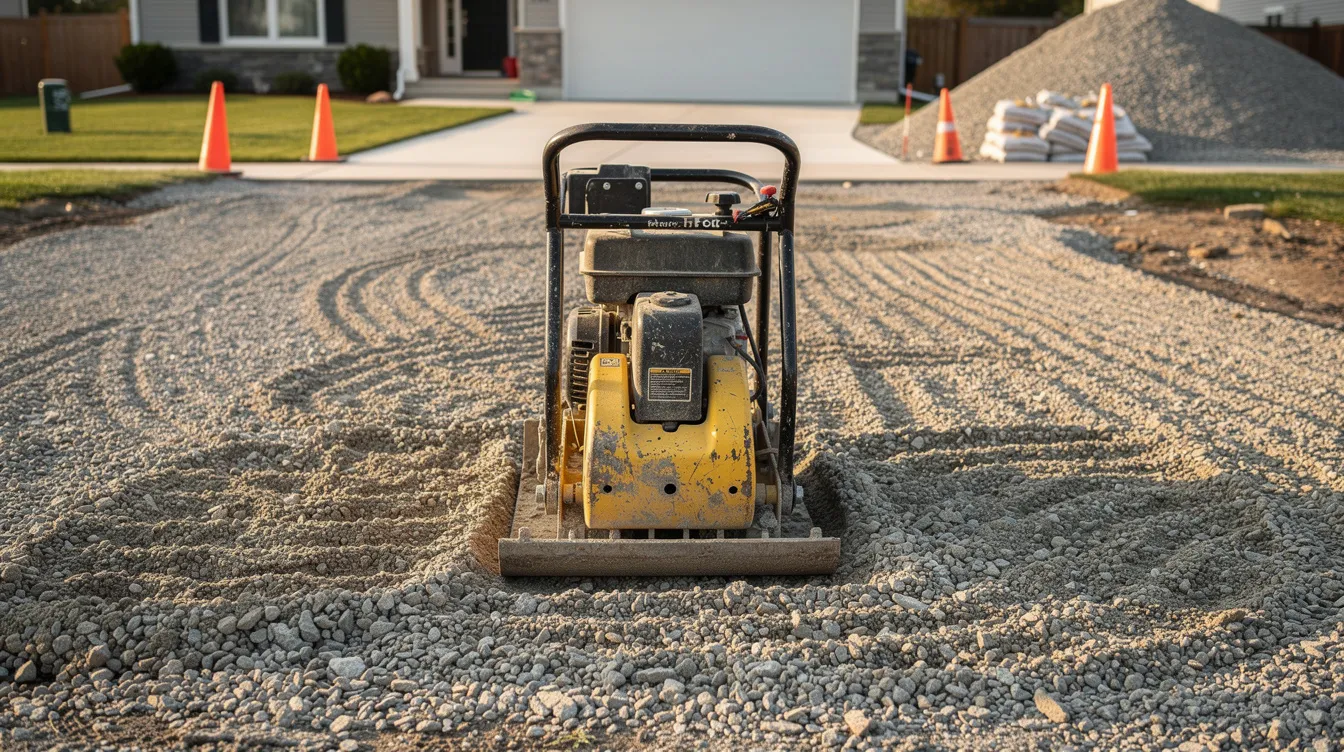
- Compact each lift with a plate compactor, jumping jack, or small roller. Rentals are widely available at US tool rental stores.
- Class 5 compacts best when slightly damp. Lightly wet very dry material before compacting. Avoid compacting when the material is muddy or saturated.
- Work in thin layers of about 2–3 inches loose depth. Make multiple passes until the surface feels firm and resists footprints.
- For larger driveways or parking areas, consider hiring a local skid steer operator or grading contractor if you lack equipment.
Following the homeowner’s instructions from a local contractor or engineer familiar with your soil conditions will help you achieve the density needed to preserve structural integrity under traffic and avoid constant maintenance later.
Surface Finishing and Other Options Above Class Five
Some owners leave compacted Class 5 as the final surface on rural driveways and farm roads. Others add an upper layer for appearance or performance:
- Finer decorative gravel, pea gravel, or river rock near homes when a smoother, more decorative finish is preferred
- Recycled asphalt surface lifts for a darker, more solid surface
- Full asphalt paving above the compacted base
A thin topping layer can control dust, improve traction, or adjust color, but the underlying Class 5 base still carries most of the load. If a future asphalt or concrete surface is planned, keep the Class 5 base clean, properly graded with the right grade and structure, and well compacted.
What Affects the Cost of Class Five Gravel?
Prices change by state, quarry, and season. Treat any ranges as rough guidance only. For broader context on aggregate pricing, see our crushed stone cost per ton guide.
Key cost drivers include:
- Distance from quarry and fuel prices
- Stone type: crushed limestone vs granite vs recycled material
- Order size: very small orders often cost more per ton
- Delivery fees: flat fee per truck, distance-based, or tiered pricing
- Some suppliers have minimum loads (e.g., 5–10 tons) and charge extra for split loads
Request written quotes that separate material price from delivery fees so you can compare all delivered material costs across suppliers. A reliable choice at a fair price often comes down to proximity to a quarry and order volume.
Delivery Tips: Getting Class Five Gravel to Your Site
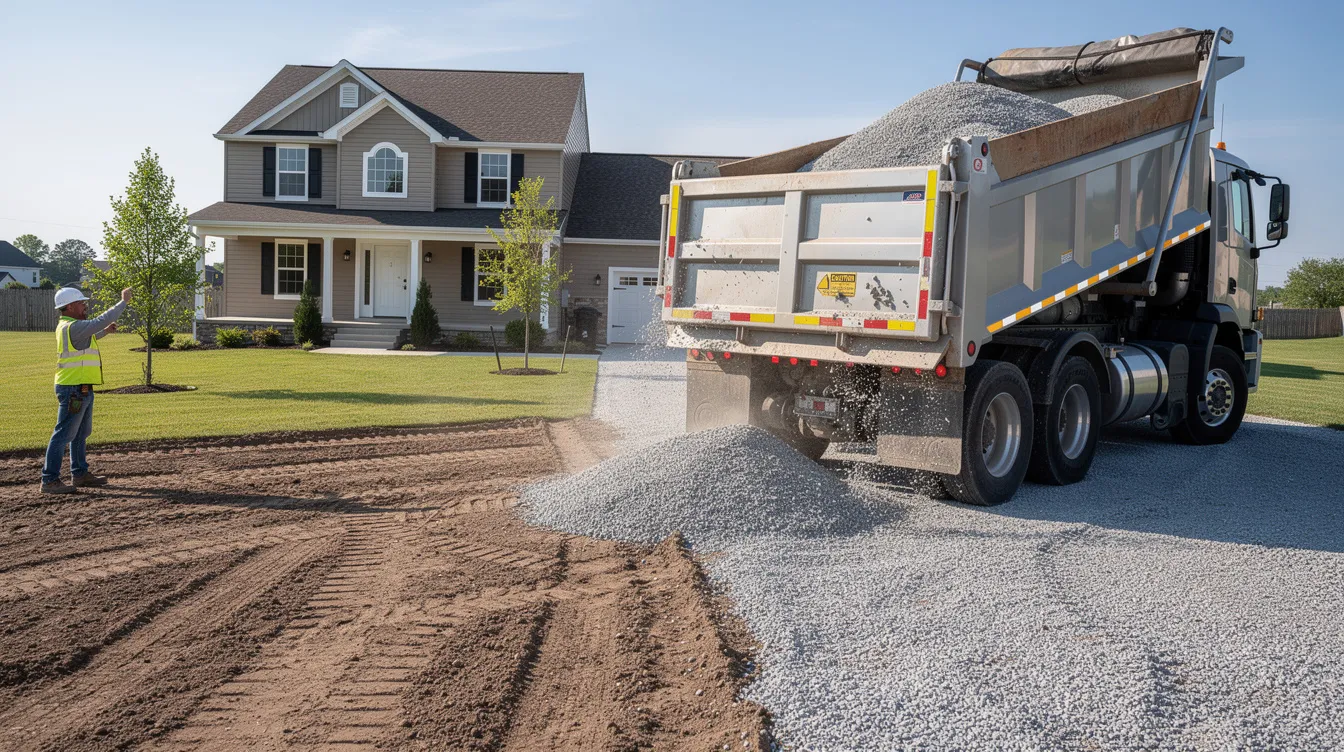
Good delivery planning prevents ruts, property damage, and surprises. Common truck sizes include single-axle, tri-axle, and end-dump semis, each with different capacity and access requirements. Confirm what your property can handle.
Prepare a clear dumping area with room for the truck to enter, raise the bed, and exit without hitting overhead wires or branches. Ask whether the supplier can tailgate-spread the load along a driveway or only dump in piles, as this affects how much labor you need afterward. Drivers usually cannot cross soft lawns, septic systems, or steep slopes, and final access decisions are made by the driver for safety.
Checking Quality When the Gravel Arrives
Inspect delivered material before the truck leaves. Look for a good mix of angular stones and fines, not all sand and not all large pieces or big chunks. Verify the top stone size matches what was ordered, for example around ¾ inch.
Some variation in color and moisture is normal, especially with recycled materials. But large chunks of debris, wood, or trash should be questioned. Contact the supplier immediately if the load seems off-spec so concerns can be addressed while details are fresh.
Long-Term Maintenance of Class Five Driveways and Roads
Even well-built Class 5 surfaces need periodic maintenance, especially in climates with freeze–thaw cycles, heavy rain, or snowplow traffic.
- Fill potholes and low spots with fresh Class 5 material
- Regrade with a tractor blade or box blade to restore crown and proper drainage
- Compact after major repairs
- Address erosion and drainage issues early by cleaning ditches and preventing water from pooling on the surface
A thin fresh layer of Class 5 every few years can refresh the surface, replace fines lost to traffic and plowing, and extend the life of the base. Poor drainage is the most common cause of premature failure, so keeping water moving off the surface is essential.
Using the Gravel Calculator Before You Order
The Gravel Calculator is designed to estimate quantity for driveway gravel, Class 5 bases, and other gravel projects. Here is how to use it:
- Measure the length and width of your driveway or parking area in feet
- Choose your planned depth of Class 5
- Enter a small waste factor (5–10%)
- Review the output: approximate cubic yards, tons, and rough cost
Densities and prices vary by region and supplier, so calculator results are planning estimates, not precise purchase orders. Save or print your results to use as a reference when calling local gravel pits or landscape suppliers.
Frequently Asked Questions About Class Five Gravel
Is Class 5 gravel good for driveways? Yes. Class 5 gravel is ideal for driveways and paths because it compacts tightly to create a stable surface with proper grading needed to manage water runoff. It is commonly used for driveways and patio bases across the country.
How deep should Class 5 be under a driveway? In many regions, 4–6 inches compacted is common for a typical residential driveway. Weak soil, heavy vehicles, or deep frost zones may require 8–12 inches or more.
Can I put Class 5 directly over grass or topsoil? No. Remove all topsoil and organic material first. Placing gravel over grass leads to settling, soft spots, and instability.
Can Class 5 be left as a final surface? Yes, on rural driveways and gravel roads it often serves as the wearing surface. Expect periodic regrading and dust in dry conditions.
Is Class 5 the same everywhere? No. Class 5 in one state may not match Class 5 in another. The same base material might be sold under a different local label. Always confirm the spec with your supplier.
How does Class 5 compare with recycled asphalt? Recycled asphalt can be a reliable choice for budget-friendly driveways and may firm up into a harder surface. Class 5 is a more standardized, spec-driven product. Both work well when properly compacted.
Does Class 5 work in wet climates? Class 5 gravel can perform well in wet climates when surface runoff and subsurface drainage are properly managed. In areas with heavy clay soil, adding thickness or drainage features helps prevent water problems.
Summary: Why the Right Gravel Makes All the Difference
Class five gravel is a versatile, compactable base for driveways, gravel roads, parking areas, and foundations, but it must be matched to local specs and site conditions. Understanding the material composition, required depth, and proper compaction is what turns a pile of aggregate into a long-lasting, solid base that supports whatever you build on top of it.
Use the Gravel Calculator to plan your quantity, compare quotes that clearly separate material and delivery costs, and talk with local experts before finalizing your order. A well-built Class 5 base can support asphalt, concrete, recycled asphalt, or gravel surfaces for many years when designed and installed with care.