Table of Contents
Ordering gravel sounds simple until you realize there are dozens of names, grades, and specs floating around. This complete guide breaks down what type a gravel actually means, how it compares to other common gravel types, and how to pick the right material for driveways, drainage systems, garden paths, and construction and landscaping projects across the United States.
Quick answer: What is “Type A gravel”?
“Type A gravel” is a label used by several U.S. state DOTs and aggregate suppliers, but it does not refer to one single, universal product. In some specifications and supplier catalogs, Type A often describes a dense, well-graded blend of crushed stone, sand, and stone dust, with the material passing through a top-size screen such as 1½ inches. The result is a versatile material designed to compact tightly into a strong, load-bearing base.
Here is the important caveat: the exact gradation, crushed rock type, particle size, and fines content may vary by region, quarry, and local road standard. What a supplier in Maine calls “Type A” might differ meaningfully from what a yard in Michigan stocks under a similar name. Always confirm the sieve sizes and material type with your own supplier before ordering.
Type A gravel is usually used as road base, driveway base, or sub-base under patios, concrete slabs, and pavers because it compacts very well. It is rarely used as a decorative surface. Gravel, broadly speaking, consists of rock fragments measuring 2–63 mm, and gravel sizes range from 2mm to 63mm according to ISO 14688-1:2017. Gravel is categorized by size and shape for specific uses, and Type A sits firmly in the “structural base” category.
What Type A usually is:
- Dense-graded blend of crushed rock, sand, and stone dust
- Maximum stone size around 1″–1½″
- Contains fine particles for tight compaction
- Used as a structural base, not a decorative surface
What Type A is not:
- A single national standard with identical specs everywhere
- Rounded pea gravel or river rock
- A decorative or walkway-surface material
How “Type A gravel” varies by state, county, and supplier
Type A is often a specification name inside a local DOT manual or supplier catalog. For example, one Maine supplier lists MDOT Type A crushed gravel as a 1½-inch maximum material under ME DOT Sec. 703.07, with angular stone and controlled fines passing the No. 200 sieve. That supplier example is useful, but it should not be treated as a national Type A gravel standard. In Michigan, MDOT documents classify 21AA, 21A, and 22A as dense-graded aggregate bases, which can serve similar road-base or aggregate-surface functions under different local specifications.
Even within the same state, counties or townships may adopt modified gradations. For instance, some Maine towns allow higher fines content (7–12% passing No. 200) in surface gravel for unpaved roads compared to the standard Type A base spec. Different crushed gravel sources-limestone versus granite-also change durability and color without necessarily changing the “Type A” label.
Before you order, ask your supplier these questions:
- What is the maximum stone size in your Type A product?
- Can you provide a gradation chart or sieve analysis?
- What percentage of fines or stone dust does it contain?
- Is the material crushed stone, crushed gravel, or a mix?
- Does it meet a named DOT standard, and which one?
Gravel vs. crushed stone vs. crushed gravel
Understanding these three terms saves a lot of confusion at the gravel yard. Natural gravel is rounded while crushed stone is angular and interlocking. Gravel consists of naturally rounded stones from riverbeds and glacial deposits. Crushed stone is man-made from larger rocks-quarried solid rock broken mechanically, producing angular edges due to the crushing process. Crushed gravel falls in between: it starts as natural gravel but is then run through a crusher to create angular faces.
Type A products are almost always made from crushed stone or crushed gravel, not rounded natural gravel. Crushed stone is commonly used for concrete and road bases because those angular edges interlock under compaction, creating superior stability. Gravel is often used for decorative landscaping and walkways where a rounded shape feels more comfortable underfoot and offers visual appeal.
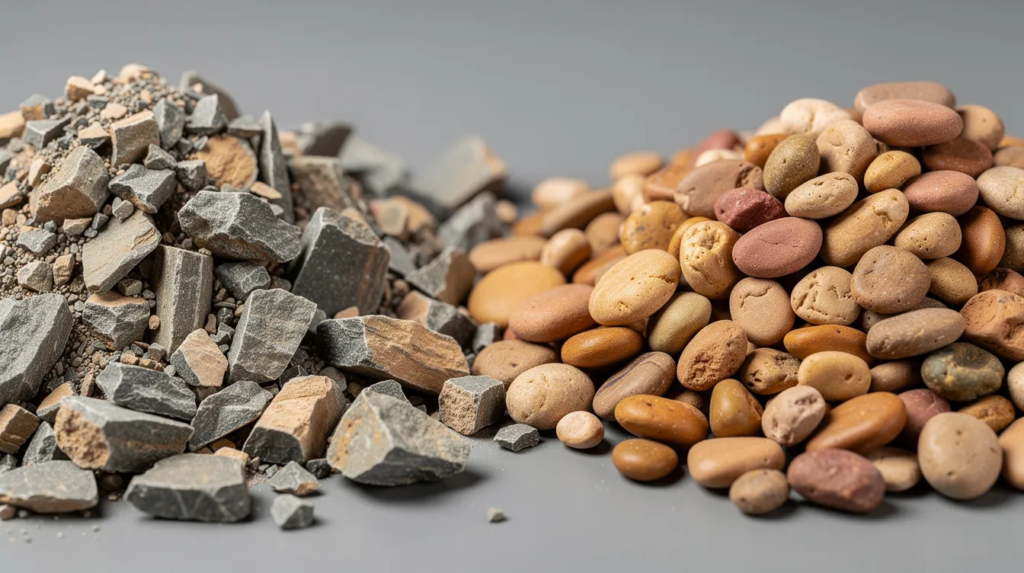
Angular crushed material:
- Better interlock and tight compaction
- Higher load-bearing capacity
- Preferred for road base, driveway base, stable foundations
Rounded natural material:
- Comfortable to walk on, smooth texture
- Aesthetic appeal for garden beds and walkways
- Poor compaction, shifts under heavy loads
Common ingredients in Type A gravel mixes
Type A gravel is a blend of several coarse aggregate components designed to meet a target gradation. Think of it as a recipe: each ingredient plays a role in how the finished base performs under load and weather.
- Coarse aggregate (¾″–1½″ crushed rock): Provides bulk and load-carrying capacity. These larger stones form the skeleton of the base.
- Intermediate crushed rock (¼″–¾″): Fills gaps between the larger aggregate, reducing voids and improving density.
- Sand: Occupies remaining spaces and helps the blend compact smoothly.
- Stone dust and fines (passing No. 200 sieve): The binding agent. These smaller particles lock everything together, but too much can trap moisture and reduce drainage properties.
A typical Maine DOT-style Type A product might be called “1½ inch minus crusher run” because everything passes a 1½ inch screen down to fines. Coarse pit run gravel is ideal for road and driveway bases when properly graded. Different rock types-limestone, granite, basalt-change color, hardness, and weathering behavior slightly, but gradation is usually the more important factor for most homeowners. Construction gravel prioritizes load-bearing and stability for infrastructure rather than appearance.
Typical gravel sizes and gradations for Type A and similar bases
When suppliers say “1½ inch minus,” they mean the material includes everything from the top size of 1½ inches all the way down to sand and dust. This full spread of sizes is what makes a dense-graded base different from a single-size product.
A typical Type A may specify 95–100% passing the 1½ inch sieve, 70–100% passing the 1 inch sieve, 40–70% passing the No. 4 sieve, and 3–10% passing the No. 200 sieve. Gravel grading affects its use in construction and landscaping projects-tighter gradations mean denser compaction and more structural integrity. Different types of gravel include #57 gravel, pea gravel, and crushed stone, each with distinct different grades and behaviors. Grade #57 gravel is known for good compaction and drainage but contains far fewer fines than Type A. Gravel grades correspond to specific particle size ranges.
Common base materials with similar gradation patterns:
- 1½″ MDOT Type A: Regional spec, full gradation with fines, used under pavement
- ¾″ crusher run: Common at landscape yards, dense-graded, slightly smaller top size
- DOT dense-graded aggregate (21AA, 22A, ABC): Various state codes, similar performance
- Road base / QP (Quarry Process): Often functionally identical to Type A in many regions
- #57 stone: Clean, single-size (≈¾″), excellent drainage but does not compact densely-very different from Type A
Where Type A gravel is commonly used
Type A gravel is generally a workhorse construction material rather than a decorative surface. Gravel is a foundational material used for drainage and erosion prevention, and Type A fills that structural role across many construction projects.
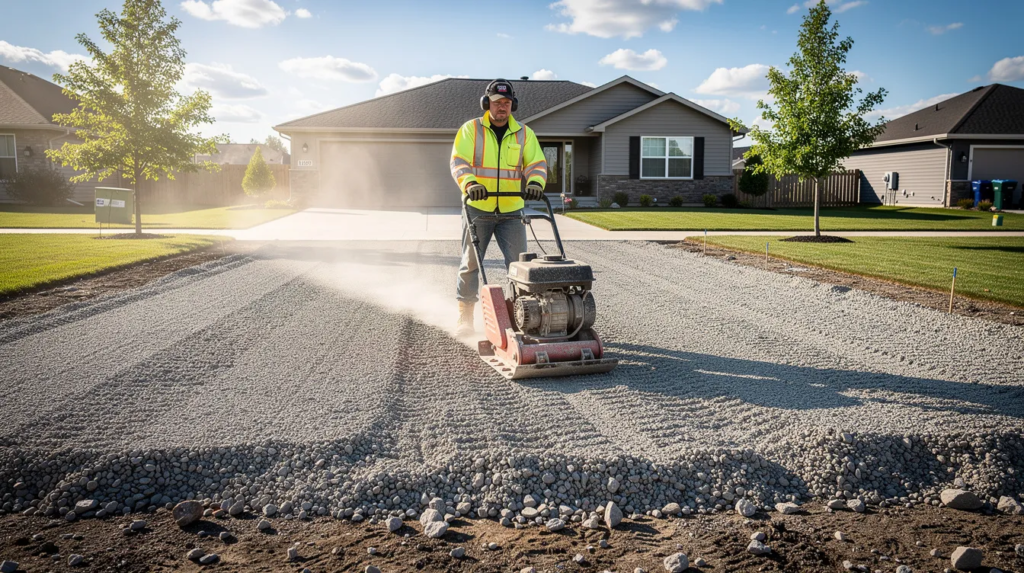
- Public and private road base: The primary use. Dense-graded crushed gravel supports pavement and handles repeated vehicle traffic, making it essential for road construction.
- Driveway base: Provides a long lasting surface foundation that resists rutting under cars and light trucks.
- Parking lots and parking pad bases: Supports repeated heavy loads across larger aggregate footprints.
- Garage or shed pad base: Prevents settling beneath concrete slabs or concrete blocks by distributing weight evenly.
- Patio base: Works as a patio base under pavers or poured concrete, ensuring a smoother surface and reducing shifting over time.
- Unpaved rural driveways: Some homeowners use Type A as both base and surface course, though this can generate dust and may rut without periodic grading.
- Erosion control and retaining wall base areas: Type A gravel can help stabilize rough grades, low spots, access areas, and compacted base layers where support matters. Around retaining walls, it may be used in some base or general fill situations, but drainage backfill behind the wall often requires clean stone such as #57 stone so water can move freely. Confirm the correct backfill material with your contractor or local supplier before ordering.
Type A vs. other base materials (crusher run, road base, and more)
Many suppliers stock similar stone products under different names, and homeowners often hear terms like “crusher run,” “¾ inch minus,” and “road base” alongside “Type A.” In many cases, these are functionally similar dense-graded blends of crushed rock and fines. The name may depend on the quarry process, regional custom, or which DOT spec the material was originally designed to meet.
Clean aggregates like #57 stone or #67 stone are a different category entirely. They contain little to no stone dust, do not achieve the same tight compaction, and are meant for drainage applications rather than structural base work. Washed gravel is screened to remove fine particles, giving it better drainage but less binding ability.
When to choose Type A or road base:
- Driveway or parking lot base under pavement
- Sub-base beneath concrete slabs or pavers
- Any application requiring superior stability and load support
When to choose clean stone (#57 or similar):
- French drains and drainage solutions where water accumulation must be avoided
- Pipe bedding around perforated drain tile
- Drainage purposes where fines would clog the system
When to choose sandier or finer mixes:
- Leveling courses directly under pavers (usually a thin sand layer over Type A base)
- Fill around utilities where gentle backfill matters
Type A gravel vs. pea gravel and river rock for surfaces
Type A gravel is designed as a structural base, while pea gravel and river rock are more often surface or decorative materials. The difference matters when you’re deciding what goes on top versus what goes underneath.
Pea gravel is typically ⅛ to ⅜ inch in size-small gravel with rounded edges that feels comfortable underfoot. It works well for walkways, play areas, and garden beds when contained by edging. However, pea gravel can shift underfoot and requires edging for defined spaces, making it a poor standalone driveway surface. Smaller gravel sizes are easier to walk on while larger sizes offer structural support. Landscaping gravel focuses on aesthetics and comfort for outdoor spaces, and pea gravel is a prime example. It is a cost effective material for decorative purposes and visually appealing garden paths.
River rock ranges from ⅜ inch to 4 inches in diameter. River rock is used for decorative landscaping and drainage ditches, dry creek beds, water features, and around foundations. These rounded stones offer aesthetic appeal but roll under tires and cannot form a stable base alone.
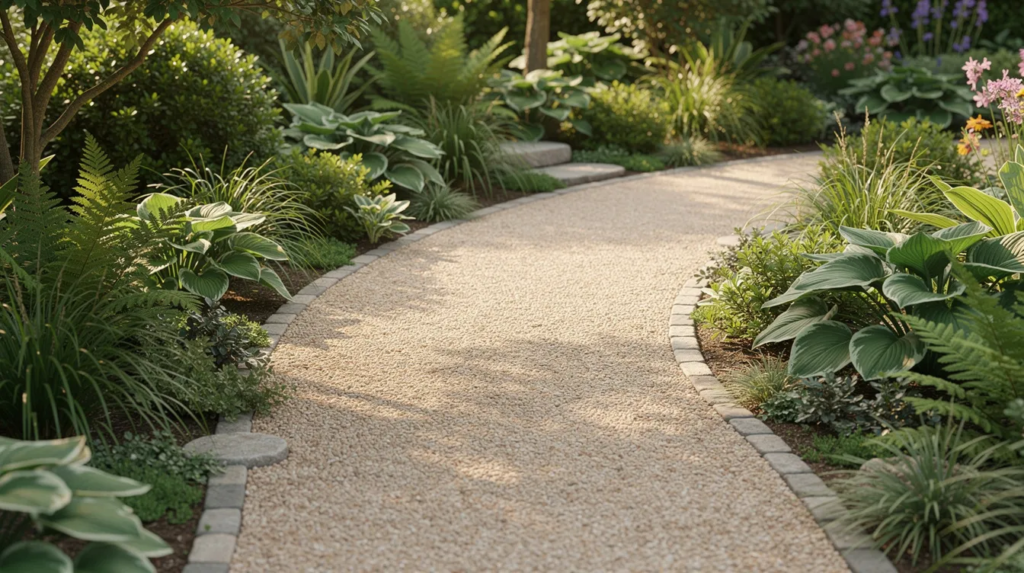
Best uses at a glance:
- Type A gravel: Driveway and road base, parking lots, under concrete slabs, structural fill
- Pea gravel: Garden paths, play areas, decorative landscaping, fine gravel surfaces
- River rock: Dry creek beds, larger rocks for mulch alternatives, drainage layer around foundations
Using pea gravel or river rock as a driveway base alone usually leads to poor compaction and ruts. They are more effective when placed over a well-compacted base like Type A. Gravel can provide stability for driveways and comfort for walkways when layered correctly.
Drainage, plant life, and environmental considerations
Dense-graded materials like Type A offer moderate drainage. Water moves through, but fines and stone dust slow infiltration compared with clean stone. This makes Type A a cost effective material for bases where you want firmness, but a poor choice where you need maximum water flow.
For French drains, curtain drains, and around perforated pipe, clean coarse aggregate such as #57 stone is usually preferred over Type A to reduce clogging risk. When drainage matters most, avoid materials with heavy fines content.
Type A’s dense compaction limits plant life and root penetration. This is a benefit under driveways and slabs, but a drawback if you want healthy turf or garden beds nearby. For landscaping projects, use clean rock around plant beds, leave adequate depth of topsoil and mulch, and choose loam-based soil instead of dense road base wherever healthy vegetation is the goal. Sedimentary rocks and natural material like decomposed granite may offer a middle ground in some applications.
Consider the environmental impact: surfaces with high fines content act almost like a semi-impervious layer, affecting runoff patterns. Local storm-water rules, nearby wells, or streams may dictate what kind of gravel and depth are appropriate. Checking local guidance is always wise.
How much Type A gravel do you need? (Using a gravel calculator)
Most gravel is sold by the cubic yard or ton, and under-ordering is one of the most common DIY mistakes. Running short mid-project means a second delivery charge and potentially mismatched material from a different batch.
Here is how to estimate what you need:
- Measure the area: Length × width in feet gives you square footage.
- Choose compacted thickness: 4–6 inches for light-duty driveways; 6–8 inches or more for heavy loads or soft clay subgrade.
- Convert to cubic yards: Multiply square footage by depth in feet (depth in inches ÷ 12), then divide by 27.
- Convert to tons if needed: Dense-graded base like Type A often weighs roughly 1.4 tons per cubic yard, but confirm with your supplier.
- Add 5–10% extra for compaction loss, spreading, and slope.
The Gravel Calculator is a helpful tool that lets you plug in dimensions, thickness, and material type to estimate both volume and approximate cost before ordering. Using it before calling suppliers helps you compare quotes for large quantities, evaluate options (such as a thick Type A base plus a thinner decorative top layer), and avoid the headache of running short.
Choosing the right gravel for your project
Type A may be the right gravel for many bases, but the best choice depends on project type, expected loads, drainage needs, and appearance goals. Choosing the right gravel depends on the specific project requirements, not just the product name.
Key decision factors: intended use (driveway, walkway, parking, drainage), traffic level (passenger cars versus delivery trucks), soil conditions (coarse soil or firm subgrade versus soft clay), drainage needs, and desired look.
- If you’re building a new driveway on clay: Consider a thicker Type A or similar road base (6–8 inches compacted), possibly with geotextile fabric beneath.
- If you’re lining a French drain: Choose clean #57 stone for drainage applications-skip anything with heavy fines.
- If you’re filling garden paths: Consider pea gravel or small gravel over a compacted base for comfort and aesthetic appeal.
- If you’re creating a patio base: Use Type A as the structural layer, then a thin sand leveling course, then pavers.
- If you need pathways that compact firm: Decomposed granite compacts to a hard surface suitable for pathways and patios.
- If you want a decorative look around beds: Marble chips, river rock, or washed gravel offer visual appeal without structural demands.
Always confirm local names and specs with the supplier. What one yard calls “Type A,” another might call “road base” or “crusher run.”
Installation basics for Type A gravel bases
This is a high-level overview for a small driveway, patio base, or shed pad-not a full engineering spec. For larger structures, consult a professional.
- Strip sod and organic material: Remove all vegetation, roots, and topsoil down to firm subgrade.
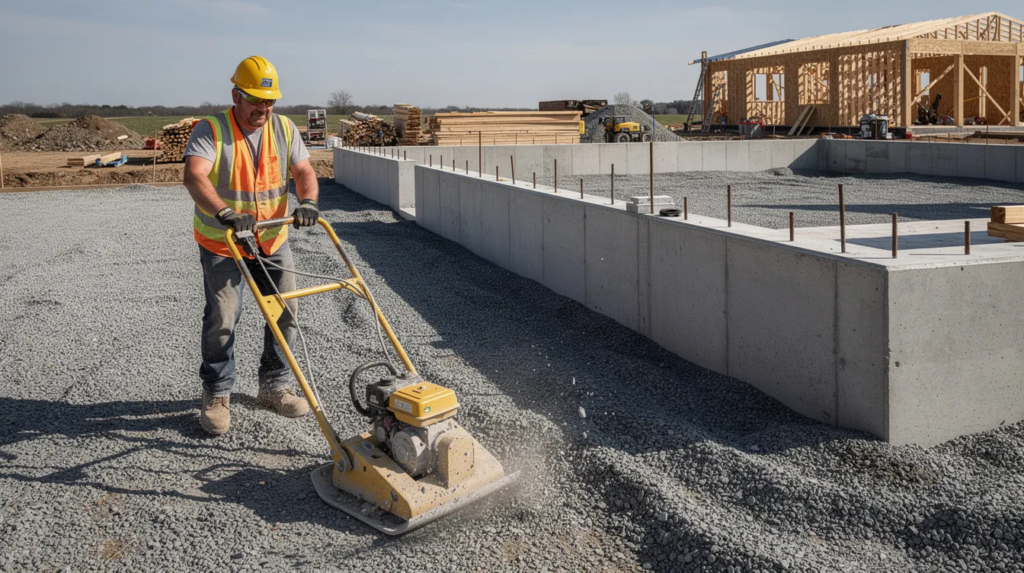
- Shape and compact the subgrade: Grade the native soil so it slopes away from buildings. Compact with a plate compactor or roller.
- Place Type A gravel in lifts: Spread material in 2–3 inch layers, not the entire depth at once.
- Compact each lift: Use a plate compactor or roller on each layer. Material should be slightly damp-not muddy, not bone-dry-for ideal compaction.
- Check slope and grade: Verify that the surface drains away from structures, preventing water accumulation.
- Top with surface layer if desired: Add a thin decorative gravel, pavers, or prepare for asphalt or concrete.
Local frost depth, building codes, and soil conditions may require deeper bases or geotextile fabric. Larger aggregate at the bottom with finer graded material on top can improve performance in some situations.
Cost considerations and ordering tips
The cost of Type A gravel varies by region, rock type, fuel prices, and haul distance. It is often quoted per ton or cubic yard plus delivery. Dense-graded base gravels are generally among the more affordable aggregates per yard, but delivery can add significantly to the final bill-especially for smaller orders or sites with limited truck access.
Questions to ask when calling a gravel yard:
- Does the quoted price include delivery?
- What is the minimum order quantity?
- Am I buying loose material or bulk bags?
- Where exactly will the truck dump-can it reach my site?
- Do you carry recycled crushed concrete base or reclaimed asphalt that might work for my project at a lower cost?
Recycled options can perform similarly to Type A for certain applications like shed pads or temporary parking surfaces. Use the Gravel Calculator first so you arrive at the conversation with approximate yardage or tonnage, making it easier to compare quotes and avoid over- or under-ordering.
Safety, maintenance, and troubleshooting
Wear eye protection and a dust mask when spreading or compacting Type A gravel. Be mindful of heavy equipment and truck traffic during delivery-coordinate a safe dump location before the truck arrives.
Routine maintenance:
- Grade periodically to smooth ruts and redistribute material
- Add fresh Type A where low spots develop
- Check that drainage slopes remain intact after heavy rain or snow
Common problems and fixes:
- Ruts: Base is too thin or was poorly compacted. Add more material, recompact in lifts, and verify subgrade strength.
- Soft or muddy spots: Weak subgrade or trapped water beneath the base. Improve drainage, consider geotextile, or remove and replace saturated soil.
- Excessive dust: High fines content in dry conditions. Water the surface occasionally, or top-dress with a slightly coarser natural material.
- Washouts: Insufficient slope control or no edge containment. Install ditches, swales, or curbing. Correct slope profiles so water flows away rather than across the surface.
Summary: How to talk to your supplier about Type A gravel
“Type A gravel” is a useful starting term, but it is not a universal recipe. Buyers should always confirm the actual gradation, rock type, and best use with a local expert before placing an order.
Bring this checklist to the yard or quarry:
- What is the maximum stone size in your Type A?
- What percentage of fines or stone dust does it contain?
- Is the material DOT-approved, and under which specification?
- What applications do you recommend it for?
- Would a different gravel-road base, crusher run, clean stone-be better for my specific project?
Run your numbers through the Gravel Calculator before calling so you know approximate yardage or tonnage to discuss. Think in terms of function-base, surface, drainage layer, decorative purposes-rather than just product names, since labels like Type A, crusher run, and road base often overlap. The right gravel for your project is the one that matches your loads, your drainage needs, and your local supplier’s actual specs.