Table of Contents
If you’re planning a driveway base, patio, shed pad, or drainage project, #67 stone is one of the most common aggregates you’ll encounter at the yard. This guide covers what it actually is, how it compares with other crushed stone grades, where it works best, and how to estimate a practical order quantity before placing an order.
Quick Answer: What #67 Stone Is and When to Use It
#67 stone is a crushed stone size defined under the AASHTO M43 standard with a top size of ¾ inch and very few fines. It is commonly produced from limestone, granite, or trap rock, and is usually washed and clean when sold for base and drainage work.
The most common homeowner and small-contractor uses include:
- Base layers under concrete slabs and garage floors
- Walkway bases and some paver base systems
- Shed pads and small parking pads
- Moderate drainage applications like French drains and retaining wall backfill
#67 stone can settle and interlock into a smoother surface than larger clean stones like #57. It does not compact tightly like crusher run or dense-graded road base with fines, and it usually drains a bit slower than #57 stone because the particles are smaller, making it a solid general-purpose choice for many base layer and drainage layer applications. You can use the Crushed Stone Calculator or Gravel Calculator to estimate cubic yards, tons, and cost for #67 stone before ordering.
What #67 Stone Is: Size, Standards, and Material Types
The “#67” designation is not a brand name. It’s a gradation class defined by AASHTO M43 and ASTM D448, specifying what percentage of material must pass through or be retained on specific laboratory sieves.
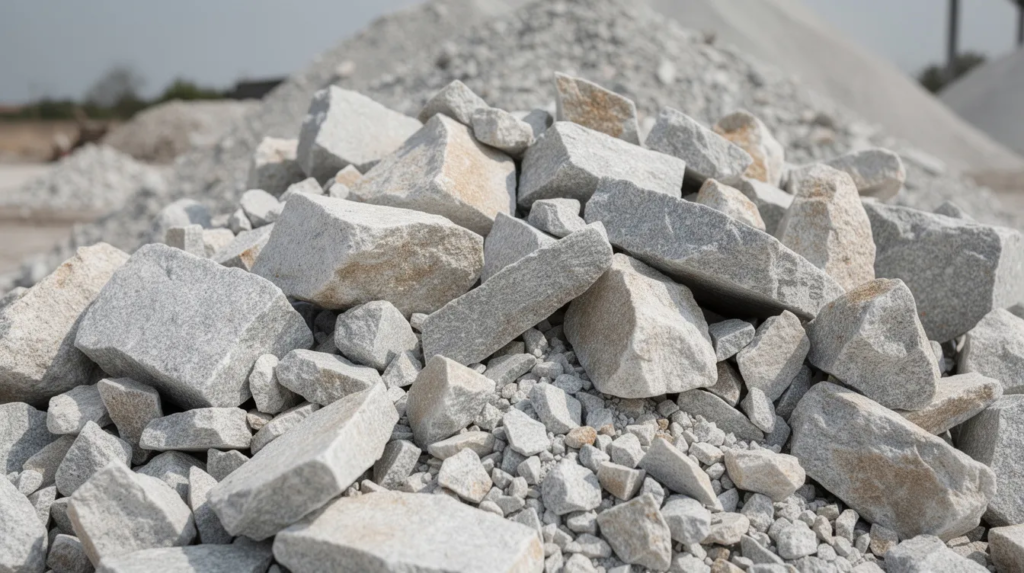
The typical particle size range runs from about 3/8 inch up to ¾ inch, with an open-graded, mostly single-size distribution and very little fine material passing the No. 4 sieve. Local suppliers may call it “3/4 inch clean stone,” “#67 limestone gravel,” or simply “3/4 crushed stone”-names vary by region.
It consists of crushed limestone with angular pieces in many areas, though granite, trap rock, or other durable stone products are used depending on the quarry. #67 stone is valued for its strength and durability across residential and commercial projects. Density and gradation can vary between suppliers, so always ask the yard for a current technical sheet if you’re working on a spec project.
#67 Stone vs. #57 Stone and Other Common Aggregates
#57 stone and #67 stone are the two aggregates homeowners most often compare for base and drainage work. Here’s how they differ:
| Feature | #67 Stone | #57 Stone |
|---|---|---|
| Top size | ¾ inch | 1 inch |
| Packing density | Denser, smoother surface | More voids, coarser surface |
| Drainage speed | Good, but slightly slower | Faster free-draining |
| Best for | Slab bases, paver bases, general base material | Deep drainage, French drains, heavy drainage systems |
#67 stone can settle into a smoother surface than #57 stone because its smaller particles create smaller voids, but it still does not compact like crusher run or dense-graded aggregate with fines. #57 stone drains faster than #67 stone due to its larger voids. For a deeper comparison, see the No. 57 Stone Guide.
- Compared with pea gravel, #67 is angular and interlocking, providing superior stability under load. Rounded pea gravel rolls and shifts, making it less suitable as a compacted base.
- Compared with dense-graded materials like crusher run or 21AA limestone screenings, #67 is open-graded and not ideal as a primary driving surface without a top layer of denser aggregate.
For many U.S. homeowners, the practical choice comes down to #57 stone, #67 stone, pea gravel, or recycled concrete aggregate depending on drainage, compaction, and budget priorities.
Technical Background: AASHTO #67 Size and Gradation
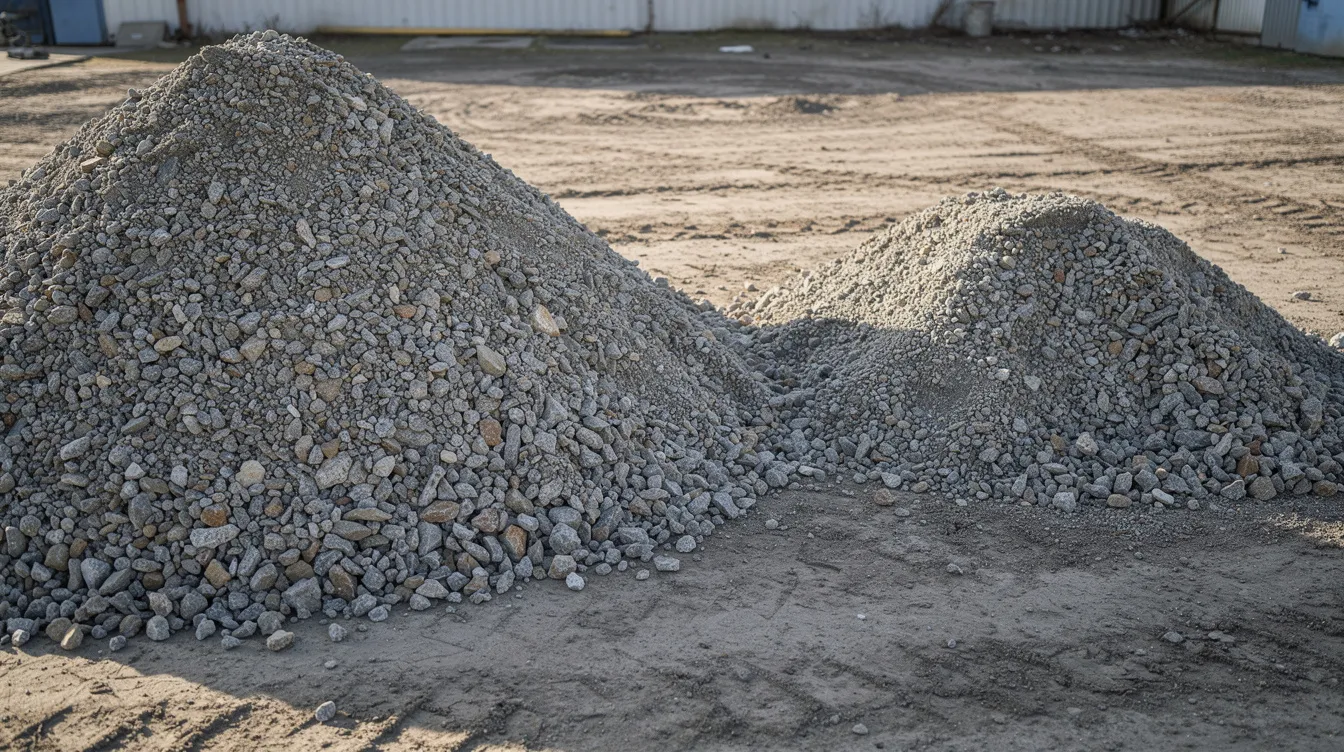
For readers who want the engineering details: #67 is defined by AASHTO M43 and ASTM D448 as an open-graded coarse aggregate with a ¾-inch nominal maximum size.
A “gradation envelope” specifies the percentage of material that must pass through specific sieves. In plain terms, projects that specify #67 aggregate should use material that matches the required AASHTO M43 or ASTM D448 gradation. For typical #67 gradation, most particles fall between ¾ inch and the No. 4 sieve (4.75 mm), with 0–5% passing the No. 8 sieve. Concrete work may also reference ASTM C33 or a project-specific mix design, so confirm the required standard before ordering. That minimal fine content is what helps make #67 stone a clean, free-draining product.
These specifications matter for DOT work, engineered concrete applications, and commercial construction projects. For non-spec homeowner projects, focus on confirming that the material is “clean, washed #67 stone” and that the approximate size looks right.
Typical Uses of #67 Stone for Homeowners and Small Contractors
#67 stone is a versatile base and drainage aggregate for many outdoor projects. Here are the most common applications:
- Under concrete slabs and garage floors: Typically placed 4–6 inches deep as a compacted base beneath residential slabs, driveways, and patios.
- Base layer under walkways and some paver systems: #67 stone can work in open-graded or drainage-focused base designs, but paver patios should follow the paver manufacturer’s base, bedding, and joint material specifications.
- Shed pads and parking pads: Often 8–12 inches deep over compacted subgrade; a common choice for shed pads, small parking lots, and ground cover for utility areas.
- Drainage applications: Effective around perforated drain pipe, in French drains, as retaining wall backfill, and as a drainage layer behind landscape features. It serves as a base material for roads and patios in many construction projects.
- Landscaping projects: Used around downspout outlets, in swales, beneath decorative river rock, and in garden beds for erosion control.
#67 stone is commonly used for ready-mix concrete and drainage systems across a wide range of project types. It is commonly used in driveway and parking lot base layers, drainage layers, and light commercial settings where clean, angular stone fits the design.
When #67 Stone Is a Good Fit – and When It May Not Be
#67 stone is useful, but it’s not always the right material for every job.
Good fit:
- Reasonably smooth, interlocking base layer that still drains freely — for slab bases, moderate-traffic walkways, and some open-graded paver systems
- Projects needing a stable, angular base layer with some drainage capacity
- Pipe bedding and wall backfill where angular interlock matters
May not be ideal:
- As the top surface of gravel driveways or a parking lot, because it tends to ravel and shift under turning tires. See Which Crushed Stone Size Is Best for a Long Gravel Driveway for surface options.
- For drainage-critical applications like deep French drains where maximum water flow matters more than smoothness-choose #57 stone instead.
- When a tight, long-lasting driving surface is needed-use dense-graded aggregates like crusher run, road base, or limestone screenings for stable interlock and a surface that resists rutting.
- When a softer, decorative surface with aesthetic appeal is the goal and heavy loads aren’t expected-pea gravel or smaller decorative stone types may work better.
#67 Stone and Concrete Mixes
#67 stone is often used as coarse aggregate in ready-mix concrete mixes when specified by the engineer or producer. #67 stone may be used in some concrete mixes when the smaller top size fits the producer’s mix design, reinforcement spacing, or placement method better than larger aggregate. Do not change aggregate size in a concrete mix without the ready-mix supplier or engineer approving it.
Both #57 and #67 can be acceptable per ASTM C33 for concrete applications, but the concrete mix design must match the aggregate size used. Never change aggregate size in a structural concrete mix on your own-always follow the ready-mix supplier’s or engineer’s mix design.
For small homeowner projects using bagged concrete, the coarse aggregate is already included. Separate #67 stone is usually for base layers, custom mixes, or road construction aggregate.
Material Options: Limestone, Granite, and Recycled Concrete #67 Stone
#67 stone can be produced from different source materials, each with trade-offs:
- Limestone gravel: Light gray, widely available, consistent density. Often the default for DOT and structural applications in the Midwest, Northeast, and Southeast. Commonly the most affordable natural option.
- Granite or trap rock: Typically darker, very hard, and durable. Common in parts of the Southeast, Northeast, and mountain regions. Often costs more than limestone. For a detailed breakdown, see Limestone vs Granite Gravel: Cost, Strength & Best Uses.
- Recycled concrete aggregate (RCA): Crushed and screened recycled concrete can sometimes be produced to a #67 gradation, offering a sustainable and often lower-cost alternative for base and fill.
RCA may absorb more water and may contain small amounts of residual fines or steel. Many DOTs allow recycled concrete in base and subbase layers but restrict its use in structural concrete mixes. Ask your local supplier whether their #67 stone is virgin rock, recycled concrete, or a blend.
Planning Depth and Coverage for #67 Stone
Getting depth and coverage right directly affects both project performance and cost. Typical depth ranges:
| Project Type | Recommended Depth |
|---|---|
| Residential concrete slabs | 4–6 inches deep |
| Walkways and patios | 4–8 inches deep |
| Shed pads and light-vehicle parking | 8–12 inches deep |
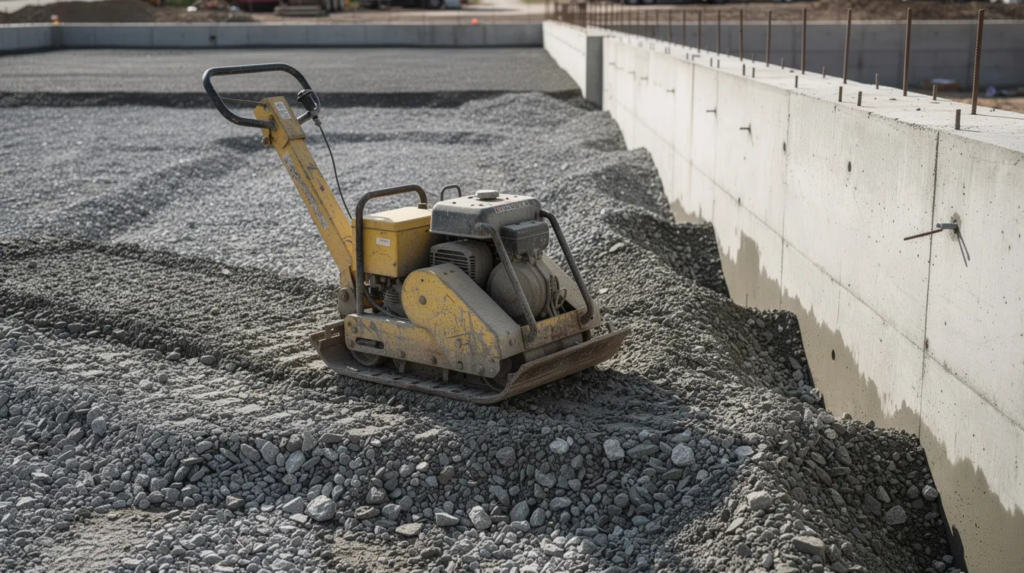
One cubic yard of #67 stone covers about 100 square feet at 3 inches deep. Adjust proportionally for your target depth. When compacting, place stone in multiple thin lifts of 2–3 inches each with a plate compactor for more uniform, stable support and tight compaction.
Very soft or wet subgrades may require thicker layers, geotextile fabric, or a base of larger stones or dense-graded aggregate beneath the #67 layer. Plug your area dimensions and planned depth into the Crushed Stone Calculator or Gravel Calculator to get a quick coverage and square footage estimate.
How to Estimate #67 Stone Quantity in Cubic Yards and Tons
Calculating quantity correctly helps avoid short orders and costly second deliveries. The basic formula:
Cubic yards = (length × width × depth in feet) ÷ 27
For example, a 20 ft × 10 ft area at 6 inches deep (0.5 ft): (20 × 10 × 0.5) ÷ 27 = ~3.7 cubic yards.
Typical bulk density for #67 stone runs around 1.3–1.5 tons per cubic yard, depending on material type and moisture content. To convert, multiply cubic yards by an estimated density-commonly about 1.4 tons per cubic yard for planning purposes.
- Add a 5–10% waste factor for most residential projects to account for compaction, spillage, and grading adjustments.
- One cubic yard at 1.4 tons/yd³ = about 1.4 tons of material.
Use the Crushed Stone Calculator’s online calculator to handle these calculations automatically and to compare different depths and areas without doing the math by hand.
Cost Planning for #67 Stone: What to Expect
Prices for #67 stone vary widely by region, quarry distance, fuel costs, order size, and delivery logistics. Here are planning-level ranges:
- Bulk quarry price: In some U.S. markets, #67 stone may fall around $25–$45 per ton before delivery, but local pricing can be lower or higher.
- Delivered/retail pricing: Can run higher, especially for small loads or decorative stone with aesthetic appeal
- Full range: Bulk quarry loads are usually the lower-cost option, while delivered, small-load, retail, bagged, decorative, or specialty orders can cost much more. Final pricing depends on quantity, delivery distance, minimum load, supplier type, and local availability.
Delivery prices include both product and transportation costs. Small-load fees and minimum delivery charges often apply for orders under 5–10 tons. Limestone may be cheaper than granite or specialty aggregate in some regions.
Request quotes from at least two local suppliers, asking for price per ton, delivery fee, minimum load size, and any fuel surcharges. For regional benchmarks, see Crushed Stone Cost Per Ton.
Ordering #67 Stone: Names, Specs, and Talking to Suppliers
Confusion often comes from different product names and local terminology. Common yard names include:
- “#67 limestone”
- “3/4 inch clean stone”
- “#67 crushed stone”
- “3/4 drain rock”
When ordering, mention both the local name and that you want a clean, washed, open-graded stone with about ¾-inch top size. Ask whether the material meets AASHTO #67 or similar gradation. Confirm whether it’s virgin rock or recycled concrete aggregate and which stone type (limestone, granite, etc.) is available.
Some yards require a minimum order for local delivery, such as a few cubic yards or several tons, while others charge a small-load fee. Ask about minimum order size, delivery windows, dump-location access, and fuel surcharges before placing the order.
Installation Tips: Getting the Most Out of #67 Stone
Proper installation is as important as choosing the right material. Follow these steps:
- Prepare the subgrade: Remove topsoil, organic matter, and soft spots. Compact with a plate compactor or roller where possible.
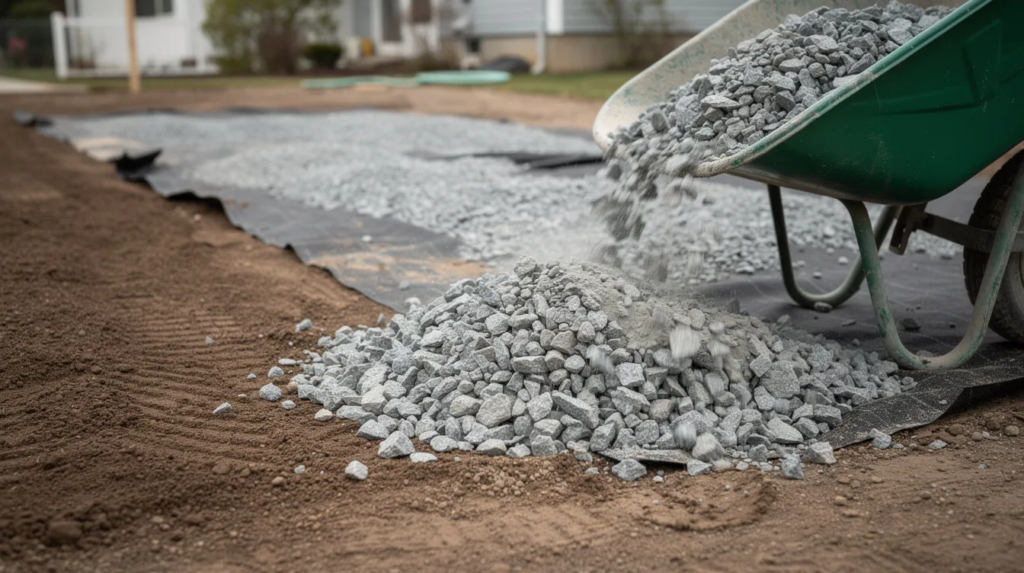
- Lay geotextile fabric: Use non-woven geotextile between the subgrade and #67 stone when building drainage layers, walkways, or pads over silty or clay soils.
- Place in thin lifts: Spread stone 2–3 inches at a time and compact each lift. This reduces settlement and improves stable interlock.
- Cap if needed: #67 stone remains somewhat loose because it is open-graded. For driveways and driving surfaces, cap it with a dense-graded aggregate, asphalt, concrete, or pavers as a top layer.
- Check grades: Use a level or string line to verify proper slope away from buildings and toward designated drainage outlets.
Common Mistakes to Avoid with #67 Stone
Avoiding a few recurring errors can save real time and money:
- Using #67 as the only driveway surface without a dense-graded cap. It tends to ravel and develop ruts under traffic because it’s open-graded and resists rutting less than crusher run or road base.
- Skipping geotextile fabric under the drainage layer, which allows fines from the subgrade to migrate up and clog voids over time.
- Ordering the wrong material-“3/4 minus” includes significant fine material and behaves very differently from clean #67. Pea gravel lacks the angular interlock. Confirm exact stone products before delivery.
- Underestimating depth and quantity, which leads to thin, weak layers. Plan for proper thickness from the start and include a waste factor.
- Relying only on national averages for density and cost. Local confirmation with suppliers is always recommended for construction and landscaping projects.
Using Recycled Concrete Aggregate as #67 Stone
Recycled concrete aggregate (RCA) is gaining popularity for eco-friendly and cost-conscious projects. RCA can be crushed and screened to a #67-like gradation, producing a free-draining, angular aggregate suitable for many base and fill applications.
RCA may have slightly lower density and higher water absorption than virgin limestone gravel or granite, which can affect delivered weight and long-term performance. Many DOTs allow recycled concrete for base and subbase layers but limit or restrict its use in structural concrete mixes.
Use RCA #67 primarily for non-structural uses like driveway bases, parking pads, and general fill unless a professional engineer approves structural use. Confirm with local suppliers whether their recycled concrete product meets a #67 gradation and ask for any available specification sheets.
FAQs About #67 Stone for Residential and Light Commercial Projects
Is #67 or #57 stone better for drainage? #57 stone typically drains faster due to its larger voids and 1 inch top size. #67 provides a smoother, tighter interlocking base layer. Choose based on whether drainage speed or surface smoothness matters more for your project.
Can I use #67 stone under a concrete slab? Yes, #67 stone is commonly acceptable as a base under residential slabs. Always follow local codes and any engineer specifications for your specific foundations.
Is #67 good for driveways? It works well as a base layer but is not ideal as the long-term top surface for gravel driveways. Cap it with crusher run, road base, or another dense-graded surface material for durability.
Can I mix #57 and #67 stone? Blends may fall outside strict AASHTO gradation envelopes, but they can be acceptable on non-spec private projects. For spec work, use the designated gradation.
When should I use pea gravel, stone dust, or other crushed stone grades instead? Pea gravel works for decorative ground cover and garden beds where loads are light. Limestone screenings or stone dust are better when you need a fine texture for a smooth finish walkway surface. Choose based on your specific project needs-there’s no single right material for every situation.
How Crushed Stone Calculator Helps You Plan #67 Stone Projects
Crushed Stone Calculator is a free planning tool and educational site for U.S. homeowners, landscapers, and small contractors. Enter your project dimensions and desired depth into the Gravel Calculator to instantly estimate cubic yards, tons, and approximate cost for #67 stone.
Adjust depth, material type, and waste factor to see how changes affect total quantity before you order. The site also offers guides on #57 stone, pea gravel, drainage gravel, crushed stone grades, and gravel driveway design for deeper learning. All calculator results are planning-level estimates-always confirm final density, gradation, and pricing with local suppliers. Use the output as a “supplier-ready” quantity estimate to streamline quote requests and avoid under-ordering.
Next Steps: Choosing the Right Material and Getting Local Confirmation
#67 stone is a versatile, mid-size crushed stone useful for bases, moderate drainage, and under-slab support across a wide range of landscaping and construction projects. Compare it with #57 stone, pea gravel, and dense-graded aggregates based on your drainage, compaction, and surface finish needs.
Visit or call local aggregate yards to confirm availability of #67 stone, recycled concrete aggregate options, and local crushed stone grades. Use the Crushed Stone Calculator or Gravel Calculator first to estimate cubic yards, tons, and budget, then verify quantities and specs with suppliers. Local codes, engineer specifications, and DOT standards may dictate which aggregate sizes and materials are acceptable for specific projects.
For more detailed help, explore the site’s guides on #57 stone, drainage gravel, and driveway gravel planning.