Table of Contents
Getting rock sizing right is one of the most practical decisions you can make before ordering materials for a driveway, drainage system, patio, or landscaping project. Choose too small and your surface shifts under vehicle tires. Choose too large and you cannot level it properly. This guide covers the most common rock sizes used across U.S. projects, explains the difference between minus and clean products, and helps you match the right stone size to your specific needs.
Quick Start: Rock Size by Project Type
If you already know what you are building, scan this list to find a starting rock size fast. You can read the detailed sections below for the reasoning behind each recommendation.
- Driveway top layer: 3/4″ crushed stone or #57 stone (often the go-to for balance between drainage and stability)
- Driveway base: 1″–1 1/2″ minus or crusher run, compacted in lifts
- French drains and drainage trenches: Clean 3/4″–1 1/2″ angular stone, such as #57 stone, which is commonly used where free drainage is important.
- Patio and walkway base: 3/4″ minus or road base material compacted in lifts, with a bedding layer that follows the paver or stone manufacturer’s specifications.
- Shed pad base: 3/4″ minus, 4″–8″ deep depending on soil and load
- Decorative beds: Pea gravel (3/8″–1/2″) or 1″–2″ river rock
Once you have a size in mind, plug your project dimensions into the Crushed Stone Calculator to estimate cubic yards, tons, and approximate cost before ordering. Keep in mind that exact recommendations may vary by climate, soil conditions, and supplier specifications, so always confirm locally.
Rock Size Basics: How Rock Is Measured and Named
Rock sizing in construction is determined by functional needs such as drainage and stability. In everyday terms, stone size refers to the approximate diameter of the individual pieces, usually measured in inches across the U.S. Suppliers and quarries identify their products in a few different ways.
Named sizes like #57 stone, #8 stone, and #3 stone follow standard U.S. aggregate numbering systems defined by ASTM D448 and AASHTO M43. These specs set limits on how much material must pass through certain screen openings, giving each number a predictable stone size range.
Descriptive sizes like “3/4 inch minus,” “1 1/2 inch clean,” or “pea gravel” tell you either the maximum size of the pieces or whether fines are included. Products labeled “minus” include a variety of smaller sizes plus fine material (stone dust and small particles) for compaction. Products labeled “clean” have been washed or screened to remove most fines, allowing water to flow through freely.
Boulder categories like one man, two man, and three man rock describe larger pieces by how many people or what equipment is needed to move them. These terms are common at many quarries, though exact meanings vary by region.
Methods for rock sizing include standardized sieve analysis and weight classification, which help quarries and DOTs maintain consistency. That said, suppliers in different states may use slightly different size ranges or names, and state departments of transportation often define local standards. When you call a supplier, ask for both the size in inches and the type (minus, clean, etc.).
Crushed Stone Size Chart for Common Projects
This section provides a practical, high-level overview of the most commonly available quarry rock sizes and what they are typically used for. These are not full engineering specs, but they will help you narrow your choices.
- Stone dust / Screenings – Powder up to about 1/8″. Used as a bedding layer under pavers and for tight finishes. Not suited for exposed surfaces where drainage matters.
- Pea gravel (#7, #8, #89) – Roughly 3/8″–1/2″, rounded. Commonly used for walkways, playgrounds, fire pit areas, and decorative borders. Comfortable to walk on but tends to shift.
- #57 Stone – About 1″ down to 3/8″, angular. The most widely used size for residential driveways and French drains. Common crushed stone sizes include #8 stone, #57 stone, and #67 stone, with #57 being the most versatile.
- Mid-size stone (#5, #67, #4) – Commonly ranges from about 3/4″ to 1 1/2″ depending on the gradation. It is often used for driveway bases, road subbase layers, and drainage fields where more void space is needed than smaller compacted materials provide. Exact size ranges vary by supplier, so always confirm the actual size in inches before ordering.
- Larger rock (2″–4″+) – Riprap and erosion control stone. Used for heavy-duty base applications and shoreline protection where larger size rocks resist being washed away.
Angular crushed stone locks together well, making it suitable for creating stable pathways and driving surfaces. Rounded stone like river rock looks great but does not interlock the same way.
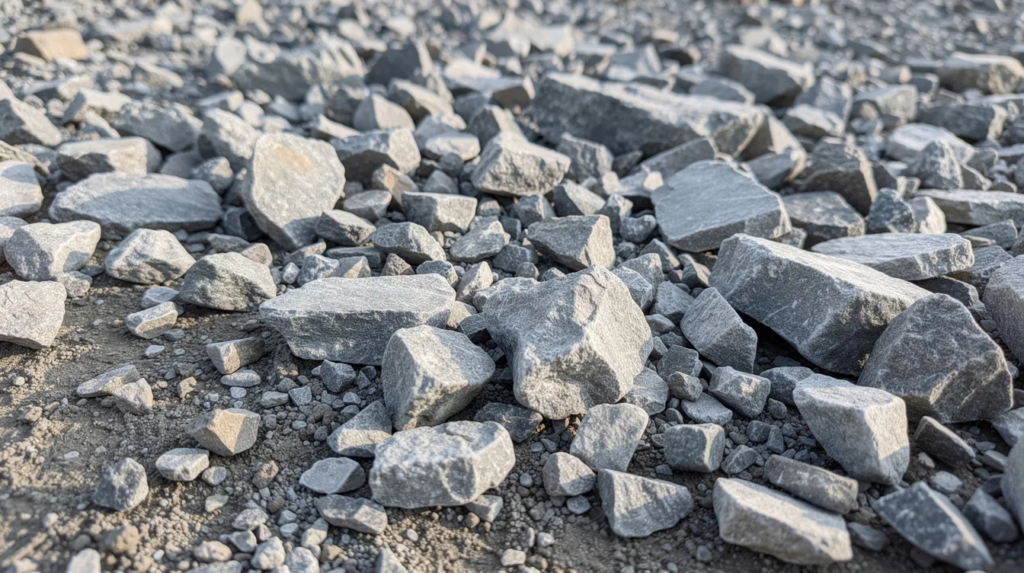
Keep in mind that density and coverage can vary by rock type. A ton of limestone versus granite will cover different areas at the same depth. Always ask your supplier for the actual stone size range in inches when ordering, since similar size names for gravel and crushed stone can cause confusion.
Minus vs. Clean Rock: Compaction vs. Drainage
Choosing between minus and clean matters more than obsessing over tiny size differences. This single decision affects whether your project drains properly or holds firm under load.
Minus rock products contain a blend of stone sizes plus fines that aid compaction. Examples include 3/4″ minus, 5/8″ minus, 1 1/4″ minus, crusher run, and regional products like 21AA or 22A road base. Minus rock products compact well for concrete pavement bases and are typically used where a firm, sturdy surface is needed: driveways, patio bases, and shed pads. Minus rock products contain fines that fill voids between larger pieces, creating a dense, locked-together surface.
Clean rock products have been washed or screened to remove most fines. Examples include 3/4″ clean, 1 1/2″ clean, #57 stone, and #67 stone. Clean rock products allow better water drainage in landscaping and are the standard choice for French drains, around perforated pipe, dry wells, and foundation backfill.
Here is how they compare:
- Minus: Better compaction, smoother driving or walking surface. Poorer drainage. May hold water in wet soil conditions.
- Clean: Excellent drainage, allowing water to pass through freely. Less compaction. Pieces may shift if used alone as a surface layer without a solid base underneath.
Clean rock allows for better drainage compared to minus rock, which offers better stability. Many projects use a combination of both: a clean stone drainage layer topped with a minus product for a stable surface.
Recommended Rock Sizes by Project Type
This is where rock sizing gets project-specific. Function and aesthetics are key factors in selecting rock sizes for landscaping, driveways, and drainage, so consider both when making your choice.
Gravel driveways and parking pads:
- Base layer: 1″–1 1/2″ minus or crusher run, typically 4″–8″ deep depending on soil and expected vehicle weight. Larger stones should be placed at the bottom of layers for a sturdy foundation.
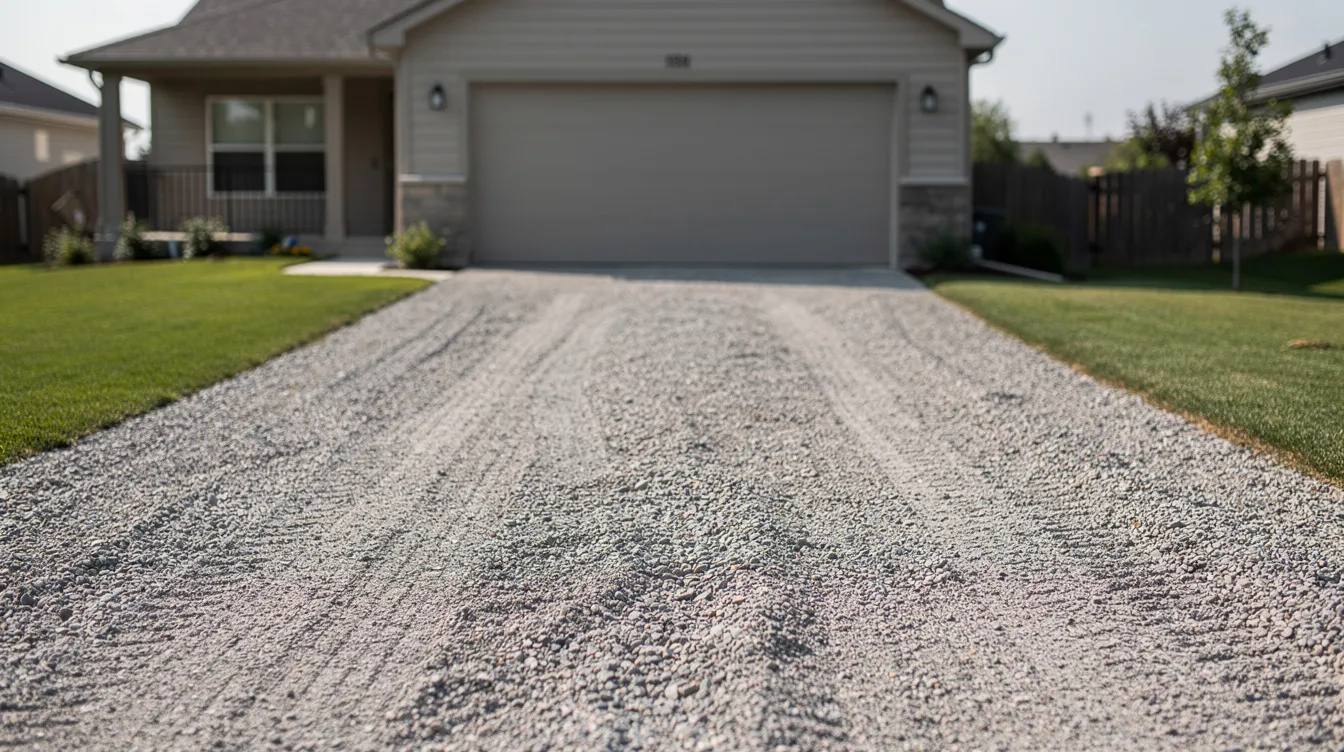
- Top layer: 3/4″ crushed stone or #57 stone is commonly used. Some regions prefer 5/8″ minus for a tighter, smoother surface. In some regions, 5/8″ minus gravel is also popular for refreshing driveways because it creates a tighter, smoother surface. For more detail, see our guide on which crushed stone size is best for a long gravel driveway.
- 1 1/4″ minus is suitable for heavy traffic areas where equipment or heavy vehicles are expected, while 1 1/4″ clean stone is also suitable for heavy traffic areas that need drainage.
- Pea gravel (3/8″) alone is usually too loose for primary vehicle traffic and will rut quickly.
French drains and drainage trenches:
- For drainage systems, clean rock sizes of 1 to 2 inches are recommended for optimal water flow. #57 stone is commonly used in drainage layers and some driveway base applications because its open gradation allows water to move through the stone layer.
- Typical trench depth ranges from 12″–24″ depending on the volume of water and slope. Many designs call for geotextile fabric and perforated pipe. Follow local code and engineer guidance.
Patios, walkways, and paver bases:
- Base course: 3/4″ minus or similar road base material, compacted in 2″–3″ lifts to a total depth of 4″–6″.
- Bedding layer: 1″ of stone dust, screenings, or coarse sand for leveling.
- Flagstone paths may use 3/8″–1/2″ pea gravel as a loose surface between stones.
Shed pads and small foundations:
- 3/4″ minus or similar compactible aggregate, 4″–8″ deep based on soil conditions and load. Keep the rock size small enough to level easily but with enough fines for strong compaction.
General landscaping and decorative beds:
- Pea gravel for play areas, paths, and between pavers.
- River rock (1″–2″ or 2″–4″) for planting beds and along house foundations. Ranging from smooth rounds to irregular shapes, these create a natural look.
- Larger rockery rock or boulders for accents. Coordinate sizes visually to match house and yard scale.
A helpful rule of thumb: installation depth for rock should typically be 1.5 to 2 times the diameter of the stones. Use the Crushed Stone Calculator to estimate cubic yards and tons based on your desired depth, then add a 5%–10% waste factor for settling and irregular areas.
Pea Gravel, Stone Dust, and Other Fine Materials
Small rock sizes behave differently than larger stone and play a critical role in finishes, comfort, and weed suppression.
Pea gravel consists of typically 3/8″ or 1/2″ rounded stones. It is very comfortable underfoot but tends to shift and migrate without edging. Pea gravel is commonly used for landscaping and drainage, especially around fire pits, playgrounds, and decorative borders. Smaller rocks are often better for ground cover and suppressing weed growth, making pea gravel a practical choice for beds where you want low maintenance.
Stone dust and screenings are very fine particles ranging from rock powder up to about 1/8″. They are often used as a bedding layer under pavers to help with leveling. Stone dust can hold water and may not drain as well as coarse sand, so check local best practices before committing to it as your only bedding material.
Other fine materials include concrete sand and masonry sand as alternatives to stone dust, and crusher run, which blends fines and small stone into a base that compacts tightly under patios and walkways. Note that 1/4″ minus is often used for hiking trails where a firm, walkable surface is needed, but 1/4″ minus is too fine for driveways and will not hold up under tire traffic.
Typical depths: 1″ bedding layer under pavers, 2″–3″ pea gravel surface for comfort and coverage. Fines-heavy materials change density significantly with moisture and compaction, so calculator estimates are planning-level and should be checked against your supplier’s weight-per-yard data.
Large Rock: Rockery Rock, One Man, Two Man, and Three Man Sizes
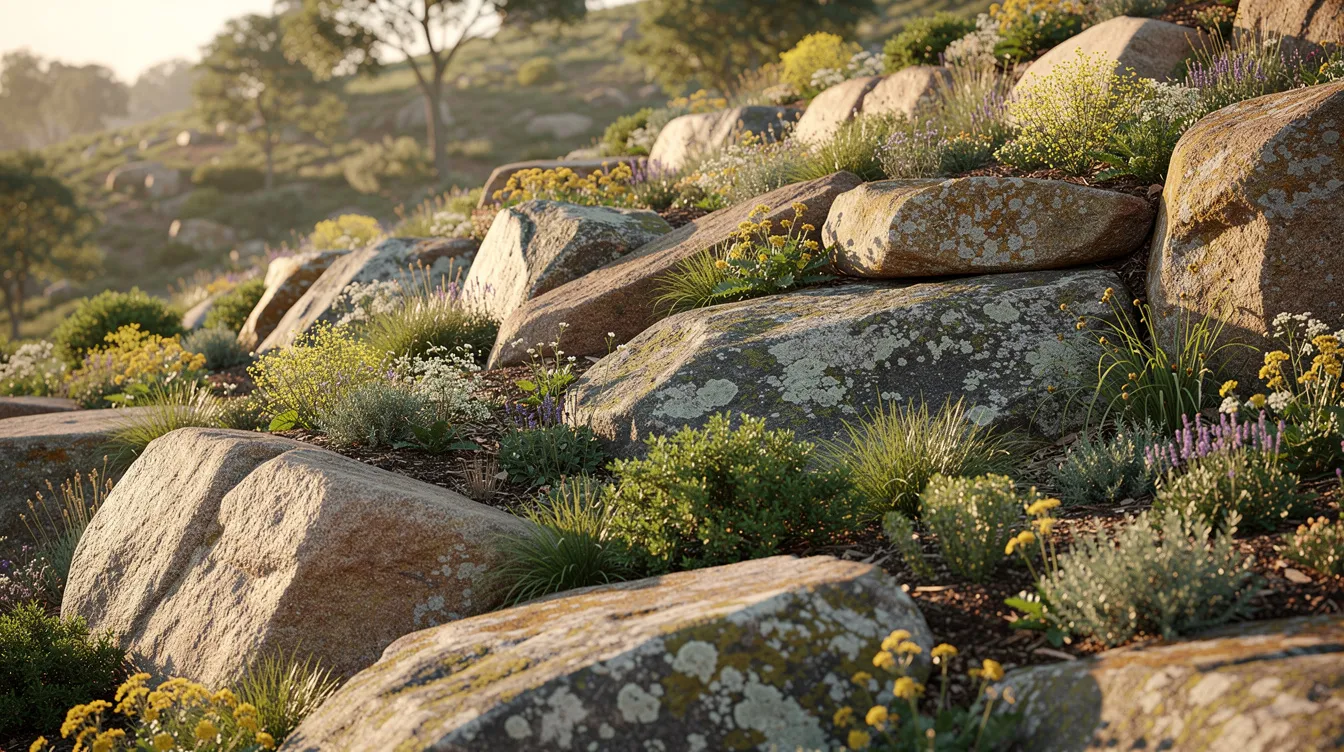
Large rocks and boulders are sized differently from gravel. Instead of sieve numbers, they are often described by what a person or machine can handle. Boulders are classified by size and weight for landscaping applications, and the terminology varies somewhat by region.
Rockery rock and landscape boulders are generally 8 inches and larger, used for walls, steps, and decorative accents. They are often sold individually or by weight rather than by cubic yard.
Common “man” size terms used at many U.S. quarries:
- One man rock: Roughly 8″–12″ in diameter, often about 20–200 lbs depending on stone type and shape. Smaller pieces may be moved by hand, but heavier pieces usually need a pry bar, dolly, wheelbarrow, or small equipment for safer placement.
- Two man rock: Roughly 12″–18″, about 200–700 lbs. Usually requires two people, a dolly, or small equipment.
- Three man rock: Roughly 18″–28″+, several hundred pounds up to 1,500+ lbs. Requires a skid steer, mini-excavator, or similar machinery.
- Six man rock and larger: These massive boulders require heavy transportation and equipment for placement and are typically reserved for major landscape features or commercial projects.
Larger rocks are used in erosion control to resist being washed away, and riprap design often calls for pieces in the 6″–24″+ range depending on water flow velocity. Maintenance needs vary with rock size; larger rocks may be easier to move individually for maintenance or repositioning.
Actual size and weight ranges can vary by supplier, so ask for the quarry’s specific boulder size chart. Equipment access, slope, and soil conditions matter more with large rock. Plan your delivery route and placement before ordering.
While the Washington State Department of Transportation and other state DOTs publish their own specs for different types of riprap and rockery rock, your local quarry can usually help you match the right product to your project. If heavy equipment is needed for boulder placement, confirm driveway access, overhead clearance, slope, and safe unloading space before delivery.
Gradation and Rock Size Tolerances
Gradation refers to the size distribution of rock products. It is what determines how a product compacts, drains, and holds together. Crushed stone grades are categorized by specific screen sizes through a process called sieve analysis, where rock passes through a series of screens with progressively smaller openings.
A product described as 3/4″ minus will still have some larger and smaller pieces within an acceptable tolerance. D50 refers to the median particle size in a gradation, meaning about 50% of the material is finer by weight.
In many states, DOT or local standards specify gradation bands for road base and structural aggregate. Landscape yards may use more informal naming. Do not worry if two suppliers offer slightly different gradations for the “same” size, as long as your project does not require an exact engineering spec.
For example, #57 stone ranges from 1 inch to 3/8 inch in size. Its gradation allows a variety of particle sizes that provide both drainage and some degree of interlock, making it suitable for a wide variety of projects.
When talking to suppliers, ask three things: the size range in inches, the presence of fines, and what the product is typically used for. That gives you enough information to make a confident decision.
Estimating Quantity: Using Crushed Stone Calculator for Rock Sizing
Undershooting or overshooting rock quantity is one of the most common DIY problems. Getting a planning-level estimate before you order can save you a second delivery fee or a pile of leftover stone in your yard.
Rock size affects coverage directly. Smaller stone and stone dust pack more tightly, so you need more tons per cubic yard for the same area. Larger rock (2″+) has more void space, so you may need deeper layers for full visual coverage.
Here is how to use the Crushed Stone Calculator:
- Measure your project length, width, and desired depth in inches based on the recommended rock size for your application.
- Choose the rock type or a typical density value from the calculator’s presets.
- Review the cubic yards and tons output, then add a waste factor (often 5%–10%) for irregular areas, compaction, and settling.
Cross-check the calculator’s planning-level density with your supplier’s published weight per cubic yard, especially for unique materials like lava rock or very large rockery rock. You can also review current crushed stone cost per ton to build a realistic budget. Round up to the nearest full truckload your supplier offers and confirm delivery minimums and fees before placing your order.
Common Rock Sizing Mistakes and How to Avoid Them
Most rock problems come from choosing the wrong size or not planning depth correctly. Here are the mistakes we see most often.
Wrong size for the job:
- Using pea gravel or river rock as the only material for a vehicle driveway. These rounded stones do not interlock and will form ruts and tire tracks quickly.
- Choosing stone that is too large for thin layers. Trying to level with 2″ rock at a 1″ depth creates an unstable, broken surface that is hard to walk or drive on.
- Skipping a compactible base (minus or crusher run) under patios and walkways and relying only on clean stone or sand.
Underestimating quantity:
- Not accounting for compaction and settlement, so the finished surface ends up below grade. Some fines-heavy products, such as crusher run, screenings, or minus gravel, can lose noticeable loose volume after compaction, sometimes around 10%–20% depending on moisture, gradation, and compaction method. Clean stone usually behaves differently because it has fewer fines, so use a 5%–10% waste factor for most residential estimates and confirm supplier guidance for the material you are ordering.
- Forgetting to convert depth from inches to feet when calculating cubic yards, which throws off your equations entirely.
How to avoid these problems:
- Confirm recommended rock sizes and depths for each project type using this guide as a source.
- Use the Crushed Stone Calculator before purchasing to create a realistic planning estimate.
- Talk to a local supplier about soil conditions, freeze-thaw cycles, and slope before finalizing your size and depth.
Visual impact should be considered when choosing landscape rock sizes. Smaller rocks are suited for pathways where comfort matters, while larger stones make better accents and borders. Finally, treat this sizing guidance as a starting point. For critical structures, steep slopes, or high water-flow areas, consult a local professional or engineer to protect your investment and ensure long-term performance.
Pingback: Estimate Landscape Rock Fast: Calculator, Density, 3 Examples