Table of Contents
Planning a driveway, drainage trench, or patio base? Understanding the cost of 57 stone can help you estimate what you’ll pay in 2026 — and how to calculate your total project cost before you place an order..
Quick Answer: Typical Cost of #57 Stone In 2026
The typical cost of #57 stone often ranges from about $25 to $75 per ton in 2026, with quarry or bulk pickup commonly on the lower end and landscape-yard or retail pricing often running higher. Prices may vary based on location, quarry, and material type, with coastal and urban areas frequently running higher.
- Price per cubic yard: Often about $50–$110 per cubic yard, depending on stone type and local density assumptions.
- Delivery fees: Can add $75–$200+ per load depending on distance, minimum order size, fuel surcharge, and truck capacity. Transport distance increases the cost of 57 stone significantly.
- 5-ton example: A small driveway repair may run approximately $250–$600 including delivery in many areas.
- 10-ton example: A French drain plus shed pad project may total about $450–$950+ depending on material price, delivery distance, and local minimums.
Always confirm current per-ton or per-yard pricing, delivery fees, taxes, and minimum order amounts with your local supplier. Before calling, use the Crushed Stone Calculator or Gravel Calculator to estimate how many tons or cubic yards you need so you can request a more accurate quote.
What Is #57 Stone & Why It’s Priced Per Ton
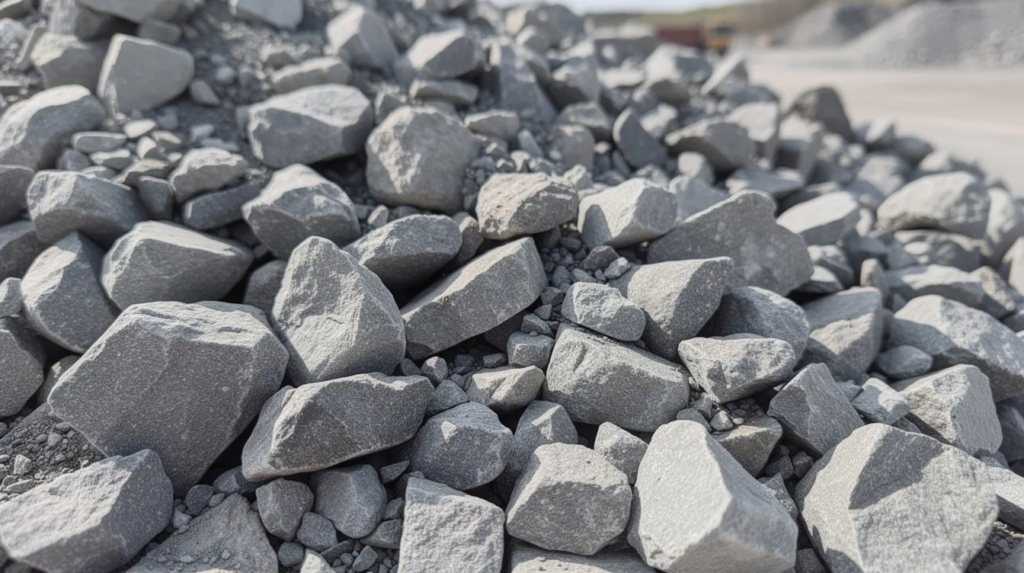
Number 57 stone is an angular, crushed stone aggregate that typically ranges from 1/2 to 1 inch in size. It’s commonly made from limestone or granite in the U.S. and is one of the most versatile aggregates for home and commercial projects.
- The “57” refers to gradation and size — not rock type. Limestone #57, granite #57, and recycled concrete #57 each carry different price points.
- Common types of 57 stone include granite and limestone, though standard crushed stone options also include recycled concrete.
- Clean 57 stone is washed to remove fine dust and dirt, making it ideal for drainage. Unwashed stone may cost less, but it is not suitable for every application, especially where clean drainage stone is required.
Main uses relevant to cost: driveways, parking areas, patios, shed and patio bases, French drains, trench backfill, retaining wall drainage, and some code-approved septic drain field designs. It is frequently used in French drain systems and often used as coarse aggregate in concrete mixes, giving it broad appeal for contractors and DIY users alike.
57 stone is commonly sold by the ton or cubic yard. Suppliers prefer weight because moisture content and voids make volume alone unreliable. That said, many will quote an approximate price per cubic yard for convenience. For estimating, #57 stone commonly weighs about 1.3 to 1.5 tons per cubic yard, and many calculators use around 1.4 tons per cubic yard as a practical planning value.
Typical #57 Stone Prices Per Ton, Per Cubic Yard & By Truckload
All numbers below are approximate examples only. Prices vary by region, quarry, stone type, fuel costs, and order size.
| Pricing Method | Common planning range in 2026 |
|---|---|
| Per ton (picked up) | About $25–$75 per ton |
| Per cubic yard (picked up) | About $40–$110 per cubic yard |
| Per ton (delivered, small load) | About $50–$150+ per ton after delivery impact |
| Full truckload (15–20 tons, delivered) | About $700–$1,500+ total depending on distance and region |
- Regions near quarries usually have lower prices for 57 stone. A Midwest quarry may sell basic limestone #57 around $43–$50 per ton at the pit, while a Northeast landscape yard may charge $79–$85 per cubic yard for the same material.
- Costs for full truckloads of 57 stone are typically lower per ton because delivery cost is spread across 15–20 tons. Aggregate suppliers typically offer discounts on bulk orders.
- Specialty or decorative stones — like white 57 stone or color blends — typically increase overall costs, sometimes significantly. Standard grey limestone is commonly the most affordable option.
- Granite #57 can be equal or slightly higher than limestone depending on quarry proximity. The price of 57 stone varies by rock type and location.
- All example pricing is before sales tax. Suppliers may add fuel surcharges, weekend fees, or extra costs for small-load deliveries.
For broader context on how #57 compares to crusher run or pea gravel, view a crushed stone cost comparison or limestone pricing guide.
Cost Factors That Change The Price Of 57 Stone For Your Project
The sticker price per ton is only part of total cost. Delivery, depth, coverage, and site conditions can change the final bill by hundreds of dollars.
- Location and distance: Delivery distance can significantly increase the total cost of 57 stone. Hauling across counties or state lines can double freight charges. A quarry 10 miles away is far cheaper to deliver from than one 40 miles out.
- Stone type and color: Standard grey limestone #57 is often cheapest. Granite, decorative white stone, or washed stone products command premium pricing, making material selection important for budget.
- Supplier type: Quarries may offer better bulk rates but require higher minimums. Landscape yards allow small orders but commonly charge more per ton.
- Order size and minimums: Many suppliers require a minimum delivery of 3–5 tons. Orders below that are often pickup only or hit with a small-load fee. Some companies deliver free for 15+ tons.
- Weight and coverage: One ton of 57 stone typically covers 100 square feet per ton at 2 inches deep, or about 65 square feet per ton at 3 inches deep. Coverage estimates may vary based on placement depth and conditions. Enter your project dimensions into the Gravel Calculator to dial in your quantity before ordering.
- Project prep: Driveways may need a compacted base of crusher run beneath #57, adding material cost. French drains and some code-approved septic or drainage designs may require washed #57 stone around perforated pipe plus filter fabric; these items add to your total budget beyond stone alone.
- Timing: Construction season, fuel prices, and quarry production can shift pricing several times per year. Call ahead for a current quote.
Ask suppliers about price per ton, delivery radius, fuel surcharges, tailgate spreading fees, and whether taxes are included.
How To Estimate Total 57 Stone Cost For Driveways, French Drains & Small Projects
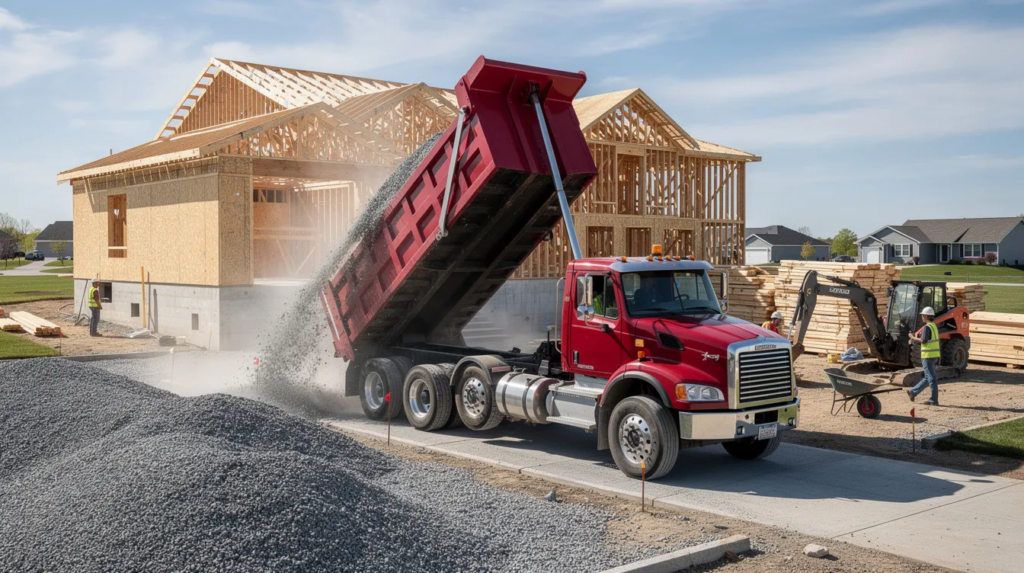
Accurate cost planning starts with a solid quantity estimate in cubic yards and tons, then adding delivery and a contingency for waste. Add 10% extra for waste or placement variation on most projects — more for irregular areas.
Step-by-step using the Gravel Calculator:
- Measure your project area: length, width, and target depth in inches for your driveway, walkway, patio base, shed pad, or French drain trench.
- Enter measurements into the Gravel Calculator to get cubic yards and tons of 57 stone needed.
- Add a 5–10% waste factor for compaction, uneven subgrade, and spillage.
- Multiply tons needed by your local price per ton. Add quoted delivery fee, tax, and any Saturday or small-load surcharges.
Quick example scenarios:
| Project | Dimensions | Approx. Tons | Sample Cost Range |
|---|---|---|---|
| Driveway resurface | 12′ × 30′ × 3″ deep | ~4.5–5 tons | $275–$650 delivered |
| French drain | 60′ × 1.5′ × 2′ deep | ~9–10 tons | $500–$1,050 delivered |
| Shed pad / patio base | 10′ × 12′ × 4″ deep | ~2 tons | $175–$400 delivered |
57 stone is used for driveways, drainage, and concrete mixes across all of these project types, thanks to its versatility and consistent gradation. It serves as a reliable base for driveways and roads and is commonly used for drainage applications where water needs to move freely.
Contact multiple local suppliers with your calculator results to compare per-ton pricing, delivery windows, and minimum orders. By combining your Gravel Calculator estimate with 2–3 local quotes, you’ll have a realistic budget locked in — no surprise costs on delivery day. Email or call suppliers directly, and don’t forget to ask about haul-away or removal services if you’re replacing existing gravel, soil, or overgrown material.
Pingback: No. 57 Stone Guide: Sizing, Uses, Price & How Much You Need
Pingback: Crushed Rocks: Types, Sizes, Uses & How Much You Need