Table of Contents
Whether you’re planning a driveway, drainage system, patio base, or landscaping refresh, the choice between gravel or crushed stone comes up fast – and the answer matters more than most people expect. These two materials look similar in a supplier’s yard, but they perform very differently once they’re on your property.
This guide breaks down the key differences between crushed stone and gravel, explains which products work best for specific construction and landscaping projects, and helps you order the right amount at a fair price.
Quick Answer: Gravel vs. Crushed Stone for Common Home Projects
The short version: crushed stone (including crusher run) is usually the better choice for structural bases and anything that carries vehicle weight. Natural gravel – including pea gravel and river rock – is usually the better choice for decorative ground cover, barefoot-friendly surfaces, and light-traffic areas.
The choice between gravel and crushed stone often depends on project requirements. Here’s a quick pairing of common project types with the material that typically performs best:
- Gravel driveway base: Crusher run or dense-grade crushed stone, compacted in lifts, for a stable surface under vehicles.
- Driveway surface layer: 3/4″ crushed stone, #57 stone, or a local driveway topping over a compacted base, depending on whether you want better drainage, a cleaner look, or a tighter driving surface.
- French drains and drainage systems: Clean, washed crushed stone (#57 or similar) without fines, or clean natural gravel – either works well for water flow.
- Paver patio base: Compacted crusher run or road base with coarse concrete sand for traditional pavers; #8 stone may be used in some open-graded paver systems.
- Shed pad or parking pad: 4–8 inches of compacted crushed stone base; rounded gravel is usually too loose for structural support.
- Flower beds and decorative landscaping: Pea gravel, river rock, or colored gravel for aesthetic appeal and a natural aesthetic.
Before ordering any material, you can plug your project dimensions and chosen depth into the Crushed Stone Calculator to estimate cubic yards, tons, and approximate cost.
What Is Crushed Stone?
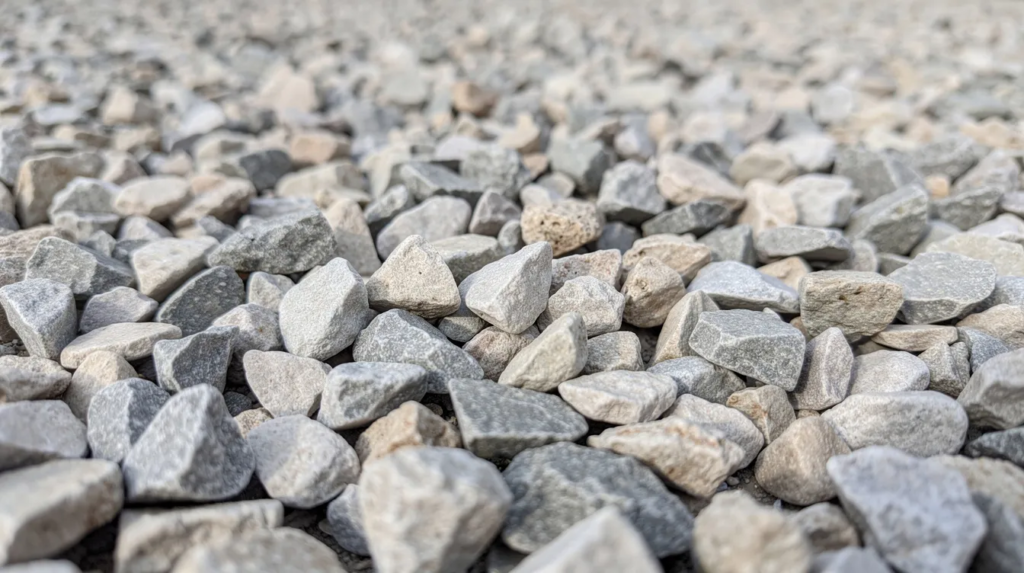
Crushed stone is a construction aggregate made by mechanically crushing quarried bedrock into angular pieces. The parent rock is often limestone, granite, or trap rock – with limestone being the most commonly used rock type for crushed stone in the United States. Essentially, crushed stone is man-made from larger rocks that are broken down and screened to specific sizes.
Crushed stone is available in a variety of sizes for different applications and is graded based on size and use. Common U.S. designations include #57 stone, #8 stone, #67 stone, and blended products like crusher run or road base. Terms like “crushed rock,” crushed gravel, and crushed granite on supplier price sheets often refer to this same family of angular, machine-made stone aggregate products.
What makes crushed stone especially useful for building projects is its shape. Crushed stone has angular edges that interlock when compacted, which improves strength and creates a stable surface that resists shifting under heavy loads. This interlocking quality is why most crushed stone goes into base layers, driveways, road construction, and foundation backfill.
Crushed stone is also often used as aggregate in ready-mix concrete, making it a backbone material for concrete mixes and broader construction projects across the country.
What Is Gravel?
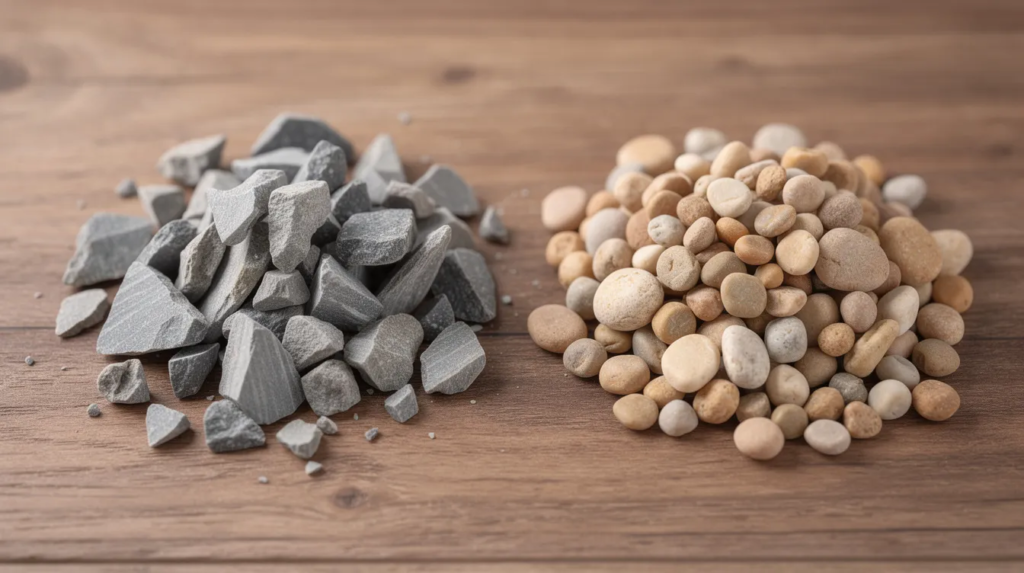
Gravel is a natural material with rounded edges, formed over time by weathering and water transport in rivers, streams, and glacial deposits. Unlike crushed stone, gravel is naturally rounded from water transport processes – tumbled and smoothed by natural processes rather than mechanical crushing.
The key differences from crushed stone are shape (rounded vs. angular) and origin (natural rock deposits vs. quarried and crushed), not just particle size. Gravel offers a more natural appearance compared to crushed stone, which is why it’s commonly used for decorative landscaping and pathways.
Common decorative gravel products in the U.S. include pea gravel (approximately 3/8 inch and smaller, with a smooth texture and rounded shape) and river rock (often 1–2 inches in diameter), which are typically sold by color or blend. The specific type of gravel chosen can influence its price significantly – basic washed pea gravel costs far less than polished Mexican beach pebbles.
One important caution: some regions use “gravel” as a generic term for both natural gravel and crushed stone products. If a supplier quotes you “gravel,” always confirm whether the material is naturally rounded or mechanically broken, what the gradation is, and whether it includes fines or stone dust.
Crushed Stone vs. Gravel: Key Differences That Affect Your Project
Understanding the distinct characteristics of these two materials helps you avoid costly mistakes. Here’s how crushed stone and gravel compare on the factors that matter most:
- Compaction and stability: Angular crushed stone generally interlocks better than rounded gravel, while crusher run and dense-grade crushed stone compact tightly and resist rutting under vehicle tires and foot traffic. Rounded gravel stays looser, tends to shift, and doesn’t interlock the same way. Crushed stone requires less maintenance and stays in place better than gravel.
- Drainage: Both materials provide excellent drainage when “clean” (meaning little or no stone dust mixed in). Drainage depends more on gradation and fines than on the name alone. Clean, open-graded crushed stone and clean natural gravel can both drain well, while too many fines or over-compaction can slow water movement.
- Surface comfort: Crushed stone can be sharper under bare feet due to its angular edges. Pea gravel and smooth river rock, with their rounded edges and smooth surfaces, are usually more comfortable for walking and play areas.
- Appearance: Gravel is often preferred for decorative landscaping projects where a smooth finish and color variety matter. Crushed stone has a more rugged, uniform look suited to structural and utilitarian areas.
- Load capacity: Crushed stone is typically used for heavy-duty construction and is recommended for driveways and parking areas. Gravel is less stable and better suited for decorative applications and areas with light foot traffic – gravel is commonly preferred for areas with light foot traffic like garden paths and landscaping beds.
- Maintenance: Crushed stone is often used for road and path construction due to its stability, while loose gravel may need periodic re-leveling and edging to stay contained.
The choice often depends on how much load the surface will carry, your drainage needs, and the desired look for your project type.
Common Crushed Stone Products, Sizes, and Uses
U.S. suppliers use numbered stone sizes and blended base materials, each suited to specific tasks. Common crushed stone sizes include #8 stone, #57 stone, and #67 stone. Here are the products you’ll encounter most often:
- #57 stone (about 3/4 inch): A versatile, clean crushed stone with a density around 2,700–2,800 lb per cubic yard. #57 stone is commonly used for drainage layers, foundation backfill, French drains, and some driveway base or surface applications where clean angular stone fits the design. It drains well and is one of the most widely available gravel products in the country.
- #8 stone (about 3/8 to 1/2 inch): A finer crushed stone often used for concrete mixes and thin asphalt layers, paver bedding over a compacted base, and some decorative purposes. Not ideal for supporting heavy loads on its own.
- #67 stone (slightly smaller than #57): Gradation from about 3/4 inch down to No. 4 sieve. Useful where a thinner, yet still draining, layer is needed – such as under slabs, in tighter forms, or where smaller stone pieces are preferred.
- Crusher run / road base (also called dense-grade aggregate, 21AA limestone, 22A or 23A gravel depending on region): A blend of multiple sizes of crushed stone with stone dust and fines that compacts into a rock-solid base. This is the go-to for base layers under residential driveways, patios, shed pads, and parking lots. Available in multiple sizes of aggregate depending on regional specs.
- Regional naming varies significantly. What’s called “CA6” in Illinois might be “ABC base” in North Carolina or “SB2” in another state. Always confirm local specifications and availability with your supplier, and verify whether a product is limestone or granite based since rock hardness affects long-term durability.
Popular Gravel Products: Pea Gravel, River Rock, and More
Decorative gravel products serve a different purpose than structural base materials. They’re chosen primarily for aesthetic appeal, comfort, and drainage or erosion control in landscaping projects.
- Pea gravel (roughly 1/4 to 3/8 inch, with some pieces up to 1/2 inch): Pea gravel is typically 1/2 inch or smaller in size, with a naturally rounded, smooth texture. Common uses include playgrounds, pool decks, fire pit areas, casual walkways, and decorative ground cover. It tends to scatter without proper edging or containment and isn’t suitable as a base for larger stones or concrete blocks.
- River rock (often 1–2 inches in diameter): River rock usually ranges from 1 to 2 inches in diameter, though larger rocks are available. It works well in landscaping beds, around downspouts, in dry creek beds, alongside water features, and as a mulch alternative. Its rounded shape and color variety provide a natural aesthetic that’s hard to replicate with crushed materials.
- Other decorative options: Egg rock, marble chips, colored gravel, and polished stone are generally chosen for appearance rather than structural strength. These are typically found at specialty landscape supply yards and may cost considerably more than standard small gravel or crushed stone.
Most natural gravel is sold washed and screened by size, which improves drainage and appearance but may increase cost compared to unprocessed construction materials.
Crushed Stone vs. Gravel for Driveways, Patios, Walkways, and Drainage
Here’s project-by-project guidance to help you choose the right material:
- Driveways: Crushed stone is recommended for driveways and parking areas. A common residential build-up uses about 4–8 inches of compacted crusher run or road base, then a thinner surface layer such as 3/4″ crushed stone, #57 stone, or a local driveway topping material depending on drainage needs, tire traffic, and desired surface finish. This layered approach creates a strong foundation that holds up under vehicle weight. A well-chosen stone size for a long gravel driveway can reduce rutting, washout, and maintenance when it is installed over a properly compacted base. Pea gravel driveways may work for light-use, low-traffic settings where aesthetics and low cost matter more than longevity.
- Patios and walkways: Use a compactable base (crusher run or similar) under pavers or concrete. For visible surface layers, small crushed stone like #8 provides a decorative finish that locks in place, while pea gravel gives a softer, more relaxed look – but expect some shifting. Pea gravel surface paths work best with solid edging on both sides.
- Shed pads and parking pads: A thick, well-compacted crushed stone base (often 4–8 inches deep) is essential. Rounded gravel is usually a poor base for structures or parked vehicles because it doesn’t interlock and will settle unevenly under concentrated loads.
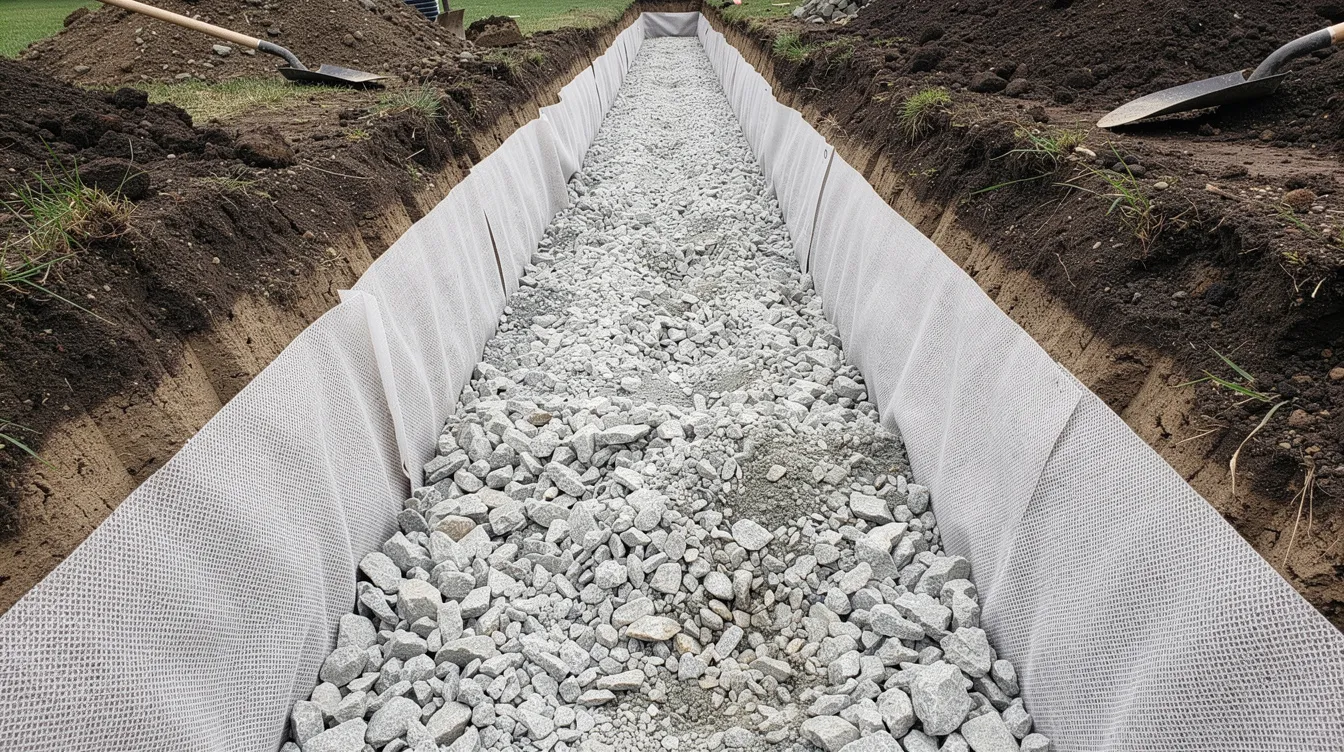
- Drainage projects: For french drains, downspout dispersal, and trench drains, use clean, washed crushed stone or gravel without stone dust to maintain water flow. Clean gravel or crushed stone is often used in French drains and some code-approved septic or drainage designs, but septic materials should always follow the approved local design and code requirements. Wrapping aggregate in geotextile fabric prevents soil from migrating in and clogging voids over time – this is especially important in clay soils. Both materials work as drainage solutions when kept free of fines.
Our Crushed Stone Calculator can estimate how many cubic yards or tons of each material you’ll need at your chosen depth for any of these drainage applications or base layers.
Strength, Compaction, and Drainage: How to Match Material to Site Conditions
Performance depends on how well the material compacts and how quickly it drains given your soil and climate conditions.
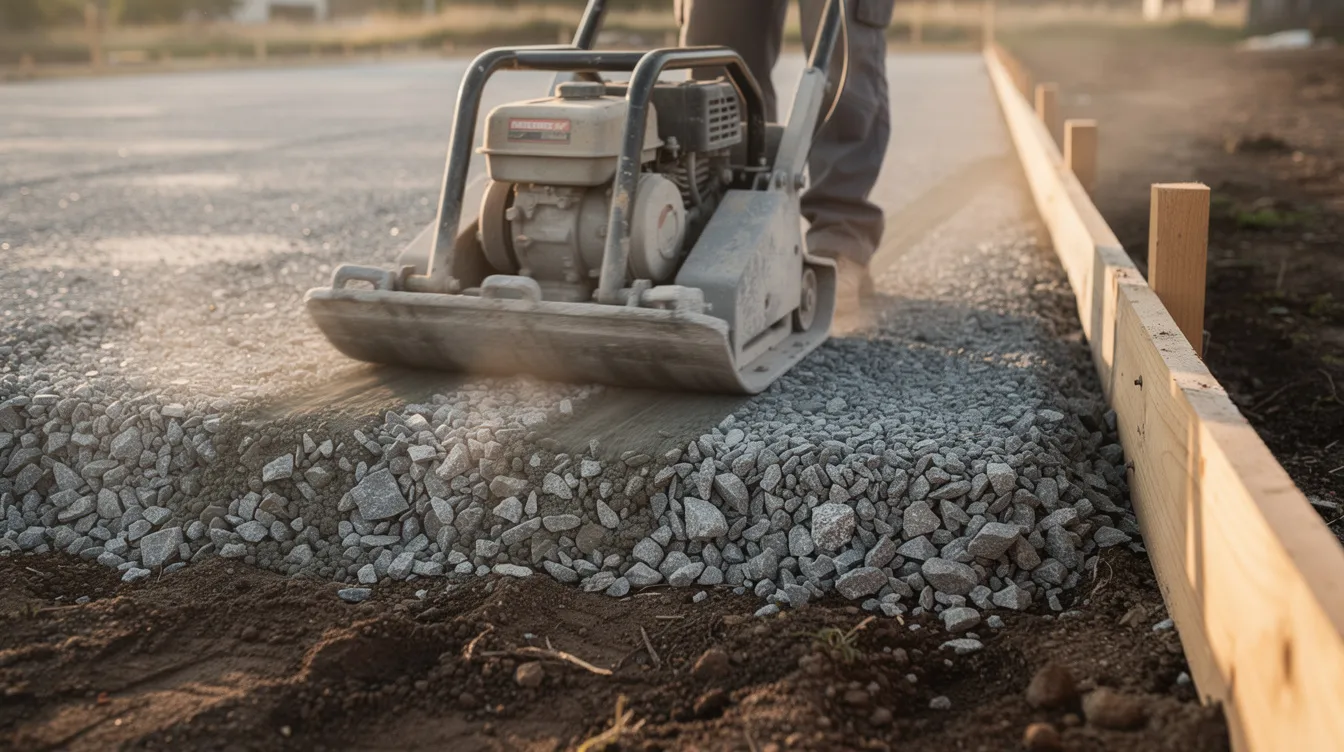
- Angular crushed stone and crusher run interlock under compaction, creating a strong foundation for residential driveways, patio base installations, and concrete slabs. Compacting in 2–4 inch lifts with a plate compactor is standard practice for high traffic areas.
- Clean, open-graded stone (like clean #57) offers excellent drainage but may require confinement or geotextile fabric to prevent migration into soft subsoil. Without containment, angular pieces can slowly work down into clay.
- Rounded gravel drains very well but tends to roll and rut under heavy loads, making it better suited for light-traffic or decorative areas. It won’t create the same kind of stable surface that interlocking crushed stone provides.
- Consider slope, freeze-thaw cycles, and local soil type when choosing materials. Dense-grade base with fines can be prone to frost heaving in cold climates if moisture accumulates. In areas with steep grades, crushed stone’s ability to lock in place offers better erosion control than loose, rounded gravel.
Cost, Environmental Impact, and Material Availability
Real-world material choice often depends on local pricing, trucking distance, and what nearby quarries produce.
- Structural vs. decorative pricing: As a planning-level range in many U.S. markets, crushed stone is often less expensive for structural uses than decorative gravels. Standard crushed stone or road base may run about $30–$50 per cubic yard delivered, while pea gravel may range from $35–$70 per cubic yard and washed river rock can reach $70–$130 per cubic yard. However, crushed stone is generally more expensive than basic unprocessed gravel because processing costs for crushed stone are typically higher than gravel. Gravel usually incurs lower production costs due to its natural occurrence. Transport distance affects the cost of both crushed stone and gravel significantly.
- Environmental impact: Crushed stone production involves significant mining emissions – quarrying and crushing are energy-intensive processes. Gravel extraction is less intensive than crushed stone production but still requires excavation and transport. Both materials can be sourced locally to reduce carbon emissions, which is the single biggest step most homeowners can take to lower the environmental impact of their construction or landscaping project.
- Recycled materials: Recycling crushed stone reduces the need for new material production. Crushed stone is often recycled on construction sites during road work, and recycled concrete aggregate can serve as an affordable base material where local codes allow.
- Before ordering, ask suppliers about source rock type, gradation, whether the material is washed, delivery minimums, and any recycled content. These details can vary by supplier even within the same region.
How to Estimate Quantities with Crushed Stone Calculator
Accurate quantity planning saves money and prevents extra delivery charges. Here’s how to get a reliable estimate before you call suppliers:
- Gather your inputs: Measure your project area in feet (length × width) and decide on your planned depth in inches. Know which material you need – for example, #57 stone for drainage, crusher run for a driveway base, or pea gravel for a garden path.
- Run the numbers: The online Crushed Stone Calculator converts your dimensions to cubic yards and estimates tons based on typical densities for common crushed stone and gravel products.
- Add a waste factor: Plan for 5–10% extra material to account for compaction, irregular areas, spillage, and minor grade adjustments. Skipping this step almost always leads to a short order.
- Confirm with your supplier: Calculator outputs are planning-level estimates. Always confirm final density, truck capacity, pricing, and availability with your local aggregate supplier before placing an order.
Practical Tips for Ordering and Installing Crushed Stone and Gravel
A few best practices will help your installation last longer regardless of which material you choose:
- Get multiple quotes: Call at least two local suppliers to compare material options (crushed stone vs. gravel), gradations, and delivered cost per ton. Prices and product names vary more than you’d expect, even between yards in the same county.
- Use geotextile fabric: Lay appropriate geotextile fabric under base layers and drainage systems to separate soil from stone aggregate and reduce contamination over time. This is especially critical over clay subsoil and for retaining wall backfill.
- Compact in lifts: For driveways, parking lots, pads, and patio base layers, spread and compact material in 2–4 inch lifts using a plate compactor or roller. One thick dump-and-go layer won’t compact properly.
- Edge loose materials: Pea gravel, river rock, and other small gravel with a rounded shape will migrate without containment. Use steel edging, concrete blocks, pavers, or timber borders to keep decorative ground cover where it belongs.
- Avoid common mistakes: Don’t use dusty base stone with sand mixed in for french drains – it clogs. Don’t skimp on base thickness under pavers. And don’t order purely by “truckload” without knowing how many cubic yards that actually is.
Choosing the Right Material: A Simple Decision Guide
The decision comes down to a handful of practical questions: How much load will the surface carry? What are your drainage needs? How important is appearance and comfort? And how much maintenance are you willing to do?
- Choose crushed stone and crusher run when you need a strong foundation under vehicles, structures, or paving. These construction materials are usually the right material for base layers, high traffic areas, parking lots, and any application where long-term stability matters most.
- Choose pea gravel, river rock, or other decorative gravel when appearance, comfort, and a natural look matter most. These are typically the right material for flower beds, walkways with light foot traffic, water features, decorative landscaping, and anywhere you want a smooth finish with a natural aesthetic.
- Sketch your project, decide on depths, and use the Crushed Stone Calculator to get cubic yard and ton estimates before calling suppliers. Knowing your numbers makes the ordering conversation faster and helps you compare quotes accurately.
- Account for local conditions: Final decisions should factor in local building codes, HOA rules, climate (especially freeze-thaw cycles), slope, and supplier guidance on what performs best in your specific area. What works in Georgia clay may not perform the same way in Minnesota sand.
The right material isn’t always the most expensive or the most popular – it’s the one that matches your site, your project, and your budget. Do the homework, run the numbers, and confirm with a local supplier before that first truckload arrives.