Table of Contents
If you are planning a driveway, drainage trench, patio base, or landscaping project, the price for gravel is one of the first numbers you need to nail down. This guide breaks down what U.S. homeowners, DIYers, and contractors actually pay in 2026 – by type, by ton, by yard, and by project – so you can figure out a realistic budget before you buy.
Quick Answer: Typical Gravel Price per Ton, per Yard, and per Project
Gravel typically costs between $25 and $55 per ton for most bulk construction products in the U.S., though prices vary based on location, type, and volume of gravel ordered. Decorative stone and specialty rock can push that higher, while basic fill or crusher run in quarry-rich areas may sit lower.
Gravel prices generally range from $15 to $115 per cubic yard, with most common driveway and base materials falling in the $30–$85 range. One cubic yard of gravel or crushed stone commonly weighs about 1.3 to 1.6 tons, with many driveway and crushed stone estimates using roughly 1.4 to 1.5 tons per cubic yard. That is why gravel is often sold by the ton: weight removes some of the guesswork that moisture and settling add to volume measurements.
Here are two planning-level examples to give you a starting reference:
- A small 12 ft x 20 ft gravel driveway at 4″ depth may need about 4–5 tons of material, often putting basic bulk material around $125–$350 before delivery and tax, with decorative or retail stone costing more.
- A 50 ft French drain with clean drainage stone might need $150–$400 of material depending on trench width and depth.
Always confirm current pricing per ton or per yard, delivery fees, fuel surcharges, taxes, and minimum order amounts with your local supplier. You can plug your project dimensions into the Crushed Stone Calculator or Gravel Calculator to estimate cubic yards, tons, and rough total material cost before phoning suppliers.
What Affects Gravel Price? (Material Type, Location, and Load Size)
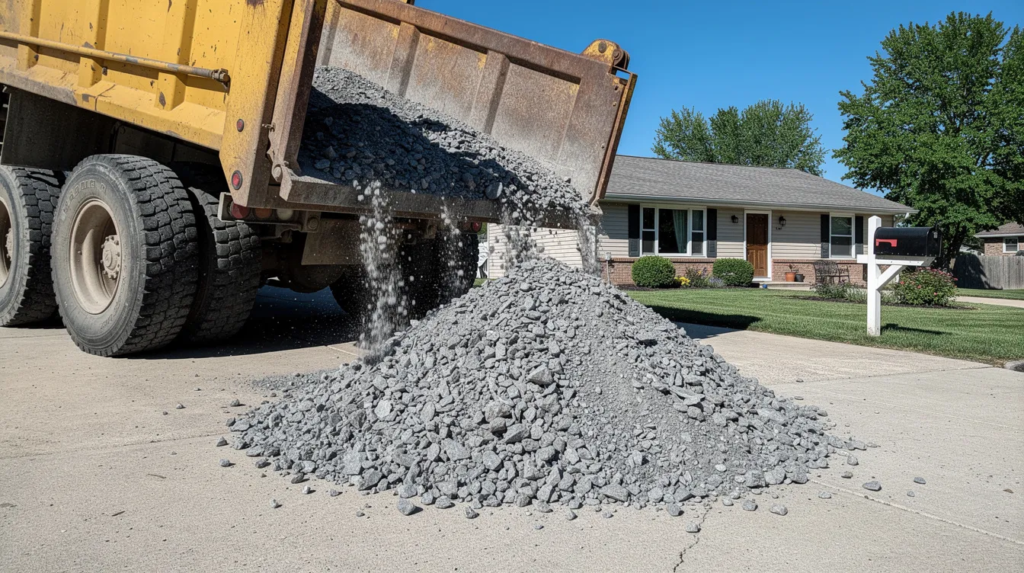
There is no single “correct” gravel price. The cost you pay depends on the type of rock, how far it travels from the quarry, and how much you order. Gravel comes in many varieties suited for different uses, and choosing the right gravel depends on project type.
Material type matters. Crushed stone – angular, fractured pieces – is structurally different from rounded gravel like pea gravel or river rock. Crushed limestone and basic crushed stone base products (crusher run, 22A gravel, 21AA limestone, 3/4 inch stone) often sit at the lower end of the pricing spectrum. Standard crushed stone is typically less expensive than decorative options such as colored river rock or polished pebbles, which require extra processing and longer haul distances.
Location drives cost. Local supply variations can significantly affect gravel prices. A quarry 10 miles away may sell crushed limestone for under $15 per ton at the pit, while the same material hauled 80 miles costs double. Urban markets with heavy demand for road base and driveway gravel sometimes run higher than rural areas near quarries. Proximity to limestone deposits in places like Ohio, Indiana, Tennessee, and Texas tends to keep limestone pricing competitive locally.
Load size and minimums. Buying in bulk reduces gravel cost per ton. Small 1–2 ton deliveries carry a higher per-ton rate plus a separate delivery fee, while full 10–20 ton truckloads usually lower the unit cost. Seasonal demand can raise gravel prices temporarily – spring and early summer driveway and landscaping work drives a lot of orders into a short time window.
Crushed Stone Calculator offers planning-level cost estimates only. Density, gradation, and final pricing must be verified with your local supplier.
Typical Gravel Prices by Type (Crushed Stone, Limestone, Pea Gravel & More)
Here is a practical comparison of common products U.S. homeowners buy. Gravel selection impacts drainage and compaction, so matching the right stone to the right job is just as important as finding a good price.
Driveway and base materials:
- Crush and run gravel, also called crusher run or 304/411 limestone in some regions, is commonly used for driveways and compacted base layers. It packs tight because the fines fill voids between larger pieces. Common price ranges for crushed stone are $25 to $45 per ton for these base products.
- Road base, 21AA limestone, and 22A gravel perform a similar role at comparable cost. Base rock is used for driveway foundations and land erosion control.
- #57 stone – a clean, angular stone often around 3/4 inch — is commonly used for drainage, concrete aggregate, and some driveway surface or base applications where clean stone fits the design. Expect $25–$40 per ton in most markets. Angular crushed stone or crushed gravel is usually better for driveways than rounded gravel because it interlocks better under traffic.
Drainage and utility gravels:
- Washed stone is commonly used for drainage projects like French drains and some code-approved septic or drainage designs. Clean #57 or #8 gravel for pipe bedding and #4 stone for erosion control may cost slightly more due to washing and grading. Pea gravel is used for drainage and backfill in lighter-duty applications.
Decorative and landscape gravels:
- River rock and colored stone are typically priced toward the high end – $50–$100+ per ton – especially where they must be trucked long distances. Rounded gravel provides a comfortable surface for walkways but should not be used as a structural base. Limestone vs granite pricing can differ dramatically depending on region.
Specialty products:
- Stone dust and screenings are used in some leveling, base, and bedding applications, but paver systems, horse stalls, and arenas should follow the project or manufacturer specifications because drainage and compaction needs vary. Limestone gravel is commonly used for erosion control along slopes and channels. Sand is sometimes blended with stone dust for paver base, while bark mulch is an entirely different product category worth considering only for non-structural landscape beds.
Estimating How Much Gravel You Need (Driveways, Patios, and Drains)
Underestimating quantity is one of the most expensive mistakes people make – it leads to extra delivery fees, project delays, and wasted time. Getting the numbers right the first day you order is needed to keep your budget on track.
Coverage rule of thumb: One ton of gravel covers approximately 80–100 square feet at 2″ depth, 60–80 sq ft at 3″ depth, and 50–65 sq ft at 4″ depth, depending on stone density.
Common project examples:
- A 2-car gravel driveway (12 ft x 40 ft, 4″ compacted depth) might require around 9–13 tons of combined base and top gravel depending on compaction and waste.
- A 10 ft x 10 ft patio base at 4″ depth might need about 1.7–2 tons of crushed stone, depending on density and waste factor.
- French drains and perimeter drains around foundations can use significant volume even at narrow widths. A 50 ft long, 1 ft wide, 1.5 ft deep trench needs roughly 3–4 tons of clean drainage gravel.
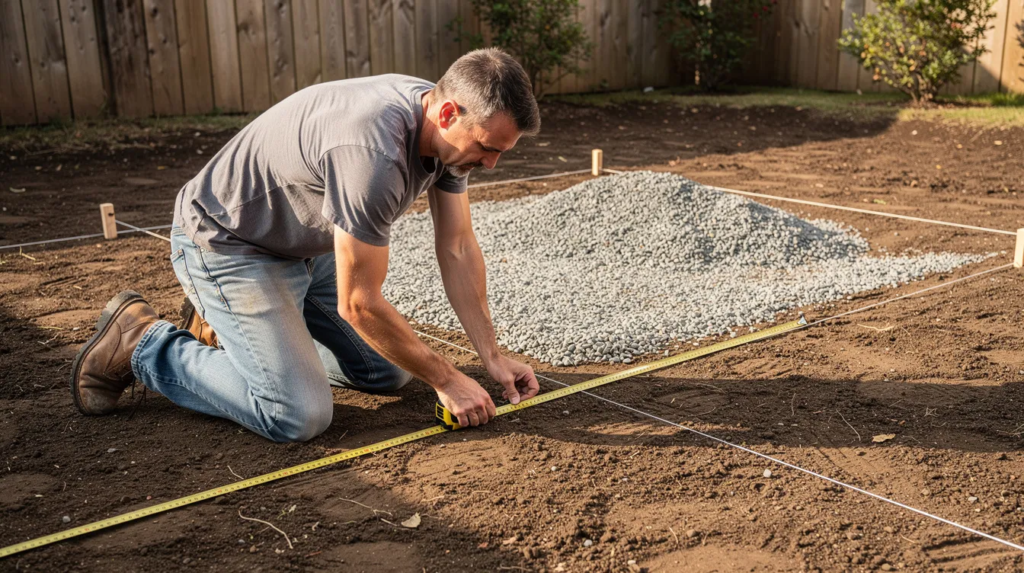
Depth and compaction matter: base layers for a gravel driveway or shed pad often need 4–8″ of compacted crushed stone, while landscape beds and walkways might only require 2–3″. Site conditions can influence labor costs for gravel placement – steep slopes or tight access add work and expense.
Use the Crushed Stone Calculator or Gravel Calculator to enter length, width, and depth in ft or inches, choose your material type, and see cubic yards, tons, and an approximate cost. Ordering about 10–15% more gravel than needed accounts for settling, spillage, and grading adjustments on uneven sites.
Understanding the Full Cost: Delivery, Fees, and Minimum Orders
The price per ton on a supplier’s page is only one line on the invoice. Delivery, distance, and minimum quantities can change the total dramatically – and this is the area where a lot of homeowners get surprised.
Common delivery fee structures:
- Gravel delivery may be included within a local service radius, often around 10–25 miles from the yard or quarry, depending on the supplier.
- For loads around 10 tons, some suppliers may add an extra mileage or fuel surcharge outside the local delivery area, often starting around $50 or more depending on distance.
- Delivery fees for gravel commonly range from about $50 to $150 for local loads, but longer distances or deliveries outside the base service area can cost more.
Truck capacities: Dump truck capacities vary, but many bulk gravel deliveries fall somewhere around 10–20 tons per load depending on truck type, road limits, and supplier policy. Many personal pickup trucks can safely carry only about 1/2 to 1 ton of gravel depending on payload rating, so check your vehicle limits before loading. Bulk delivery of gravel is often less expensive than bags from a home improvement store – sometimes dramatically so.
Example invoice breakdown for a 10-ton driveway load:
| Line Item | Estimated Cost |
|---|---|
| Material (10 tons @ $32/ton) | $320 |
| Delivery fee (within 20 miles) | $75 |
| Fuel surcharge | $25 |
| Sales tax (varies by state) | $20–$35 |
| Approximate Total | $440–$455 |
Ask suppliers specific questions: current price per ton or per yard, delivery radius, extra mileage costs, minimum order, and available discounts for full-truck or repeat orders. Many suppliers are happy to provide this information by phone or email.
How to Use Crushed Stone Calculator to Plan Your Gravel Budget
Crushed Stone Calculator is a free online tool designed for U.S. homeowners, DIYers, landscapers, and small contractors who need a quick estimate before committing to an order.
Step-by-step process:
- Select or describe your project type – gravel driveway, patio base, drainage trench, landscaping bed, shed pad, etc.
- Enter length, width, and desired gravel depth in feet or inches.
- Choose the material category – crushed stone, crushed limestone, pea gravel, river rock, road base.
- Review automatic calculations for cubic yards, tons, and suggested waste factor.
- Enter a local price per ton or per cubic yard to see a planning-level total material cost.
The calculator helps convert between tons and cubic yards using typical densities for #57 stone, crusher run, 22A gravel, 21AA limestone, and other common products. From this guide, you can also check related pages on driveway gravel selection for deeper detail. All outputs are estimates – confirm final weight, gradation, and exact pricing with your chosen local supplier.
Money-Saving Tips When Buying Gravel for Your Project
Smart planning can save hundreds of dollars on a typical gravel driveway or patio base. Here is how to take care of your budget:
- Compare 2–3 local suppliers on price per ton for the same spec material, delivery fees, and minimum orders. Prices at different places even 20 miles apart can differ by 30% or more.
- Order in one full truckload when possible to reduce per-ton cost and avoid paying multiple delivery charges for small top-off loads.
- Choose the right material for each layer. Using crusher run or 304 limestone for the base and #57 gravel for the top usually performs better – and costs less long-term – than filling an entire driveway with decorative stone. Recycled crushed concrete, where permitted, can sometimes cost 30–50% less than virgin stone for fill and base layers, but savings vary by region, supplier, gradation, and cleanliness. Confirm that the material is suitable for your project before using it.
- Plan depth correctly. Too shallow a base leads to ruts and repeated re-graveling over 3–5 years, which ends up costing more than doing a proper 4–8″ base from the start.
- Inspect samples of gravel for color and size before purchasing, especially for decorative applications where appearance matters.
- Schedule delivery when the site is ready. Grade and mark the area in advance, and ensure the dump truck has room to access and unload to avoid extra handling or wasted material.
Gravel prices in 2026 vary by material, region, and load size, but with the help of the Crushed Stone Calculator or Gravel Calculator and a few supplier quotes, U.S. homeowners can understand and lock in a realistic budget for their gravel driveway, patio, drainage, or landscaping project before committing to an order.