Table of Contents
Crushed rocks are among the most common construction materials in residential and commercial building projects. Whether you are building a driveway, filling behind a retaining wall, or laying a patio base, the type and amount of crushed rock you choose determines how well the finished surface performs. This guide covers the different types of crushed rock, how each one is used, and how to calculate the exact quantity your project requires.
Quick Overview: Crushed Rocks vs Crushed Stone vs Gravel
In most homeowner and landscaping projects, “crushed rock” and “crushed stone” refer to the same natural material: quarried bedrock that has been mechanically broken into angular pieces. Suppliers, contractors, and landscape professionals use these two terms interchangeably. The angular shape of crushed stone allows it to interlock and compact into a firm, stable surface, which is why it is the default choice for driveways, parking areas, retaining walls, and base layers under pavers.
Gravel is different. It forms through natural processes; moving water tumbles rock fragments over time, producing stones with a rounded texture and rounded edges. River rock and pea gravel are common examples. Because gravel is naturally formed with rounded edges, it shifts under load more than crushed rock does. That loose structure does give gravel excellent drainage, which makes it useful for decorative landscaping, garden beds, and light walkways.
Crushed rock compacts well due to its angular shape, while gravel provides a softer look and feel underfoot. Both are sold in a range of rock sizes. If you need a quick estimate of how much material to order for any project, the free Gravel Calculator, Rock Calculator, and Crushed Concrete Calculator on Crushed Stone Calculator can convert your dimensions into cubic yards, tons, and approximate cost in seconds.
What Is Crushed Rock and How Is It Made?
Crushed rock is produced by mechanically breaking down larger quarried rock into smaller, angular pieces sized for construction and landscaping. The crushing process starts at the quarry, where crews drill and blast bedrock to fracture it into rough blocks. Heavy machinery loads those blocks into a primary crusher, which reduces them to fist-sized pieces. Secondary and sometimes tertiary crushers break the material further, and a screening process sorts the finished product into standard grades, from large base rock down to fine stone dust.
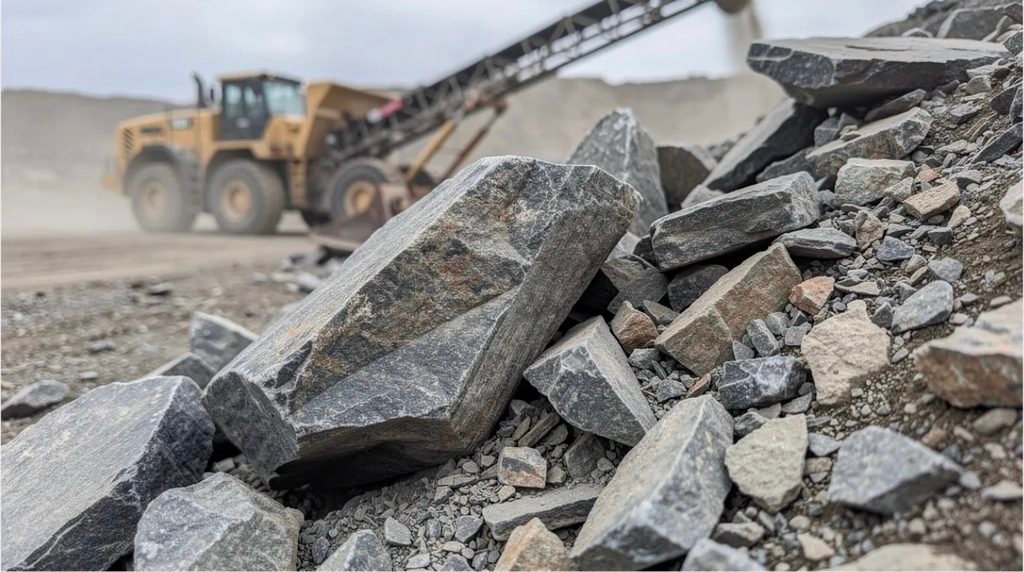
The angular edges left by mechanical breaking are what make crushed rock useful. Crushed stones have sharp, angular edges that create stable layers; those edges lock together, providing a stable surface for roads and driveways. Graded crushed stone forms the compacted foundational layer underneath asphalt and concrete.
Crushed stone is also mixed with cement or bitumen to add structural strength to concrete and asphalt pavement. Beyond road construction, crushed rock is used beneath residential and commercial foundations to prevent settling, giving structures a solid foundation. Crushed stone became popular in construction after World War II, and U.S. consumption has risen steadily since, reaching roughly 1.5 billion tons by 2025. Counting sand and gravel alongside it, total construction aggregate consumption came to about 2.6 billion tons.
Common Rock Types Used for Crushed Stone
Different parent rocks give crushed stone different strengths, colors, and drainage properties. The most common types used in the U.S. fall into sedimentary rock, igneous rock, and metamorphic rock categories.
Limestone and dolomite together account for about 70% of crushed stone production in the U.S., with granite at 14% and traprock at 6%. Limestone is abundant, easy to crush, compacts well, and works as concrete aggregate, road base, and retaining wall backfill. Crushed limestone is a popular and affordable option for homeowners on a budget.
Crushed granite is an extremely hard, dense, and durable igneous rock. Its gray, pink, or speckled tones make it a frequent choice for high traffic areas like driveways and for decorative purposes. Granite is commonly crushed for use in driveways and retaining walls because it resists abrasion better than softer stones.
Basalt (sometimes called trap rock) is a strong volcanic rock used for driveways and walkways where heavy use demands maximum wear resistance. Crushed trap rock is known for its toughness and impact resistance, and its dark color suits modern landscape designs. Dolomite behaves similarly to limestone but offers slightly better resistance to salt and acid exposure.
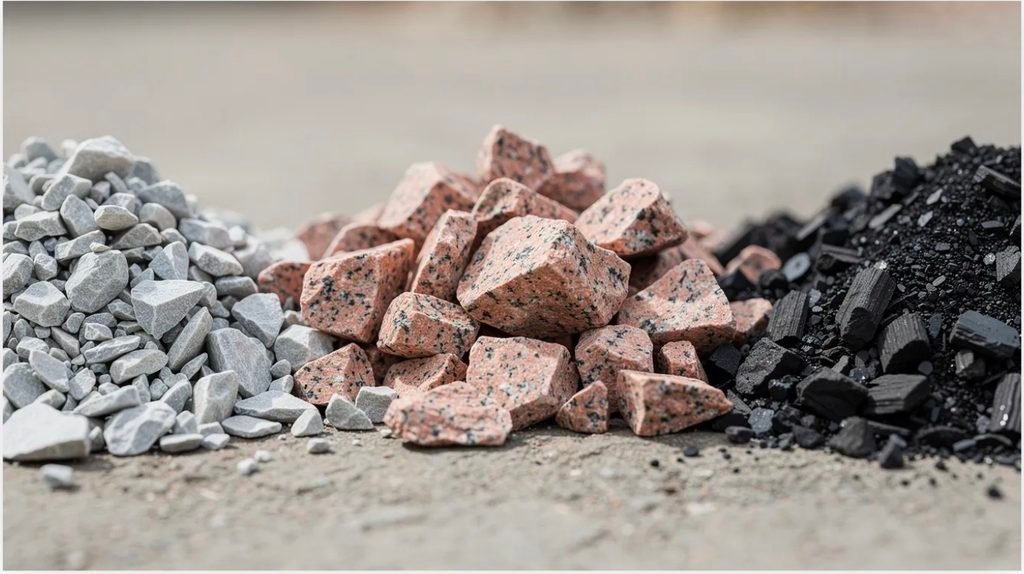
Crushed sandstone compacts securely but is softer than granite or basalt, so it works best where foot traffic is moderate or where warm tan color adds visual appeal. Crushed quartzite is highly resistant to wear and used decoratively in regions where it is quarried locally. Crushed slate consists of flaky, flat stone chips that lay flat underfoot, giving paths and flower beds a distinctive layered look.
Crushed Rock vs Gravel and Pea Gravel
Crushed rock is different from natural gravel because it is made by crushing rock to create angular edges, while gravel forms in its natural state through erosion and water movement. These two materials perform differently in every application.
Pea gravel, usually ¼ to ½ inch depending on the supplier, has a rounded shape that feels comfortable underfoot. It works well in garden beds, around fire pits, play areas, and seating spaces, provided edging keeps it contained. River rock, typically 1 to 3 inches, adds aesthetic appeal to dry creek beds and water features. Both are chosen for decorative purposes more than for structural support.
Crushed stone products containing fines (“minus” grades) compact firmly and resist rutting, making them better for driveways, base rock under pavers, and parking areas. Loose pea gravel paths need periodic raking and top-ups because rounded stones migrate. Crushed rock bases, by contrast, lock in place and require minimal maintenance compared to organic materials like wood mulch or loose gravel.
Standard Rock Sizes and How to Choose the Right One
Crushed rock and crushed stone are sold by standardized grade numbers that categorize each product, with higher numbers indicating smaller sizes. Crushed rock is sorted by these number sizes, which dictate its application.
Here are common sizes homeowners will encounter:
- ⅜” chip (close to #8): Fine, angular stone for top-dressing paths and as a smoothing layer. Stone screenings are used as a smoothing bed underneath pavers or flagstone.
- ¾” minus: Rock plus fines for compaction; a go-to base material for driveways and patios.
- #57 stone (about ¾” clean): #57 stone is widely used for driveways, drainage systems, and concrete work because it balances size with drainage capacity.
- 1½” clean: Angular stone for French drains, retaining wall backfill, and erosion control.
- Riprap (3″–6″+): Large stones for shoreline stabilization and steep-slope armoring.
“Minus” products include fines that fill gaps and help compaction. “Clean” or “washed” stone has minimal dust, so water passes through freely. Crusher run is a mix of dust and crushed stone that packs down into a solid surface, often used as a base course. For drainage systems and behind retaining walls, always choose clean stone; for compacted base layers, choose minus products.
Key Applications: Crushed Rock in Home and Landscape Projects
Crushed rocks are essential building blocks for heavy civil construction and landscaping alike. The right choice depends on whether the priority is compaction, drainage, comfort underfoot, or decorative appeal.
The sections below cover driveways, pathways, retaining walls, erosion control, drainage systems, and decorative landscaping in detail. Each ties back to recommended rock types and depths. Once you identify your needs, you can enter those dimensions into Crushed Stone Calculator tools for fast estimates before requesting supplier quotes.
Driveways and Parking Areas
Crushed rock is ideal for driveways and parking areas because its angular pieces interlock under compaction, resisting ruts and spreading under tire loads. Medium-sized angular stone, like ¾” minus or crusher run, creates a firm parking surface that holds up to daily vehicle traffic.
A typical residential driveway uses a layered approach: compacted subgrade, then a 4- to 6-inch subbase of coarse crushed stone (#2 or #3), followed by a 3- to 4-inch base of ¾” minus or #57 stone. On stable, well-drained soil a simpler build works: 4 to 6 inches of compacted ¾” minus is often enough. Soft clay or frost-prone ground is where the full layered approach earns its cost, and total depth should reach 8 to 12 inches. A properly crowned crushed rock driveway sheds water off the surface instead of letting it pool, which is what keeps the base from washing out. The compacted minus material is not free-draining like clean stone, so surface shaping does most of the work here.
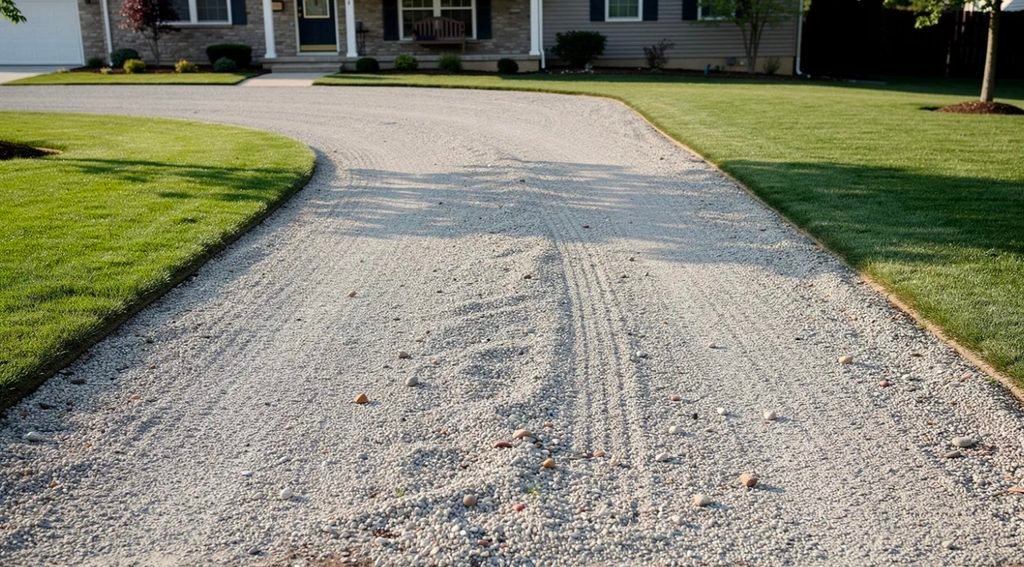
Rounded pea gravel alone is a poor choice under vehicle traffic because it rolls and displaces instead of locking together. If you are planning a gravel driveway, the Gravel Driveway Cost Per Ton guide and the Gravel Calculator can help you estimate cubic yards and tons for your planned dimensions.
Pathways, Patios, and Outdoor Living Areas
Crushed rock is used for creating pathways and walkways in both residential and commercial settings. It can serve as a compacted base under concrete pavers or as the finished walking surface itself.
Under pavers, a gravel base of compacted #57 or ¾” minus stone provides a stable platform. Stone screenings or stone dust on top create a level bedding layer for the pavers. Crushed rock aids in proper water drainage for patios by letting water filter through the base instead of pooling on the surface.
For simple paths, fines and smaller chips of crushed rock compact to form firm walking trails that resist shifting under foot traffic. A 2- to 3-inch compacted layer over landscape fabric works well. Pea gravel gives a softer, more casual look but needs edging and periodic raking. Installation components like landscape fabric, metal or plastic edging, and a plate compactor keep any crushed rock path stable long-term. Enter your path or patio length, width, and desired depth into the Crushed Stone Quantity Calculator to avoid under-ordering or expensive extra delivery trips.
Retaining Walls, Erosion Control, and Drainage Systems
A layer of crushed rock behind retaining walls facilitates drainage and reduces hydrostatic pressure, which is the main cause of wall failure. Clean angular stone (¾” to 1½”) is the standard backfill because it lets water pass through without clogging; fines or stone dust would trap moisture and defeat the purpose.
Angular crushed stones interlock for stable surfaces, assisting in slope stabilization along embankments, ditches, and shorelines. The weight and structure of crushed rock act as armor against erosion from rain, and rock layers protect exposed soil from rainfall impact to reduce erosion. Crushed rock can stabilize soil and prevent erosion on slopes where vegetation alone cannot hold.
For drainage systems, angular crushed stone allows water to flow freely in underground setups. Common uses include French drains, perforated pipe trenches, and dry wells, all of which rely on clean stone to move water away from foundations and low spots. Stone dust clogs drainage and should be kept out of these applications. You can use the Rock Calculator to size the volume of backfill or drain rock needed by entering trench length, width, and depth.
Decorative Landscaping With Crushed Rock and Pea Gravel
Crushed rock, pea gravel, and river rock serve as decorative ground cover around plants, in dry creek beds, along walkways, and in modern minimalist yard designs. Crushed rock can be used for diverse landscaping applications, providing aesthetic and functional benefits in the same way organic mulch does, but with far greater longevity.
Color and texture matter. Dark basalt chips contrast against light stucco walls; tan pea gravel complements Mediterranean plantings; white crushed quartzite brightens shaded corners. Landscape professionals often layer 2 to 3 inches of stone over weed-barrier fabric for clean aesthetics and weed suppression. Crushed stone blocks sunlight from reaching the soil, helping suppress weed growth without chemicals. Crushed rock also helps maintain moisture and oxygen exchange around plant roots, and it is pest-resistant and creates firebreaks around structures.
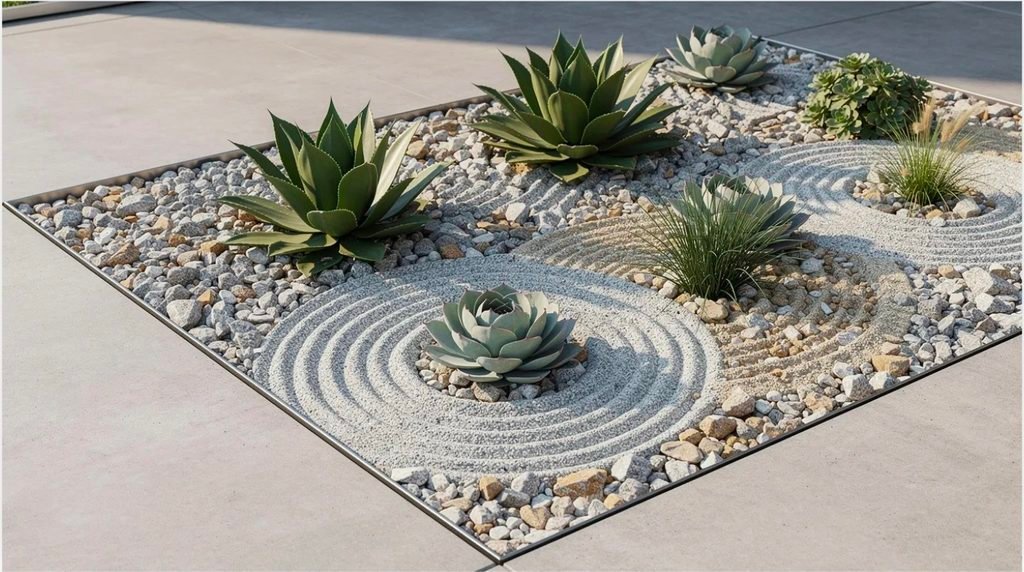
Crushed rock requires minimal maintenance compared to organic materials; it does not decompose, attract termites, or need annual replacement. It also lets rain soak into the ground instead of running off, though a weed-barrier fabric underneath will slow that down. If drainage matters in that spot, use a permeable landscape fabric or skip it entirely. In seating areas, rounded pea gravel feels more comfortable than angular crushed rock, so many homeowners use crushed stone for surrounding beds and pea gravel for the sitting zone. Collect samples from a local quarry or supplier before committing to large quantities. Once you finalize your design, Crushed Stone Calculator tools can refine material quantities and estimated weight.
Cost, Delivery, and How to Avoid Over- or Under-Ordering
Crushed stone is typically measured in cubic yards and is often sold by weight in tons. Crushed stone costs vary based on geographical factors; plant-gate prices for common products like crusher run or ¾” minus generally fall between $15 and $30 per ton, while clean #57 stone ranges from $25 to $45 per ton. Decorative or specialty stone costs more. For current pricing benchmarks, see the Crushed Stone Cost Per Ton 2026 guide.
Production costs for crushed stone include labor and energy expenses at the quarry. Transportation costs can equal or exceed production costs, especially for small loads or long hauls. Planning one well-sized delivery is almost always cheaper than making up a shortfall with a second truck.
Crushed stone density varies by type, affecting volume calculations. Loose crushed limestone weighs roughly 2,900 lb per cubic yard, or about 1.45 tons; granite runs slightly heavier at about 3,000 lb per cubic yard, or about 1.50 tons. The Stone Weight Calculator and Cubic Yards vs Tons Explained guide handle these conversions automatically. Add a 10% to 15% waste factor for compaction, spillage, and irregular project shapes. Before delivery day, confirm truck access, identify a drop zone, and lay plywood or a tarp if the truck will cross a paved driveway or lawn.
Using Crushed Stone Calculator Tools for Your Project
Crushed Stone Calculator offers free, no-signup tools built for construction projects and landscaping projects involving crushed rock, crushed stone, and gravel. The Gravel Calculator and Rock Calculator accept your project shape, dimensions, and desired depth, then return volume in cubic yards and approximate weight in tons. The Stone Weight Calculator converts between volume and weight using typical material densities. The Crushed Concrete Calculator is designed for recycled aggregate, which behaves as a lower-cost base material on many job site applications.
These tools reduce guesswork, help compare material options and costs, and minimize the risk of running short or ordering far too much. Use a coverage calculator to estimate material needs before requesting quotes. Measure your space, choose a suitable crushed rock type and depth, and run the numbers.
Summary: Matching the Right Crushed Rock to Your Project
Crushed rock and crushed stone are two names for the same thing: mechanically broken, angular aggregate ideal for structural and functional uses. Gravel and pea gravel are naturally rounded and better suited to decorative and comfort applications. Crushed rock is highly durable and long-lasting, and it provides excellent drainage properties across nearly every building project and landscaping scenario.
Match the material to the job: crushed rock with fines for compacted bases under driveways, parking areas, and patios; clean angular stone for drainage systems and behind retaining walls; pea gravel or decorative crushed stone for visual appeal and comfort underfoot in flower beds and seating areas. Always account for local soil conditions, frost depth, and rainfall when choosing depths and products. An excellent material choice paired with accurate quantity estimates prevents wasted money and wasted trips.
Visit Crushed Stone Calculator and use the Gravel Calculator, Rock Calculator, and related tools to finalize material quantities before you buy. Enter your project details, compare options, and order with confidence.