Table of Contents
If you are planning a driveway, parking pad, shed base, or any project that needs a compactable aggregate foundation, you have probably come across the term SB2 gravel. It sounds like it should be a universal product with a fixed specification, but it is not. This guide covers what SB2 gravel actually is, where it works best, how to estimate quantity and cost, and what to confirm with your local supplier before you order.
What Is SB2 Gravel and How It’s Sold
So what is SB2 gravel? SB2 (sometimes written SB-2 or SB 2) stands for Sub-Base grade 2 or Stone Base-2, depending on who you ask. The name SB2 is regional and may vary in specifications and gradations from one state, quarry, or supplier to the next. It is not an ASTM national standard. In Arkansas, for example, the old SB2 designation has been largely replaced by Class 7 Base, which shares the same gradation. A ticket marked “SB2” in Texas or Oklahoma may describe a slightly different product than what an Arkansas quarry sells under that name.
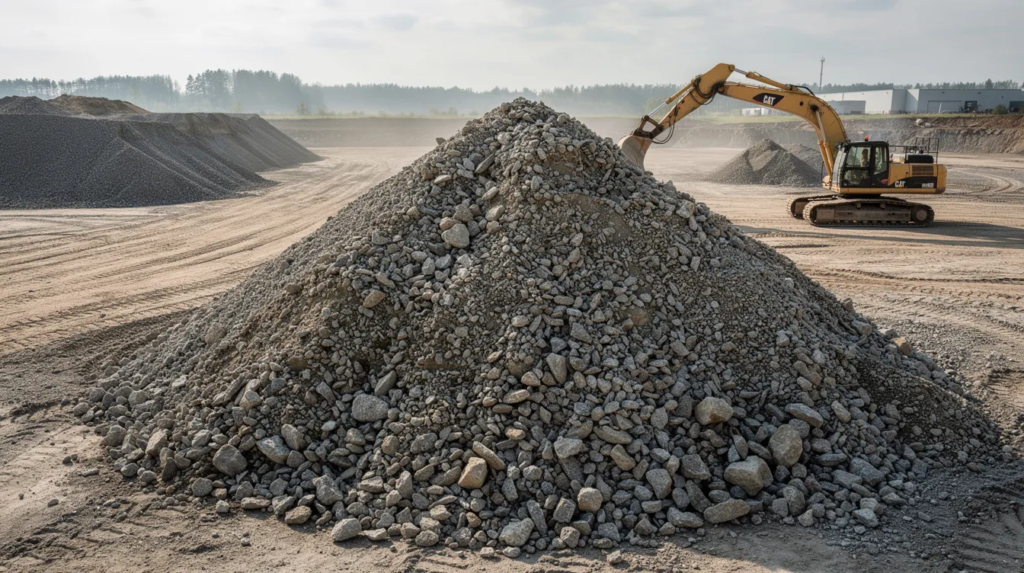
In plain language, SB2 gravel is a blend of crushed rock pieces and fines-stone dust and small particles that fill the voids between larger stones. Base stone SB2 typically includes pieces up to about 1‑1/4 inches down to fines, creating a well-graded mix that packs tightly under compaction. This type of material is commonly used as a commercial base for driveways, private roads, parking areas, and sub-base layers under concrete, pavers, or shed pads when local specs allow.
The rock type used to create SB2 varies by region. In parts of Arkansas and the southern U.S., the material is often crushed limestone or sandstone. Elsewhere, suppliers may use crushed granite, trap rock, or recycled concrete. Crushed limestone gravel costs vary based on type and delivery, while granite tends to be harder and heavier. For a deeper comparison, see Limestone vs Granite Gravel: Cost, Strength & Best Uses.
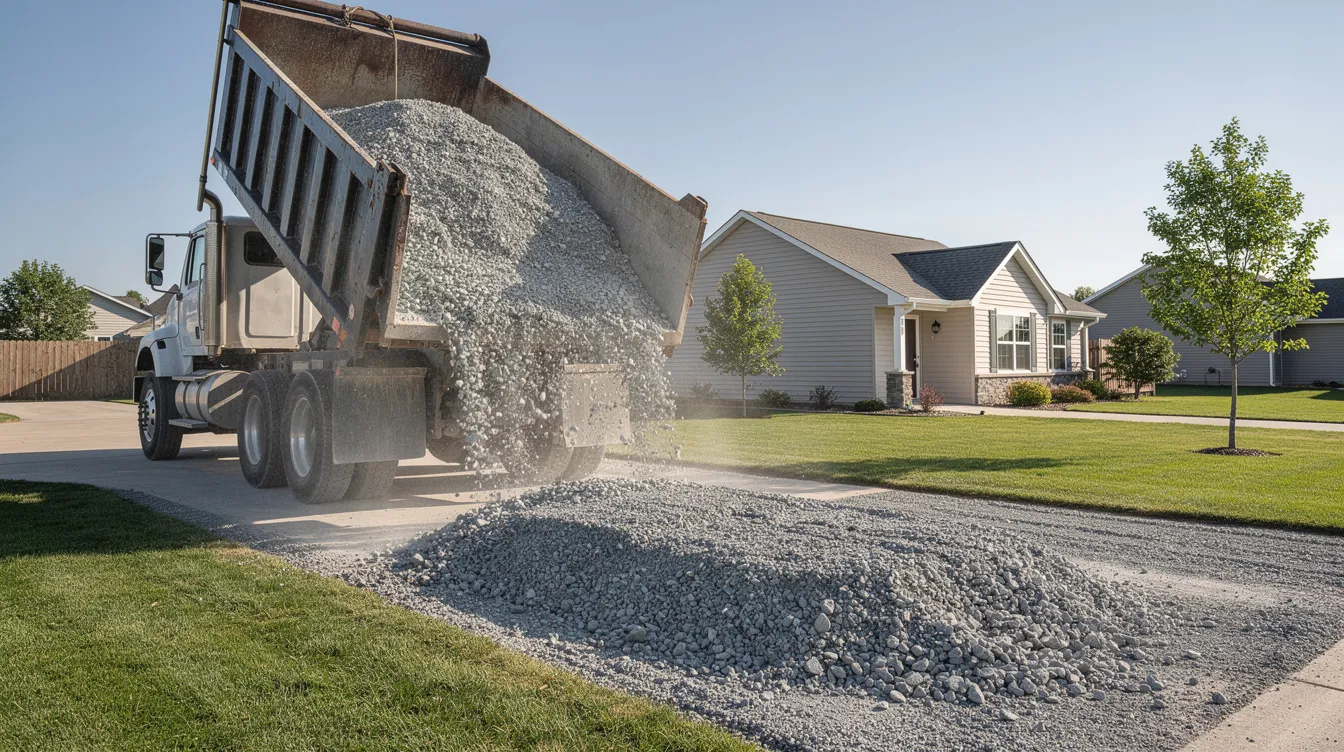
Suppliers sell SB2 by the cubic yard at bulk landscape yards and by the ton from quarries. Some offer half-yard or one-yard bulk bags for smaller jobs. One cubic yard equals 27 cubic feet-this is the standard planning unit for most base orders. Keep in mind that SB2 is dense and heavy. Many road base materials weigh roughly 2,700 to 3,000 pounds per cubic yard, so a 1/2-ton pickup may only be able to safely haul around half a yard, depending on the truck’s payload rating and the material weight. Plan your haul or arrange delivery accordingly.
Before you start ordering, confirm the exact gradation, weight per cubic yard, and recommended use with your local supplier. Our Gravel Calculator lets you select a similar compacted base material, such as Crusher Run / Road Base, to estimate the quantity and weight needed for an SB2-type project. Always confirm the supplier’s actual material specifications before ordering.
Common Uses, Coverage Depth, and Drainage Limits of SB2 Gravel
SB2 gravel compacts exceptionally well, creating a dense, stable surface that resists shifting and settling. That is why its most common role across the U.S. is structural base work-projects where the material needs to stay firm under load rather than look decorative on top.
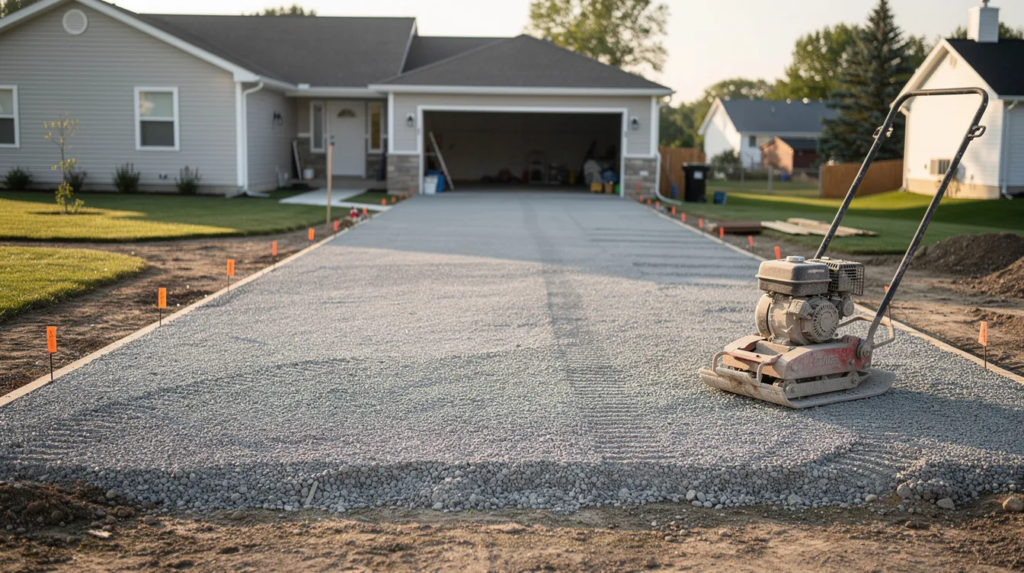
For an SB2 gravel driveway, the material serves as a solid compacted foundation for paving or aggregate driveways and walkways. A 4- to 6-inch compacted layer is typical for passenger vehicles and light trucks on reasonably stable soil. Some gravel driveways may use SB2 as a compacted base layer, while others may use a different surface aggregate for the top layer depending on local conditions, drainage needs, and the desired finish. For guidance on layering, see How Much Crushed Stone for a Driveway: Layers and Cost.
Under a parking pad or turnaround area, SB2 gravel provides good resistance to rutting and settlement under traffic. It can provide good support for higher-traffic areas when properly selected, placed, and compacted. For heavy equipment access roads, required thickness and base specifications depend on soil conditions, traffic, and project requirements.
SB2 rock works well under a shed, metal building, or small garage pad where the ground needs a firm, level base. SB2 gravel is also commonly used for road and highway base courses beneath asphalt or concrete pavement, and it is used as a base layer under concrete slabs in residential and commercial settings. SB2 can work well as a compacted base beneath some flagstone and concrete projects because its fines help fill voids and improve stability after compaction, when the material specifications and installation method are suitable for the application.
Beneath patios or walkways, some contractors use a thinner SB2 layer (3 to 4 inches) combined with a finer leveling material on top. Pea gravel is often used in landscaping and walkways as a surface layer, but it does not compact the way SB2 does and should not be confused with base aggregate.
How far does one cubic yard go? Here is a quick coverage reference:
| Compacted Depth | Coverage per Cubic Yard |
|---|---|
| 3 inches | ~108 sq ft |
| 4 inches | ~81 sq ft |
| 6 inches | ~54 sq ft |
These are planning-level numbers. Slopes, irregular shapes, and the compaction process itself will affect actual coverage.
For drainage, SB2 gravel has low permeability, making it ideal for stability rather than high-flow drainage. SB2 gravel is not ideal for drainage projects because its fines reduce drainage efficiency. Trapped fines slow water movement and can hold moisture in wet climates. If you need stone around a French drain, curtain drain, or perforated pipe, #57 stone is commonly used for drainage applications because its uniform size leaves large voids for water flow. See French Drain Gravel: Right Type, Size & How Much to Order and No. 57 Stone Guide for more information on washed, free-draining alternatives.
In freeze-thaw regions, heavy clay soils, or on steep driveways, do not rely solely on generic depth recommendations. Ask local engineers, road departments, or experienced contractors which base material and thickness are typically specified for your area.
Our Gravel Calculator lets you test different scenarios-changing thickness, area, and waste factor-to see how many cubic yards and tons of SB2 you might need before requesting supplier quotes.
Estimating SB2 Gravel Quantity, Weight, and Cost
To estimate how much SB2 gravel your project needs, measure the area in feet (length × width), decide on your compacted depth in inches, and convert to cubic yards. The formula is straightforward:
Volume (cubic feet) = Length × Width × (Depth ÷ 12) Cubic yards = Volume ÷ 27
SB2 gravel density varies by quarry, rock type, and moisture content. Many compactable road bases fall somewhere around 1.3 to 1.6 tons per cubic yard. Ask your supplier for their specific weight per cubic yard so your estimate stays realistic.
Here is a sample calculation for a 12-foot by 50-foot driveway at 4 inches of compacted SB2:
| Step | Calculation | Result |
|---|---|---|
| Area | 12 × 50 | 600 sq ft |
| Volume in cubic feet | 600 × (4 ÷ 12) | 200 cu ft |
| Volume in cubic yards | 200 ÷ 27 | ~7.4 cu yd |
| Estimated weight (at 1.4 tons/yd³) | 7.4 × 1.4 | ~10.4 tons |
Add a waste factor of 5 to 10 percent for spillage, uneven spreading, grading adjustments, and minor material loss during installation. On uneven or sloped ground, budget even more. Gravel calculators estimate cubic yards and tons needed so you can arrive at a supplier-ready number. Users can also calculate material cost and waste factor in one step by entering dimensions and an estimated price.
When it comes to SB2 gravel cost, several factors drive the final price: distance from the quarry, fuel surcharges, minimum delivery loads, dump truck capacity, local demand, and whether the material is limestone or granite. Gravel delivery prices vary by location and distance, and many suppliers charge $50 to $150 or more for delivery on top of the material price. For broader pricing context, see Crushed Stone Cost Per Ton 2026 and Gravel Driveway Cost Per Ton.
When comparing SB2 gravel prices, request written quotes that separate the material price per ton or per cubic yard from the delivery fee and any additional charges. That way you can compare apples to apples across suppliers.
Supplier checklist-questions to ask before ordering:
- What is the gradation and fines content of your SB2?
- What is the approximate weight per cubic yard (loose and compacted)?
- Is this SB2 recommended as a driveway base, or is it strictly a commercial road base product?
- What are your current SB2 gravel prices for pickup vs. delivery?
- Are there extra charges for small loads, multiple dump locations, or weekend delivery?
For more comments and tips on ordering bulk aggregate, see Buying Crushed Stone and Gravel.
Gravel calculators help plan projects like driveways and patios by letting you plug in your measured area and depth, then see cubic yards, cubic feet, and U.S. tons in one place. Calculators provide estimates for gravel depth and coverage so you can form a realistic budget before your team or contractor places the order. Our Crushed Stone Calculator also lets you enter a custom density from your supplier and an estimated cost per unit so you can see a rough project total-delivered to your screen before a single load is delivered to your drive.
Every number from an online calculator, including ours, is a planning-level estimate. Final decisions about SB2 gravel vs. other aggregates, base depth, compaction method, and drainage design should follow local specifications and professional guidance. Post your measurements, confirm the information with your supplier, and you will be in a much stronger position to order the right amount the first time.