Washed gravel is one of the most versatile materials you can use for drainage, landscaping, and outdoor construction projects. But it’s not a single product – it’s a category of stone that varies by size, shape, color, and region. This guide covers what washed gravel actually is, where it works best, and how to calculate the right amount for your next project.
What Is Washed Gravel? (Quick Answer & Basics)
Washed gravel is any gravel or crushed stone that has been washed and screened to remove most dust, sand, and silt. This cleaning process improves both the appearance and drainage performance of the stone, making it ideal for applications requiring high permeability and cleanliness.
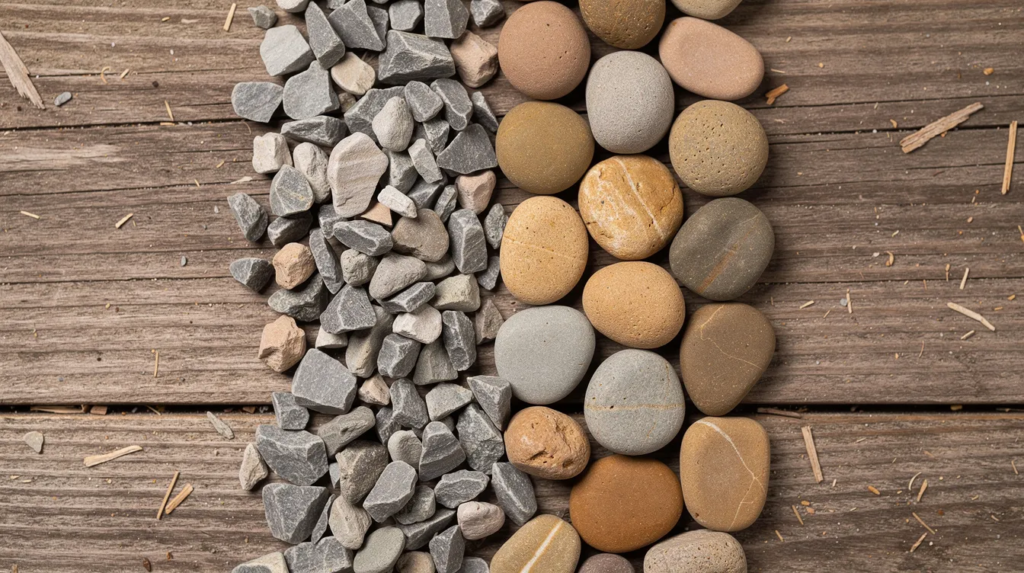
The terms “washed gravel,” “washed rock,” “wash rock gravel,” and “wash stone gravel” are all process descriptions – not one single nationwide product. The size, color, rock type, and exact gradation of washed gravel vary by supplier and region across the U.S. What one stone yard calls “washed 57” another might label “clean drain rock.”
How it’s made: Stone is quarried or collected (for example, river gravel from natural deposits), crushed if needed, passed over screens to sort by size, and then rinsed with water to flush out fine particles. Washed gravel is processed through a washing system to remove dirt and fine particles, leaving behind clean, consistent stone.
Washed vs. unwashed: The key difference is fines. Unwashed gravel or crusher run contains stone dust and sand that help particles lock together and compact under load. Unwashed gravel is rough and textured, which makes it ideal for roads and structural base layers because unwashed gravel compacts better than washed gravel. Washed gravel generally lacks fine particles compared to unwashed gravel, so it drains better but doesn’t bind as tightly.
Common sources and looks:
- Crushed limestone or granite – angular pieces, typically gray or tan, with a clean surface after washing
- Washed river gravel / washed river rock – naturally rounded stones with a smooth texture, in mixed browns, grays, and tans
- Pea gravel – small, rounded washed river gravel, usually about 3/8 inch
Washed gravel is available in various sizes for different applications, commonly sold as pea gravel, #8, #57 stone, and 1-1/2 inch washed gravel. Exact gradations and product names should always be confirmed with local suppliers.
At Crushed Stone Calculator, we provide free gravel calculators and planning guides to help you estimate quantities. However, users must always confirm the exact washed material type, density, and availability with local stone yards or landscape supply companies before placing an order.
Common Washed Gravel Uses for Homeowners & Landscapers
Washed Gravel’s two biggest advantages are its clean appearance and excellent drainage. Those qualities make it popular for landscaping, water management, walkways, and some driveway and surface applications throughout the U.S.
Drainage Applications
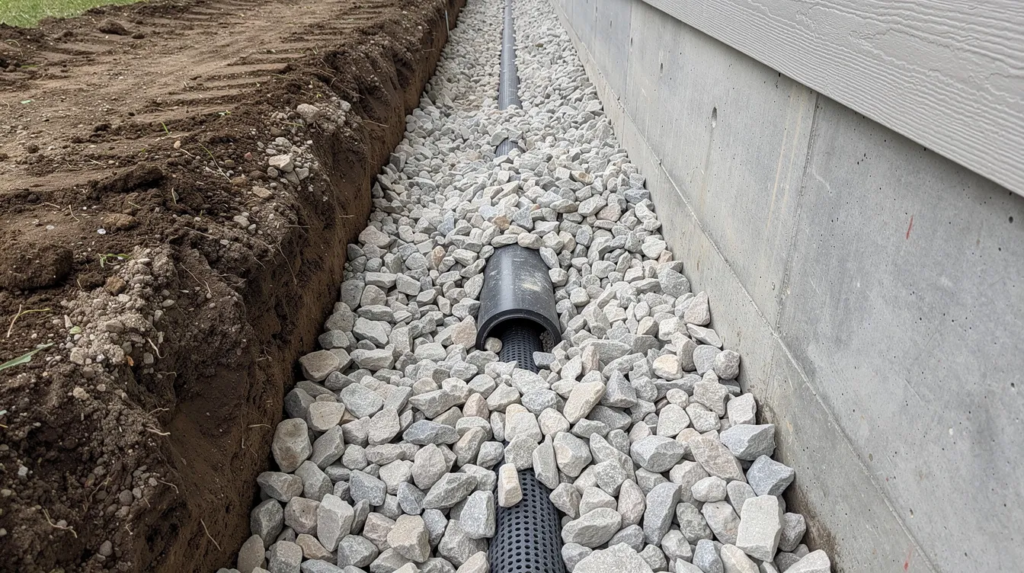
Washed gravel is ideal for drainage systems. Its open voids allow water to flow freely, which is exactly what you need around pipes and foundations.
- French drains: Washed gravel is used in french drains for effective water management. Washed #57 stone or washed drain rock is placed around perforated drain pipe to channel water away from soggy yards and foundation walls. The absence of fines keeps the pipe from clogging over a long service life.
- Trench and curtain drains: On sloped properties, washed gravel lines trenches that intercept and redirect subsurface water before it reaches structures.
- Dry wells: Clean washed stone often has about 30–40% void space, allowing water storage and movement. As an example, a 5-foot diameter, 6-foot deep dry well filled with 3/4-inch clean gravel may hold roughly 265–350 gallons of water, depending on the actual void space, stone size, and surrounding soil conditions.
- Foundation drainage: Washed gravel enhances drainage in landscaping projects around homes, protecting basements and crawl spaces from moisture damage.
Always match your drain design to local building codes and contractor or supplier recommendations. The right stone size and pipe cover depth depend on your specific soil and climate.
Landscape and Garden Uses
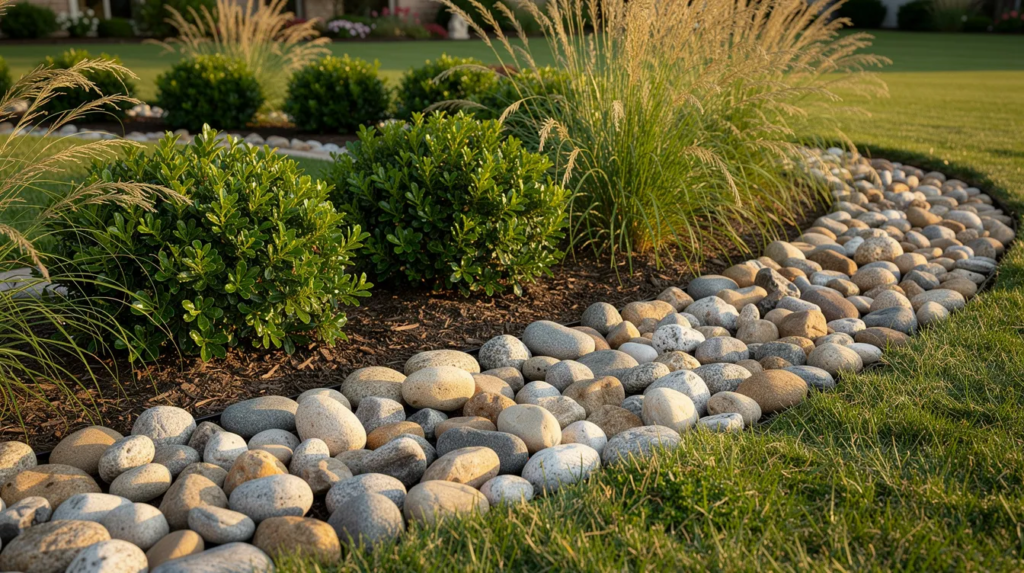
Washed gravel is commonly used for landscaping and decorative gardens. It can be used as a decorative ground cover in landscaping, and its clean, polished look makes it a great choice for visible areas.
- Garden beds: A layer of washed river gravel or pea gravel over landscape fabric in garden beds creates a beautiful, low-maintenance surface around shrubs and trees. Washed gravel can help reduce weed growth when installed over landscape fabric, although occasional maintenance may still be needed.
- Dry creek beds: Washed river rock in mixed sizes mimics a natural streambed, controlling runoff while adding visual interest to slopes and low spots.
- Borders and transitions: Around patios, pools, and outdoor living areas, washed gravel works as an easy transition from hardscape to lawn, keeping mud splash off surfaces.
- Erosion control: Washed gravel helps control erosion by stabilizing slopes and embankments, especially when combined with proper grading and fabric.
Washed gravel is often used in decorative applications because it can be more visually appealing due to its cleaner appearance compared to unwashed gravel. It comes in various sizes, colors, and textures for aesthetic appeal – from creamy tan limestone to dark gray granite to warm brown river gravel.
Walkways and Paths
Washed gravel is often used for pathways and walkways because of its smooth surface. Pea gravel and small washed river gravel are popular choices for casual garden paths and seating areas, offering a comfortable feel underfoot.
Key tips for gravel walkways:
- Edging is essential. Without solid borders, stone migrates into surrounding lawn or garden areas. Steel, aluminum, or plastic edging keeps everything contained.
- Compact the base first. A layer of compacted road base or crusher run beneath the washed gravel provides stability.
- Depth matters. Plan for 2–4 inches of washed gravel on top, depending on foot traffic.
- Shape affects stability. Round, smooth washed gravel can shift underfoot more than angular crushed stone. Washed gravel does not compact well due to its smooth surface, so keep this in mind for high-traffic pathways.
Driveway and Surface Uses
Washed gravel provides a durable surface for driveways when the right type is selected and installed properly. However, it’s important to use cautious thinking here – not every washed gravel product is suitable for every driveway.
- When it works well: Angular washed stone (like washed #57) can serve as a surface layer for light-traffic driveways or parking pads, typically placed over a compacted base of crusher run or road base.
- When it doesn’t: Very round washed river gravel tends to roll and displace under vehicle tires, especially on slopes or curves. Washed gravel is smooth and polished due to cleaning, which makes it look great but can trigger movement under load.
- The layered approach: Many driveways rely on unwashed base materials with fines for structural strength, then use washed driveway gravel only as a thin finishing layer. For more on driveway gravel costs and layer planning, check our dedicated guides.
Washed gravel allows for better drainage in landscaping projects around driveways, making it useful at driveway edges and transition zones even if the main surface uses a different aggregate. It’s also cost-effective compared to concrete and asphalt for lighter-duty surfaces.
Other Specialized Uses
- Pipe bedding: Washed gravel is used around underground utility lines to protect pipes from soil intrusion and provide consistent support.
- Under decks and landings: Clean stone under decks can help reduce mud buildup and improve air circulation.
- Fire pits and play areas: Pea gravel around fire pits offers a safe, non-combustible border – check local codes for required depth and setbacks.
- Aquariums and water features: Smaller washed gravel is sometimes used in aquariums or decorative water features, though users must select products confirmed as aquarium-safe.
Choosing, Sizing, and Calculating Washed Gravel for Your Project
Selecting the right washed gravel size, shape, and quantity is essential for both performance and cost control. Crushed Stone Calculator’s tools can help you estimate quantities before submitting an order to your local supplier.
Common Washed Gravel Sizes and Shapes
| Size Name | Approx. Dimensions | Shape | Best For |
|---|---|---|---|
| Pea gravel | ~3/8 inch | Rounded | Garden paths, seating areas, decorative beds |
| #8 washed gravel | 3/8–1/2 inch | Angular to subangular | Walkways, tight spaces, small drainage |
| #57 washed stone | 1/2–1 inch | Angular | French drains, foundation drains, driveway surfaces |
| 1-1/2 inch washed gravel | 1–1.5 inch | Varies | High-flow drainage, dry creek beds, bold borders |
Local naming differs – you might hear “wash rock,” “washed 57,” or “drain rock” for similar products. When possible, request a gradation sheet or physical sample from the supplier so you know exactly what you’re getting.
Washed vs. Unwashed: When Each Makes Sense
- Structural base layers (driveways, patios, shed pads): Crusher run, road base, or gravel with fines usually compacts better. Washed gravel should only be used as a drainage layer or surface topping if a local pro recommends it.
- Pure drainage (French drains, footing drains, dry wells): Washed gravel or washed drain rock with very low fines is preferred to keep water moving and reduce clogging.
- Decorative beds and borders: Washed river gravel or pea gravel is the popular choice for appearance and easy maintenance.
Cost and Density Considerations
Wash gravel price varies considerably by region, stone type (limestone vs. granite), color, size, and delivery method. Key cost factors include:
- Delivery fees and minimums – many suppliers require 5–10 ton minimum loads for bulk delivery
- Pickup vs. delivery pricing differences
- Seasonal demand and fuel surcharges
- Standard vs. decorative – premium washed river rock costs more than standard construction aggregate
Washed gravel can weigh around 1.2–1.6 US tons per cubic yard depending on rock type and gradation. For example, #57 washed gravel is often around 1.4 tons per cubic yard. Always request a current density number from your supplier rather than relying on a single universal value.
Washed gravel is low-maintenance and easy to replace, which makes it a smart long-term investment for many outdoor projects. It can help reduce weed growth when layered over landscape fabric, further reducing upkeep needs over time.
How to Use Crushed Stone Calculator’s Tools
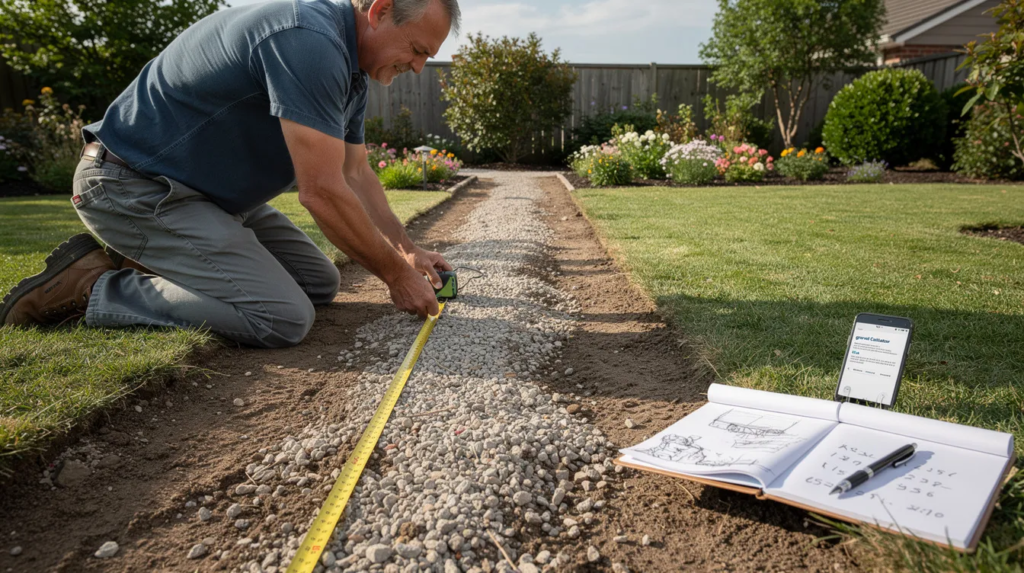
- Measure your project area – length, width, and planned depth in feet. For a 40-foot French drain that is 1 foot wide and 1.5 feet deep, you’d enter those dimensions.
- Use the Gravel Calculator – it converts your measurements into cubic yards, cubic feet, and approximate US tons, with an optional waste factor (typically 5–10%) to account for uneven areas, minor material loss, and installation adjustments.
- Select the closest material type – choose pea gravel, river rock, #57 stone, crushed gravel, limestone gravel, or granite gravel. If your supplier gives you a specific density, enter it as a custom value.
- Small projects – the calculator can also estimate bag counts by entering your bag size, which is helpful for small garden beds or short walkways.
Ordering and Installation Tips
Before you finalize your project schedule:
- Confirm availability and lead time for the specific washed gravel sizes you need
- Ask the right questions – is the material washed and screened? Is it suitable for French drains, driveway surfaces, or garden beds? What’s the official product name on the delivery ticket?
- Plan site access for dump trucks; use tarps or plywood to protect lawns; stage the material close to the work area
- Install proper edging along paths and driveways to keep stone contained
- Maintenance – rake and top up washed gravel every few years, and avoid mixing soil into drainage gravel to prevent clogging
Ready to Estimate Your Washed Gravel?
Before calling local suppliers, click over to CrushedStoneCalculator.com’s Gravel Calculator and plug in your project dimensions. You’ll get a solid planning-level estimate of how many cubic yards or tons of washed gravel you may need – whether you’re planning a driveway topping, French drain, or landscaping bed. Having that number ready makes the ordering process faster and helps you get an accurate quote on your first call. It offers a great starting point for making confident decisions about your next outdoor project.