Table of Contents
Landscaping rocks shape the look and function of any outdoor space. From a thin layer of pea gravel between stepping stones to massive boulders anchoring a hillside, different landscaping stones and rocks serve unique functional uses and aesthetic benefits. Common types include river rock, pea gravel, crushed stone, and flagstone, and each one fills a different role in your yard or garden.
Unlike organic mulch, stone is a long-lasting landscaping material that does not decompose, although it may occasionally shift or need topping up. Wood mulch fades, breaks down, and needs replacing every one to three seasons. Crushed stone costs more than most organic mulches up front, but over several years the repeated cost of mulch can exceed a one-time stone install. Properly selected and installed landscaping rock can help manage runoff, improve surface drainage, and protect exposed soil in suitable applications. Landscaping rocks can be used to create pathways, beds, walls, and drainage solutions, making them one of the most versatile materials in any landscape design.
The Crushed Stone Calculator is a free online tool that helps homeowners and landscapers estimate how many cubic yards, tons, and dollars a project requires. Just enter your project dimensions, choose a material type, set the depth, and get an instant estimate – no signup needed.
Quick-Start: Choosing the Right Landscaping Rock for Your Project
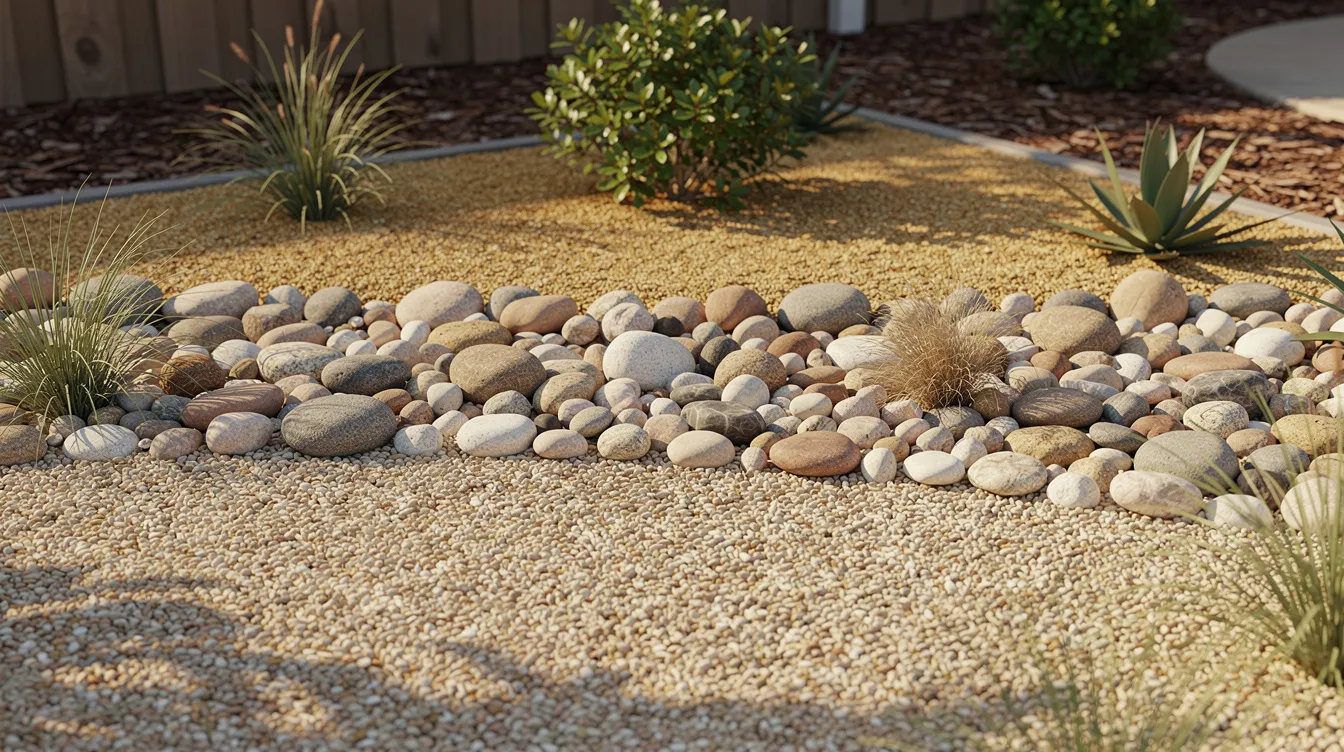
This section quickly answers one question: what rock should I use? Choosing the right landscaping rock depends on your specific goal, such as drainage or decoration. It also relies on functionality, scale, and your home’s aesthetic style. Generally, gravel is smaller than 2 inches in diameter and is often used for pathways and driveways, while rocks can be larger than 2 inches in diameter and are used for decorative features and structural elements.
- Garden beds and mulch replacement: 1–2″ river rocks or decorative gravel for clean, low-maintenance flower beds.
- Pathways and play areas: Pea gravel is a popular choice for pathways and patios; 1/2–3/4″ rounded stones are comfortable underfoot. Decomposed granite is another option for creating pathways with a compacted, walkable surface.
- Dry creek beds and drainage: River rocks are ideal for dry creek beds. Mix 2–4″ river rocks with larger cobble at the banks and pea gravel at the bottom.
- Driveway base: 3/4″ angular crushed stone (crushed stone is typically about 1 inch in size) for structural base layers.
- Erosion control: 2–4″ landscape rocks along slopes, downspouts, or exposed soil areas.
Choose angular rock when you need stability – it locks together under traffic. Choose rounded river rocks when you prefer a softer, more natural look for water features or flower beds. Once you decide on a rock type, plug your dimensions into the Crushed Stone Calculator to estimate volume, weight, and cost before ordering.
Core Types of Landscaping Stone and Rock
Decorative stones vary by shape (rounded vs. angular), size, and material, and each suits different landscape design goals. Here is how the most common types compare:
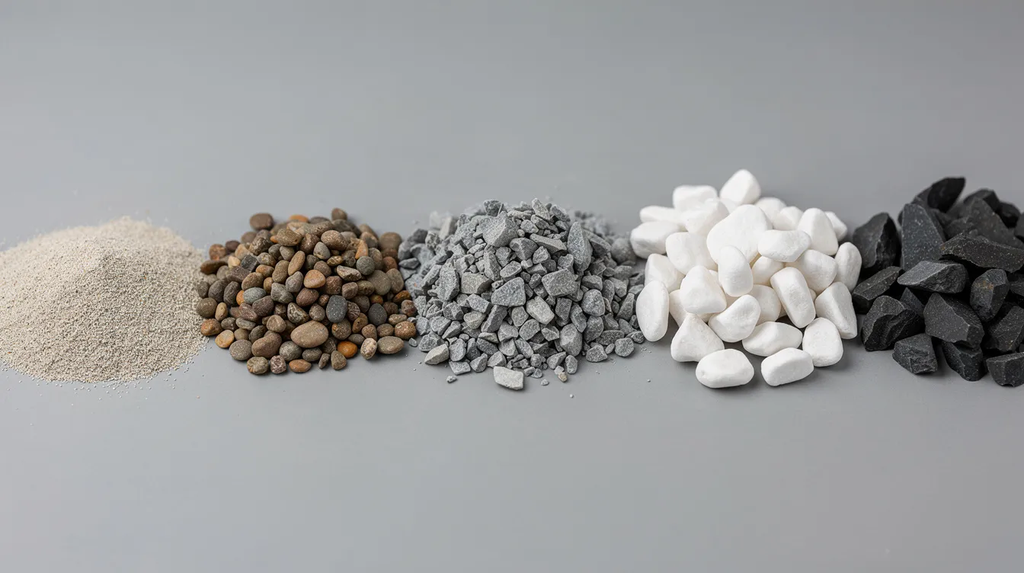
- Crushed stone: Angular, machine-crushed rock – often granite or limestone – in sizes from 3/8″ to 1-1/2″. Used for base layers under patios, driveways, and French drains, and as inorganic mulch. Crushed stone is often used as mulch around drought-resistant plants. It locks together well, providing stability, and can be ordered through major home improvement centers. Density runs about 1.60 tons per cubic yard. Cost ranges from roughly $25–$45/ton delivered in many markets.
- Pea gravel: Smooth, rounded stones about 3/8″ in diameter. Comfortable to walk on, ideal for pathways, between flagstone joints, and around play equipment. Tends to migrate without edging – steel or plastic borders help. Density is approximately 1.45 tons per cubic yard. For pea gravel and other bulk gravel projects, use the Gravel Calculator to estimate cubic yards, tons, bags, and cost.
- Decorative gravel and specialty aggregates: Colored gravels, marble chips, slate chips, and polished pebbles used mainly for visual interest in front yards and modern designs. Expect to pay 2–4× the price of plain crushed stone. Smaller stones improve drainage in landscaping projects but may move more easily during heavy rain or on slopes.
- River rocks: Naturally rounded stones from about 1″ up to cobble size (4–6″). River rocks are ideal for creating natural-looking landscapes – around downspouts, in dry creek beds, or as a mulch alternative in shrub borders. River rocks cost around $30 to $50 per ton. Clean gravel can cover the channel bottom, while larger river rocks add stability and a natural appearance; effective drainage still depends on proper grading and a clear outlet.
- Lava rock and polished pebbles: Lava rock is porous, lightweight (~0.85 tons/yd³), and available in red or black. Polished pebbles are tumbled, shiny decorative stones. Both are often sold in bags for accents rather than full-yard coverage, and lava rocks are available at reasonable prices in bags.
Natural Stone Features: Flagstone, Cobblestone, Fieldstone, and Boulders
These are larger-format natural stone products used as structure and focal points – not ground cover. Color, veining, and texture vary by quarry, so inspect actual pieces or photos from your supplier before ordering.
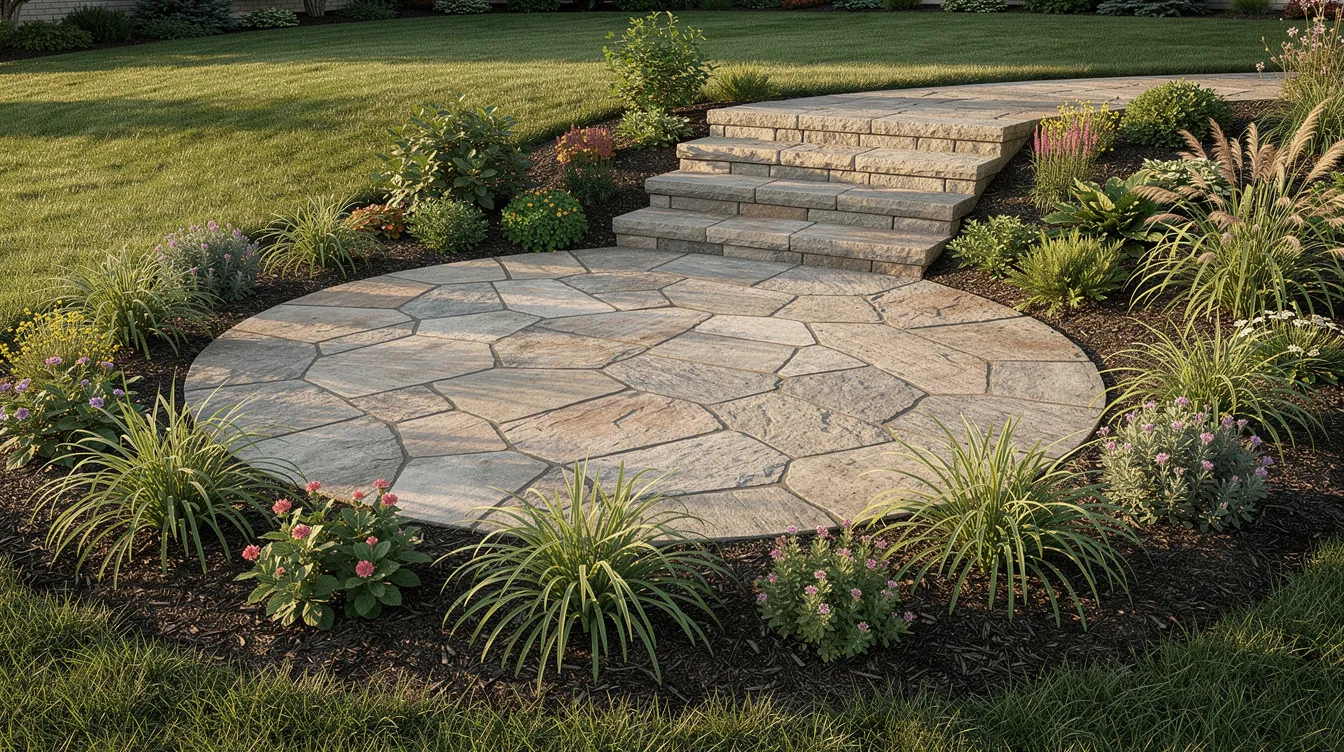
- Flagstone: Flat, naturally split slabs of sandstone, slate, or quartzite, commonly 1–2″ thick. Flagstone is commonly used for walkways and patios, making a flagstone walkway or flagstone patios a natural fit for most yard styles. Joints can be filled with sand, small gravel, or low-growing groundcovers. Flagstone is sold by weight and varies in price depending on stone type and region.
- Cobblestone: Rectangular or square blocks, often granite or basalt, used for driveway aprons, edging, and accent bands. Cobblestones are often used for driveway aprons. They deliver an old-world style and hold up under vehicular traffic, but the uneven surface makes snow-shoveling difficult. Cobblestones cost $40 to $70 per square foot installed, and one ton of cobblestones covers 25 to 35 square feet.
- Fieldstone: Irregular, naturally weathered stones for dry-stack garden wall construction and rustic borders. Flat pieces suit mortarless walls; more rounded fieldstone usually needs mortar for stability. Expect higher labor costs due to sorting and fitting.
- Boulders: Large landscape rocks generally over 12″ across, often weighing hundreds of pounds. Used as focal points, for informal seating, or for terracing sloped yards. Placement usually requires machinery or professional installation help. Plan location carefully – moving a boulder later is expensive. Use the Stone Weight Calculator to estimate a boulder’s weight before arranging delivery or lifting equipment.
Design Ideas: Using Decorative Stones in Landscape Design
Decorative rocks connect directly to practical landscape design goals: low-water gardens (xeriscaping), modern curb appeal, defined outdoor rooms, and cleaner maintenance lines. Whether you prefer the warmth of sandstone or the contrast of polished black pebbles, stone helps you create a property that matches your style with minimal upkeep.
- Rock gardens: Combine small decorative stones (1–2″ visible top layer), medium cobble, and boulders with drought-tolerant plants like sedums and ornamental grasses to mimic nature. Lava rocks are suitable for accents in rock gardens and around fire pits, adding texture without excessive weight.
- Dry creek beds: Start wide and shallow, taper the ends, and layer pea gravel on the bottom with 2–4″ river rocks in the channel and larger cobble or boulders at the banks. When graded toward a safe outlet, this design can also help direct runoff.
- Pathways and patios: Pea gravel paths contained by steel or plastic edging; flagstone stepping stones set in 3/8″ crushed stone base. Mix dark decorative stones with light concrete pavers for contrast.
- Stone as mulch: Spread decorative landscaping stone 3–4″ deep around trees and shrubs, keeping a clear ring from trunks to prevent rot and moisture problems. Match stone color with foliage and your house exterior.
- Accent zones: Create stone islands using a distinctive decorative rock – white marble chips or black polished pebbles – under feature plants, garden art, a mailbox, or near a pool to explore creative focal points.
- Accessibility: Avoid loose, rolling gravel on steep slopes or where people using walkers or wheelchairs need firm footing. Properly compacted angular crushed rock can provide a firmer, more stable surface, but accessible routes should still meet applicable requirements for firmness, stability, slip resistance, slope, and cross-slope. Consider climate when selecting decorative stones for landscaping – lighter rocks reflect heat, while dark stone absorbs it. A consistently applied 2-to-3-inch layer of landscape rock can help suppress weed growth, although it will not eliminate weeds or provide reliable pest control.
Planning, Depth, and How Much Landscape Rock You Need
Even the most beautiful decorative stones disappoint if you under- or over-order. Getting depth and coverage right is the difference between a polished result and a patchy one.
- Typical depths: 2″ for light decorative ground cover, 3″ for most mulch-style stone areas, 4″+ for paths, and 4–6″ or more for driveway base layers—exact depth depends on soil conditions and use. For play areas beneath elevated equipment, follow the surfacing material’s tested fall-height rating and required installed depth rather than using a general landscaping depth.
- Volume math: Calculate area × depth, then convert cubic feet to cubic yards (divide by 27). Example: a 20 ft × 10 ft area at 3″ deep = 200 ft² × 0.25 ft = 50 ft³ ÷ 27 ≈ 1.85 cubic yards. One cubic yard covers approximately 160 square feet at 2 inches deep.
- Weight conversion: Most landscape rock is sold by the cubic yard or by the ton. Densities vary – crushed granite weighs about 1.60 tons/yd³, while lava rock is closer to 0.85 tons/yd³. Converting cubic yards to tons requires a rock-specific density, so don’t assume one ton weight fits all materials.
- Use the Rock Calculator: Select your shape (rectangle, circle, triangle and Known Area ), enter dimensions, choose rock type, set depth, and get an instant estimate in cubic yards, tons, and optional cost.
- Waste factor: Add 5–10% extra to account for settling, uneven ground, and minor measurement errors – especially on irregularly shaped beds.
- Delivery vs. bags: Bulk delivery is usually more economical for anything over about 1–2 cubic yards. Bagged decorative stones suit small accent projects or testing colors at a local store before committing to a full load.
Practical Tips for Buying, Installing, and Maintaining Landscaping Rocks
Good preparation and installation habits keep decorative stones low-maintenance for years. A few hours of site prep up front saves significant rework later.
- Site prep: Remove weeds, roots, and organic debris. Grade the area to slope away from buildings. Consider a high-quality landscape fabric under long-term rock mulch to limit weed growth, but some gardeners prefer to skip fabric in planting beds so they can add soil amendments later.
- Edging: Install steel, concrete pavers, plastic, or brick edging to keep loose landscaping rocks like pea gravel and small decorative rocks from spilling into lawn or mulch areas.
- Color consistency: Mixing too many rock types in a small yard can look chaotic. Choose 1–3 complementary natural stone colors and repeat them to achieve a cohesive look. Always request a sample – even names like “red granite chips” vary in shade between quarries.
- Maintenance: Blow or rake leaves off stone seasonally. Hose dust from smooth decorative stones. Spot-spray or hand-pull weeds that sprout in the rock layer. Occasionally rake to re-level high-traffic areas. Unlike organic mulch, you won’t need to suggest annual replacement – just occasional topping up.
- Climate and heat: Dark river rocks or black decorative stones can heat up significantly in full summer sun. Avoid placing them right against delicate plants, south-facing walls, or areas where reflected heat is intense. In cold climates, use a well-drained, compacted base suited to local soil and freeze-thaw conditions for flagstone patios, and follow local footing or engineering requirements for retaining walls.
Before you visit a local stone yard or home center, measure your project areas and enter the details into the Crushed Stone Calculator so you arrive knowing the approximate volume, tonnage, and budget your landscaping projects require.