Table of Contents
Pea gravel prices make it one of the most budget friendly landscaping materials available in 2026. But the spread between the cheapest bulk load and a fully installed patio can surprise many homeowners who only look at per ton pricing. This guide breaks down real cost data, coverage math, delivery fees, labor costs, and project-specific estimates so you can plan your next project with confidence.
Quick Answer: Typical Pea Gravel Prices in 2026
Here is the fast, at-a-glance pea gravel cost overview for 2026. All figures are estimates; your local market, supplier, fuel surcharges, and material grade will shift final numbers.
Material-only ranges (no delivery, no labor):
- Bulk pea gravel costs between $10 and $55 per ton. Expect $10–$25 per ton in low-cost regions (Southeast, South Central) and $30–$55 per ton near coasts or in urban areas, with most homeowners landing around $20–$35.
- $45–$80 per cubic yard for bulk deliveries at landscape supply yards.
- About $0.50–$1.50 per square foot for material at 2–3 inch depth.
Delivered cost benchmarks:
- A 5-ton pea gravel delivery typically runs $250–$550 total (material plus delivery costs), depending on distance.
- A truckload of pea gravel costs between $250 and $500 for about 20–25 tons in the lowest-cost regions, though $400 to $1,250 is more typical once region and material grade are factored in.
- 10-ton orders often land around $500–$950 for material and delivery combined.
Bagged vs bulk gravel pricing:
- A bag of pea gravel costs $4 to $8 at big-box stores and covers about 0.5 cubic feet. That means a cubic yard takes 54 bags — roughly $215 to $430.
- Bulk delivery typically costs $45 to $80 per cubic yard for the same material, which makes bagged stone three to nine times more expensive per yard. For anything larger than a few cubic feet, bulk wins easily.
Prices vary by region, and 2026 fuel and labor trends are pushing costs slightly upward. Get free quotes from local suppliers before committing. Later in this article, you can plug your dimensions into the Crushed Stone Calculator for a project-specific estimate.
Pea Gravel Price Basics: Units, Coverage & How It’s Sold
Understanding the units suppliers use is the first step to comparing pea gravel prices accurately. Different projects require varying gravel depths, which changes how many tons or yards you need.
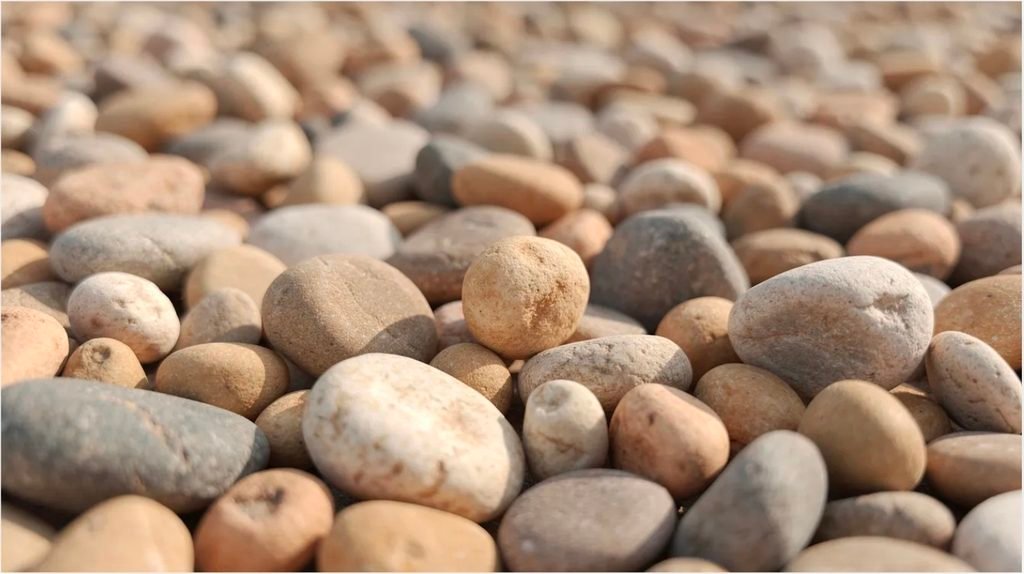
How pea gravel is priced:
- Per ton: quarries and bulk suppliers quote by weight.
- Per cubic yard: landscape supply yards quote by volume.
- Per bag: retailers sell 0.5 cubic foot or 50 lb bags.
Coverage at common depths (per 1 ton, roughly 0.7–0.8 cubic yards):
- ~120 square feet at 2 inch depth
- ~80 square feet at 3 inch depth
- ~60 square feet at 4 inch depth
A cubic yard of pea gravel weighs about 2,600 pounds (roughly 1.30 US tons). For a deeper look at how cubic yards and tons relate for gravel, see our conversion guide.
Pea gravel is commonly ¼ to ½ inch depending on the supplier, with a smooth, round shape that does not compact the way angular crushed stone does. That means depth planning matters more; material will shift under foot traffic if spread too thin.
Example calculation: A 12 ft × 20 ft patio at 3 inch depth needs 60 cubic feet, or about 2.2 cubic yards, which equals roughly 3 tons of pea gravel.
Pea Gravel Cost per Ton, Cubic Yard & Square Foot
This section breaks down pea gravel cost across the three standard units. All ranges reflect 2026 pricing data from supplier listings and industry estimates; your local yard may differ.
Per ton: Most homeowners pay $20 to $35 per ton in 2026. Washed or screened material in higher-cost metros runs $30 to $55 per ton, while low-cost states can drop to $10–$25 per ton.
Per cubic yard: The price of pea gravel typically ranges from $45 to $80 per cubic yard at landscape supply yards. That tracks with the per ton price, since one cubic yard weighs about 1.35 tons.
Per square foot:
- Material only at 2–3 inch depth: roughly $0.50–$1.50 per square foot
- With professional installation: $0.85–$2.80 per square foot for simple paths or patios, since spreading labor adds $0.35 to $1.30 on top of material
How order size affects price: Small 1–2 ton orders carry higher per ton rates because of handling and minimum delivery charges. Orders of 10+ tons often qualify for a $5–$15 per ton discount. Buying pea gravel in bulk can lower total costs on any project above a few cubic yards.
2026 cost examples:
- 5 tons of bulk gravel: $150–$275 for material, plus $100–$275 for delivery
- Full truckload (20–25 tons): $400–$1,250 for material depending on region and gravel type
Project size impacts total pea gravel costs more than any other single variable. Use the Crushed Stone Calculator to plug in your square footage and see a projected total.
Pea Gravel Cost Factors You Need to Know
Several factors cause pea gravel prices to swing by 50% or more between two otherwise similar projects. Use this list as a checklist when requesting quotes:
- Type and color: plain pea gravel vs decorative stone or colored varieties
- Quantity ordered: bulk discounts kick in at 5, 10, and 20 ton thresholds
- Project type and depth: a driveway needing at least six inches of material costs far more than a 2 inch garden path
- Delivery costs: distance, truck access, and fuel surcharges
- Labor costs: excavation, grading, spreading, compaction
- Site prep: weed barrier fabric, edging, base course of crushed stone
- Region: areas close to gravel pits often have lower prices; pricing increases based on the distance between a project site and the nearest supplier
Transportation is often the largest variable cost component for gravel. Local sourcing can cut material costs by 20–40% compared to shipping from a distant quarry.
The subsections below break each factor down in detail.
Material Choices: Type, Color & Alternatives
What you buy has a direct effect on pea gravel cost. Plain pea gravel typically comes in natural colors like gray or brown and is the most budget friendly option.
Plain vs decorative:
- Rough-cut stone is the most cost-efficient pea gravel type. Opt for plain pea gravel to save money on color.
- Colored pea gravel costs an extra $20 to $50 per ton. Specialty colored gravel can carry a premium that doubles the base price. Glow-in-the-dark pea gravel is available for purchase but sits at the top of the price range.
- Shaped pea gravel (tumbled, polished) is more expensive than traditional gravel because of extra processing.
Size and shape: Standard pea gravel is ¼ to ½ inch depending on the supplier, with a round shape. Smaller or highly uniform stones require extra screening, adding cost. The natural look and excellent drainage of standard pea gravel make it popular for garden beds, fire pits, and pea gravel pathways.
Decomposed granite as an alternative: Decomposed granite runs about $30–$75 per cubic yard. It compacts into a firmer surface, which reduces shifting under foot traffic. For walkways where loose pea gravel scatters, DG often works better.
Other alternative landscaping materials: For driveways or areas with heavy vehicles, a crushed stone base beneath pea gravel provides stability that round stones alone cannot. River rock, mulch, wood chips, and concrete are other options, each with different lifecycle costs and aesthetic appeal.
Delivery Costs, Labor Costs & Other Installation Expenses
Material price is only part of the pea gravel cost. Delivery fees, labor, and prep work regularly double the budget for real world projects.
Delivery costs:
- Delivery fees for pea gravel typically add $50 to $150 per load for local drops.
- Delivery fees for pea gravel start at $5 per mile beyond the supplier’s base radius.
- Many suppliers set a minimum delivery fee of $80–$175 per truck, even for small orders.
- Some vendors waive or reduce fees if you order 5+ tons within a short radius.
Labor costs:
- Labor costs for pea gravel installation range from $13 to $65 per hour, depending on region and crew size.
- Per square foot, labor rates for installation range from $0.35 to $1.30.
- Leveling or regrading runs $1–$3 per square foot on uneven soil.
Common pea gravel installation prep items:
- Soil excavation and disposal to lower grade
- Landscape fabric to limit weed growth and prevent gravel from sinking
- Compacted crushed stone base for driveways or high-traffic zones (see the gravel driveway installation guide for base layer details)
- Steel, plastic, or timber edging to prevent shifting and contain loose stones
Hidden cost scenario: A homeowner budgets $300 for stone but spends another $300–$600 on delivery, fabric, edging, and a plate compactor rental. Always price the full install, not just the material.
Pea Gravel Costs by Project Type
Pea gravel cost per square foot changes with project type, required depth, and base layers. Here are typical 2026 ranges.
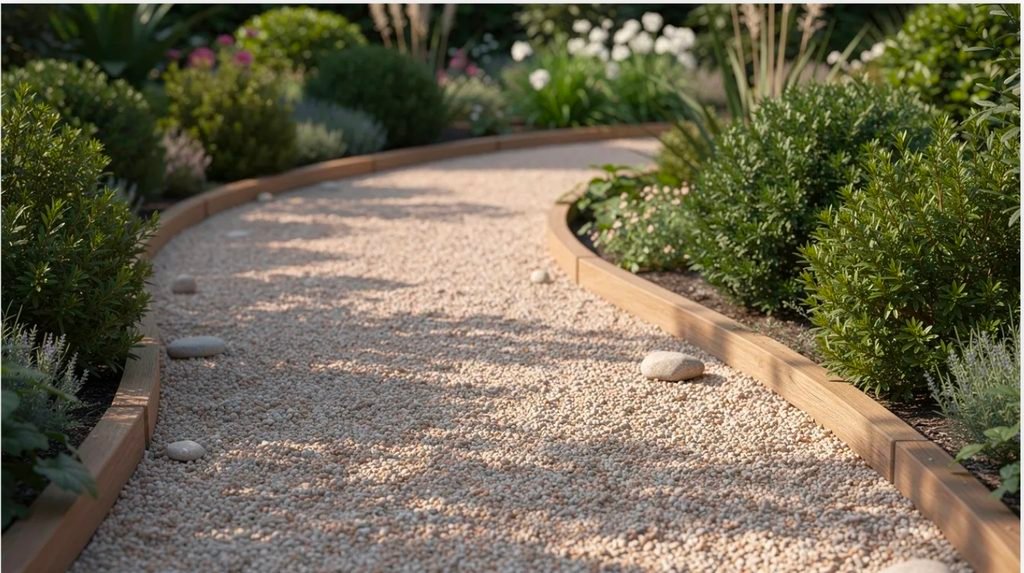
Pea gravel pathways and garden walkways: 2–3 inches deep. Material cost around $0.50–$1.50 per square foot; with professional installation, expect $0.85–$2.80 per square foot. Low maintenance and good drainage make pea gravel a popular path surface.
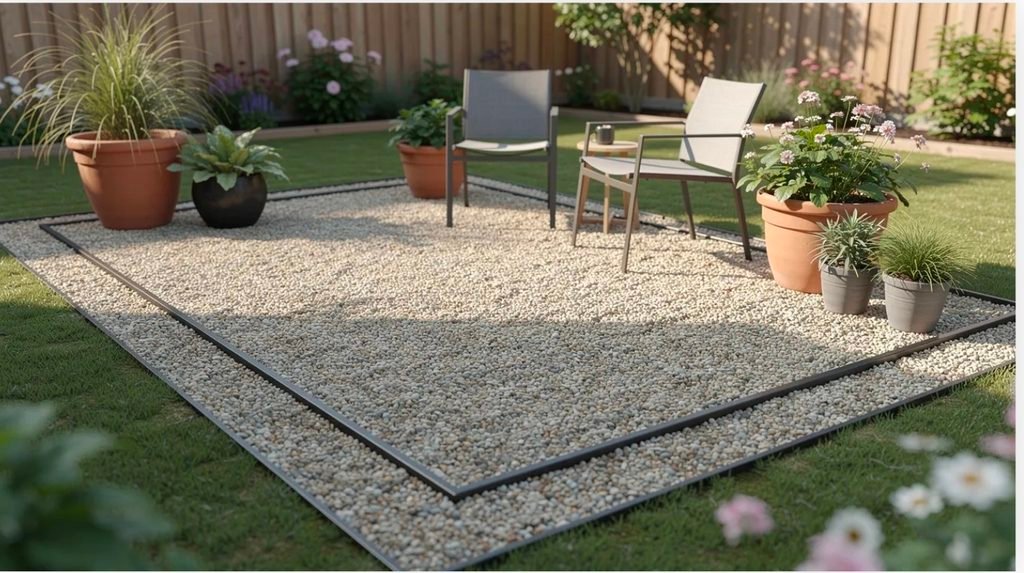
Patios and sitting areas: 3–4 inches over a compacted base. Total installed pea gravel costs fall around $1.50–$3.50 per square foot depending on edging and base prep. Adding a weed barrier and edging keeps the same area looking clean longer.
Driveways: Pea gravel is a poor standalone driveway surface — the round stones roll under tires and migrate toward the edges. It works only over a compacted crushed stone base, with solid edging to contain it. Avoid it entirely on a sloped driveway, where it migrates downhill over time and sinks into the ground. If you want a low-maintenance gravel driveway, crusher run or ¾” minus is the better material. If you still want the pea gravel look, plan for at least six inches of total depth in multiple layers.
A single-car driveway averages 240 square feet. Two-car driveways typically cover around 480 square feet. Three-car driveways average 960 square feet in size. Total costs range from a few hundred dollars to well over $1,000 depending on base requirements and labor. For more gravel driveway pricing data, see our gravel driveway cost per ton breakdown.
Playgrounds: Usually 4+ inches of pea gravel covers the play zone for cushioning. A small backyard playground might cost a few hundred dollars in material plus border and fabric.
General landscaping and ground cover: Used around beds, trees, and outdoor space at 2–3 inch depth as a mulch replacement. Material cost for 10 cubic yards often runs $150–$750 depending on region, plus delivery and labor.
For patios and driveways, crushed stone or decomposed granite may cost more initially but offer firmer footing. For decorative stone applications, pea gravel is almost always cheaper per square foot than pavers or poured concrete.
DIY vs Pro: What You’ll Spend on Pea Gravel Installation
Choosing between DIY and hiring a pro is one of the biggest pea gravel cost factors.
DIY pea gravel project costs (200 sq ft path example):
- Materials (gravel, fabric, edging): $200–$500
- Equipment rentals (wheelbarrow, plate compactor): $50–$250
- DIY installation can reduce labor costs to zero, but takes more time and physical effort
- Hauling gravel yourself saves on delivery fees if you have trailer access. Purchase directly from suppliers for better prices per ton.
Professional installation costs:
- Labor typically adds $0.35 to $1.30 per square foot for straightforward spreading, with the upper end applying when excavation, grading, or a compacted base is involved
- Pros often secure lower per ton rates because they buy in bulk regularly
- For a 200 sq ft patio, total pro-installed cost might land in the mid-hundreds vs low-hundreds for DIY
When to hire a pro: Driveways, large patios, or sloped yards where drainage is critical benefit from professional grading and compaction. Small pea gravel pathways and garden beds are usually manageable DIY landscaping projects.
How to Estimate Your Pea Gravel Costs Step by Step
Four steps take you from bare dimensions to a working budget.
Step 1: Measure. Record length and width in feet. Pick a depth in inches (2, 3, 4, or 6 for driveways). Break irregular shapes into rectangles or circles.
Step 2: Convert to volume. Multiply length × width × depth in feet, then divide by 27. Example: 10 ft × 30 ft at 3 inch depth = 75 cubic feet ÷ 27 = 2.78 cubic yards.
Step 3: Convert to tons. One cubic yard of pea gravel weighs about 1.30 US tons. So 2.78 × 1.30 ≈ 3.61 tons. The Stone Weight Calculator handles this conversion if you already know volume.
Step 4: Multiply by price. 3.61 tons × $35 per ton = $126 in material. Add delivery ($50–$150), edging, fabric, and labor to reach your installed total.
Instead of doing this manually, enter your project dimensions into the Crushed Stone Calculator or the Gravel Calculator to get volume, tonnage, and estimated cost in seconds. Both tools are free and require no signup.
Saving Money on Pea Gravel Projects in 2026
Pea gravel is already one of the cheapest landscaping materials per square foot. These strategies push costs lower:
- Buy in bulk instead of bags whenever you need more than a few cubic feet. Bulk delivery of pea gravel is cheaper than buying bags by a wide margin.
- Consolidate multiple small projects (paths, garden beds, play area) into a single delivery to spread delivery fees across more gravel.
- Choose plain, natural colors. Colored pea gravel costs $20 to $50 more per ton, and plain material still delivers a natural look.
- Haul small loads yourself from a local yard if you have a truck or trailer.
- Schedule delivery during off-peak seasons; some suppliers cut rates by 10–25% in late fall and winter.
Avoid costly mistakes:
- Run your numbers through a gravel calculator before ordering to prevent a second delivery that triggers another minimum fee.
- Do not skip fabric or edging. Redoing a pea gravel project because stones sank into soil or scattered into the lawn costs more than doing it right once.
- Compare at least two local suppliers on per ton price, delivery minimums, and fuel surcharges. Market studies show supplier quotes for the same material in the same area can differ by 20–40%.
Material and fuel costs have been trending upward in 2026, so quotes from early in the season often beat late-summer pricing. Get at least two bids and ask each supplier to hold the quote for a set number of days.
The Crushed Stone Calculator tools are free and require no signup. Experiment with depths, areas, and cost assumptions before you commit to your pea gravel project.