Table of Contents
If you are planning a driveway, walkway, shed pad, or paver base, 5/8 minus gravel is one of the most practical materials you can order. Here is what it actually is, where it works best, and how to figure out the right quantity for your project.
What 5/8 Minus Gravel Is
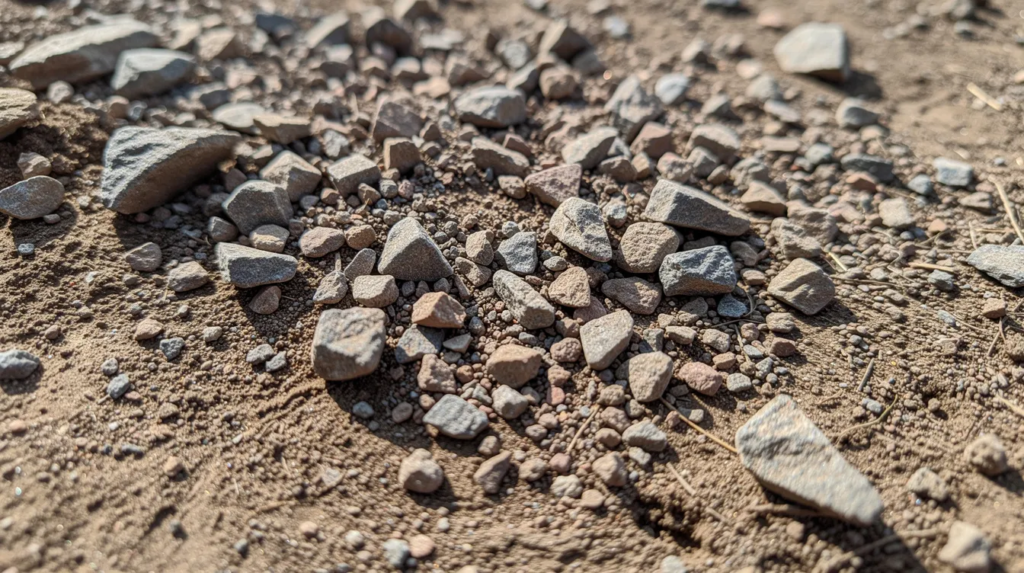
5/8 minus gravel (also written as 5/8″ minus or 5 8 minus) is a type of crushed gravel where the largest pieces measure about 5/8 inch across. It consists of crushed rock down to sand and fine stone dust. The word “minus” means the product includes a full range of particle sizes, from that 5/8-inch top size all the way down to fines, rather than being a single uniform stone.
This material is usually a manufactured crushed rock – commonly limestone, basalt, or another quarry rock – not a naturally rounded product like pea gravel or river rock. The angular edges and smaller pieces are what give it a functional advantage: when compacted, the fines fill voids between larger particles, and the whole mix locks together tightly into a firm, stable surface.
You may see this product listed under several names at U.S. rock yards:
- 5/8 minus
- 5/8 inch minus
- 5/8 minus crushed rock
- 5/8 minus crushed gravel
- 5/8 minus road mix
5/8 Minus vs Clean Gravel and Other Common Materials
Not all 5/8 gravel is the same product. The difference between “minus” and “clean” matters for every project you plan.
Clean gravel is screened or washed to remove most fines, leaving mainly uniform stone pieces with open voids. Clean gravel allows water to flow through easily, which makes it great for drainage applications and French drains. However, it does not compact into a solid layer – the stones stay loose and shift underfoot or under tires.
Minus gravel behaves the opposite way. It packs down into a dense, firm surface that holds its shape better under load than clean or rounded gravel. That is why 5/8 minus gravel is usually not the right choice for drainage applications where water needs to pass freely through the stone.
Quick comparison:
| Feature | 5/8 Minus | 5/8 Clean | 3/4 Minus / Road Base |
|---|---|---|---|
| Compaction | Excellent | Poor | Excellent |
| Drainage | Low | High | Low |
| Best for | Driveways, bases, walkways | Drain rock, backfill behind retaining walls | Heavy loads, deeper base layers |
| Surface feel | Firm, smooth | Loose, shifting | Slightly coarser |
3/4 minus gravel and crusher run use a slightly larger top size and may be better for heavier vehicle loads or deeper foundations. Limestone and granite are common base rock types, though gradations vary by region. Rounded materials like pea gravel and river rock are usually chosen for appearance and comfort underfoot, not for tight compaction.
Always check with your local supplier whether a product is “clean” or “minus” before you place an order.
Best Uses for 5/8 Minus Gravel Around the Home
5/8 minus is a versatile base material for projects where you need a compacted, load-bearing surface. It compacts into a solid base for construction projects ranging from residential driveways to small outbuildings.
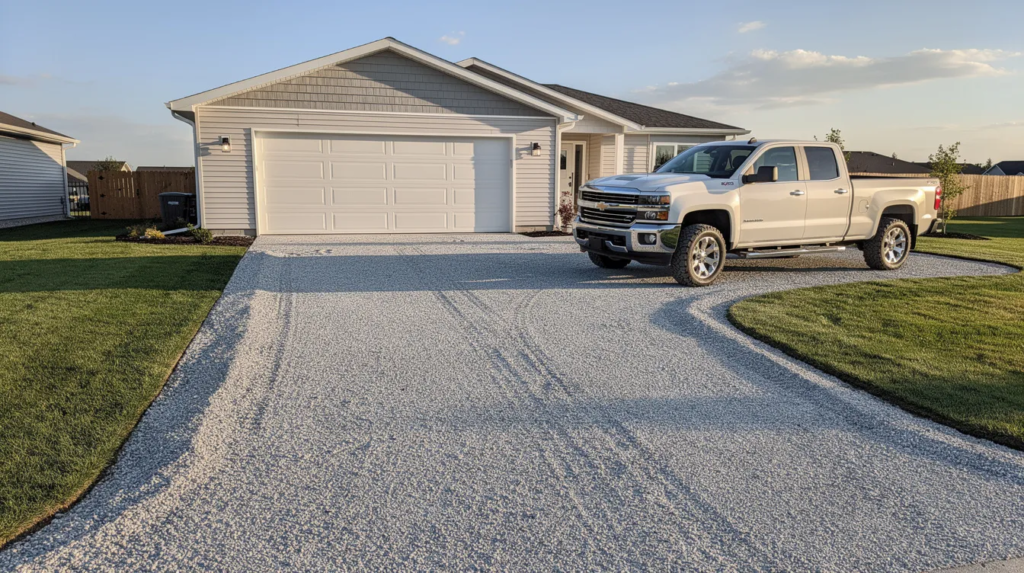
Driveways and parking areas. This is one of the most popular uses. 5/8 minus gravel packs down tightly for driveways carrying regular passenger vehicles. A 4 to 6 inch compacted layer is a common target for light residential driveways built on stable soil. For a light resurface over an existing sound base, 3 to 4 inches may be enough. Crown the surface slightly to shed water and prevent potholes. For help choosing the right stone size for a long gravel driveway, depth and traffic volume both matter.
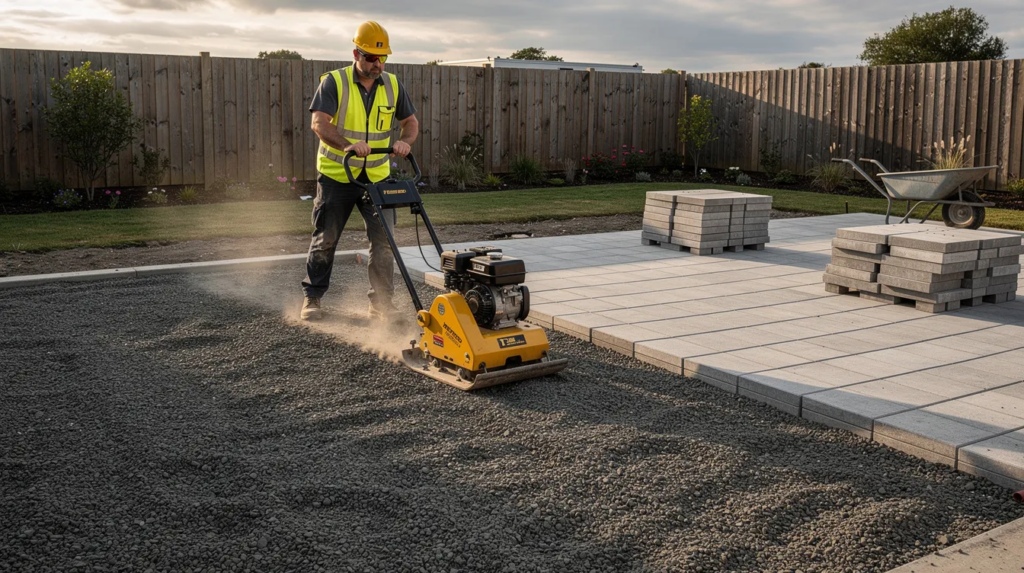
Paver base for patios and pathways. A common traditional layering approach is a compacted minus-gravel base, a thin bedding layer of coarse sand, then pavers on top. Always follow the paver manufacturer’s base and bedding specifications. The angular mix supports pavers so they stay level and resist settling over time. Some installers use 3/4 minus for the deepest layer and 5/8 minus as the top course for a smoother paver base.
Shed pads and small parking pads. Excavate organic soil, lay geotextile fabric if the ground is soft or wet, then compact 5/8 minus in lifts to create a stable pad for garden sheds or trailer parking.
Other uses. 5/8 minus gravel is commonly used for walkways, temporary access roads, and general all-purpose base layers. Note that it is not the right pick for inside French drains or dedicated drain trenches – fines will clog water flow over time. Use clean, washed stone for those.
Weight, Coverage, and How to Estimate Cubic Yards
Getting the right quantity avoids a second delivery trip or wasted money on excess material.
Typical weight per cubic yard. One cubic yard of 5/8 minus gravel weighs approximately 2,700 to 2,800 pounds. This weight is about 1.35 to 1.4 tons. Actual density can vary by rock type (basalt tends heavier than some limestone) and moisture content, so check with your supplier for their specific product.
Cubic yard basics. One cubic yard equals 27 cubic feet. Calculate volume by multiplying length × width × depth (all in feet), then divide by 27.
Coverage examples:
| Project | Dimensions | Depth | Approx. Cubic Yards |
|---|---|---|---|
| Parking pad | 10 ft × 20 ft | 4 inches | ~2.5 yd³ |
| Walkway | 4 ft × 40 ft | 3 inches | ~1.5 yd³ |
Add 5–10% for compaction loss, grading adjustments, and spillage.
Estimate before you order. The free Gravel Calculator at Crushed Stone Calculator lets you enter your project length, width, and depth to get results in cubic yards and tons, with options for waste factor and approximate price per ton or per yard.
Pickup vs delivery. One cubic yard of 5/8 minus commonly weighs over 2,700 pounds, which may overload many personal pickup trucks. Overloading a half-ton pickup risks suspension damage. For larger projects, consider truckload delivery or check with your supplier about split-load options. Always confirm current crushed stone cost per ton in your area.
All calculator results are planning-level estimates. Confirm final quantity, density, and price with your local supplier before you order.
Installation Tips: Getting a Solid, Long-Lasting Surface
Even the best material fails without proper preparation. Good compaction and drainage planning are what separate a surface that lasts from one that ruts in the first season.
Prep the ground. Remove topsoil and vegetation before placing gravel. Organic matter breaks down and causes settling. Grade the subgrade so water flows away from buildings and toward suitable runoff areas. If soil is soft or wet, place geotextile fabric before adding gravel.
Spread and compact in layers. Spread 5/8 minus gravel evenly using a landscape rake, working in lifts of 2 to 3 inches at a time. Compact the gravel with a plate compactor for best results – hand tampers work for small walkways, but driveways and parking areas need mechanical compaction. A 4 to 6 inch compacted layer is the standard target for drive surfaces.
Moisture matters. Slightly damp fines bind and lock together better than bone-dry dust. Avoid soaking wet conditions, which can cause the mix to pump or rut under the compactor.
Driveway and parking tips. Crown the gravel surface to direct rainwater away. A slope of about 2% — roughly a quarter inch drop per foot — is a common rule of thumb for shedding water. Plan for periodic top-dressing in heavy-traffic zones as the surface wears over the years.
Paver and retaining wall bases. Keep the compacted surface consistently flat so pavers or wall blocks do not settle unevenly. Follow manufacturer depth and material recommendations – some retaining wall systems require clean stone as backfill to manage drainage behind the walls.
When you combine the right material choice (minus vs clean), adequate depth, and thorough compaction, 5/8 minus gravel delivers a surface that resists ruts, potholes, and mud season after season. Run your numbers through the Gravel Calculator to get a solid estimate, then confirm specs and pricing with your local supplier before you place your order.