Table of Contents
Planning a driveway, patio base, or drainage trench? Knowing the crushed rock price before you order saves time and money. This guide covers realistic U.S. pricing, delivery fees, and how to estimate the right amount for your project.
Key Takeaways
- Most crushed rock in the U.S. runs roughly $25–$75 per ton or $35–$110 per cubic yard as of 2024–2026, before delivery. Common base products usually fall toward the lower to middle part of that range, while decorative, washed, or bagged materials cost more.
- 3/4″ crushed stone for driveways and base work usually falls near the middle of that range, while decorative rock, lava rock, and bagged products cost more.
- Delivery fees for crushed rock can range from $50 to $150 or more per trip, depending on distance and minimum order size (often 3–10 tons).
- Your project type — driveway, patio base, 3/4-inch drainage layer, or decorative bed — determines how much material you need and therefore the total cost.
- Crushed Stone Calculator’s free tools help you estimate cubic yards, tons, and approximate material plus delivery cost before calling a supplier.
What Does Crushed Rock Actually Cost in 2024–2026?
Crushed rock generally costs about $30–$65 per ton for standard materials in most U.S. markets. In lower-cost regions, common base rock and 3/4″ stone run about $25–$55 per ton, while high-demand metros push prices to $40–$75 or more.
Clean drain rock, #57 stone, and washed materials typically price higher than crusher run or 3/4″ minus because screening and washing add processing cost. Bagged 0.5 cu. ft. products at home centers can translate to $120–$200+ per ton when used for large projects – so bulk is almost always cheaper.
Prices for crushed rock vary based on location and type. All numbers here are estimates; confirm your current crushed rock price per ton or yard with local suppliers before you buy.
Common Crushed Rock Types and Typical Price Ranges
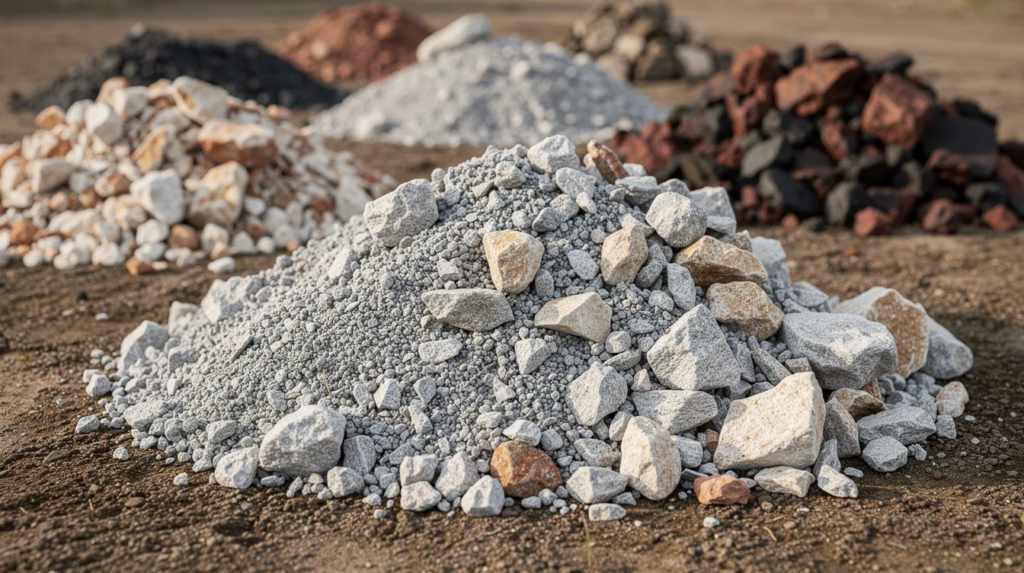
“Crushed rock” covers several products – crushed stone, gravel, recycled concrete, and decorative rock. Crushed stone is often sorted through screens and sold by size or grade, but naming systems vary by supplier and region. The type of rock dictates its structural integrity and aesthetic appeal.
| Product | Typical Price (per ton) | Notes |
|---|---|---|
| Crusher Run / 3/4″ minus | $20–$35 | Crusher Run is a mix of crushed stone and dust that compacts tightly; great for driveways |
| 3/4″ Crushed Rock | $25–$45 | A blend of various crushed stones; standard base and surface rock |
| #57 Clean Stone | $30–$50 | Washed, free-draining; ideal around pipes |
| Pea Gravel | $30–$50 | Smooth, round; walkways and fill |
| Recycled Concrete Aggregate | $15–$30 | Recycled concrete aggregate is often priced lower than quarried stone; check gradation |
| 1 1/2″ Blue Rock | $30–$55 | Regional name for larger crushed rock; may be limestone, granite, basalt, traprock, or another local quarry stone depending on supplier. |
| 3/4″ Red Lava Rock | $50–$90 | Porous and helps retain water in landscaping beds |
| 1 1/2″ Black Lava Rock | $55–$100 | Porous and jagged; striking in garden beds |
| 3/4″ Black Diamond Rock | $60–$110 | Features a striking dark black color |
| 3/4″ California Green Rock | $55–$100 | Consists of dull green colors; decorative use in California landscapes |
Unlike mulch or bark that decomposes, crushed rock lasts years without replacement. Stone dust is another option for filling joints between pavers.
Factors That Affect Crushed Rock Price
Two neighbors can pay very different prices for similar 3/4″ crushed stone. Crushed rock prices are influenced by hauling costs and demand, along with these drivers:
- Distance from quarry: Hauling fuel and driver time dominate outside local supply zones.
- Material and processing: Washed rock vs. unwashed, decorative colors vs. standard gray granite or limestone, and whether the product includes sand or a binder.
- Rock size and gradation: 3/8″, 3/4″, 1 1/2″, and minus vs. clean – extra screening changes cost.
- Order quantity: Small 1–2 ton orders cost more per ton than a full 10–15 ton truck. Some companies add a small-load surcharge.
- Seasonal timing: Spring and early summer bring higher demand. Late fall may offer more flexible pricing and faster delivery windows.
A solid base layer provides security against settling and erosion, so choosing the right material matters as much as finding the lowest price. For larger jobs, ask whether the supplier can schedule multiple deliveries so material arrives when each phase of the project is ready.
How Delivery Charges Work (And Why They Matter More Than You Think)
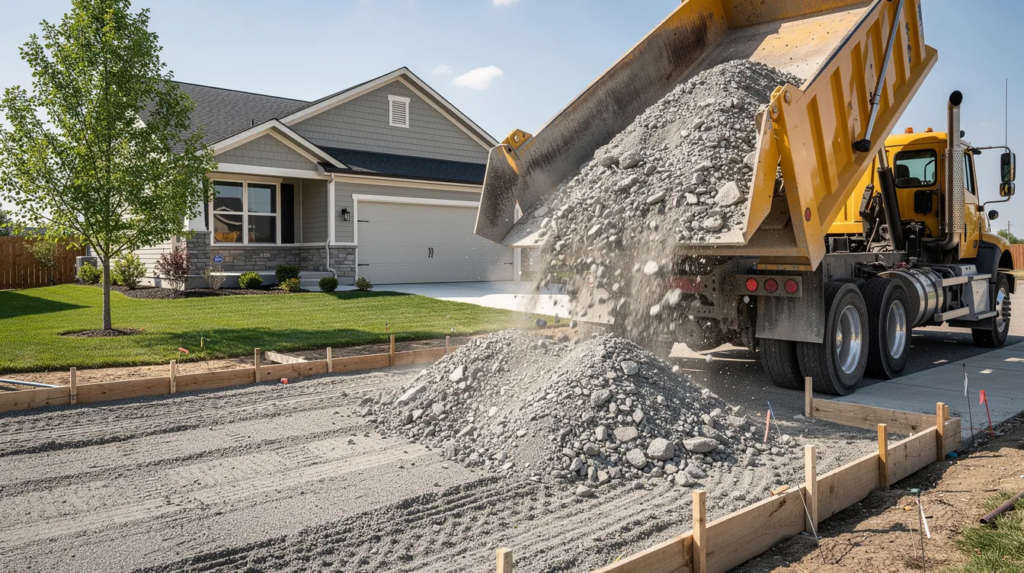
Delivery can easily turn a low per ton price into a higher total project cost. Some suppliers use a flat delivery fee within a local radius, then add per-mile charges for longer hauls.
- Flat fee + per-mile: Many suppliers charge $50–$125 within 10–15 miles, then $5–$10 per loaded mile beyond.
- Minimum loads: Most require 3–5 tons minimum to deliver. Partial loads often carry a short-load fee.
- DIY pickup vs. delivery: A half-ton pickup hauls about 0.5 tons per trip. A 20×40 ft driveway base at 4″ deep needs roughly 14 tons – that’s 28 pickup trips vs. one or two dump trucks.
Always confirm delivered prices, dump location, and whether the driver will spread or just dump the load.
Estimating How Much Crushed Rock You Need (Before You Call for a Quote)
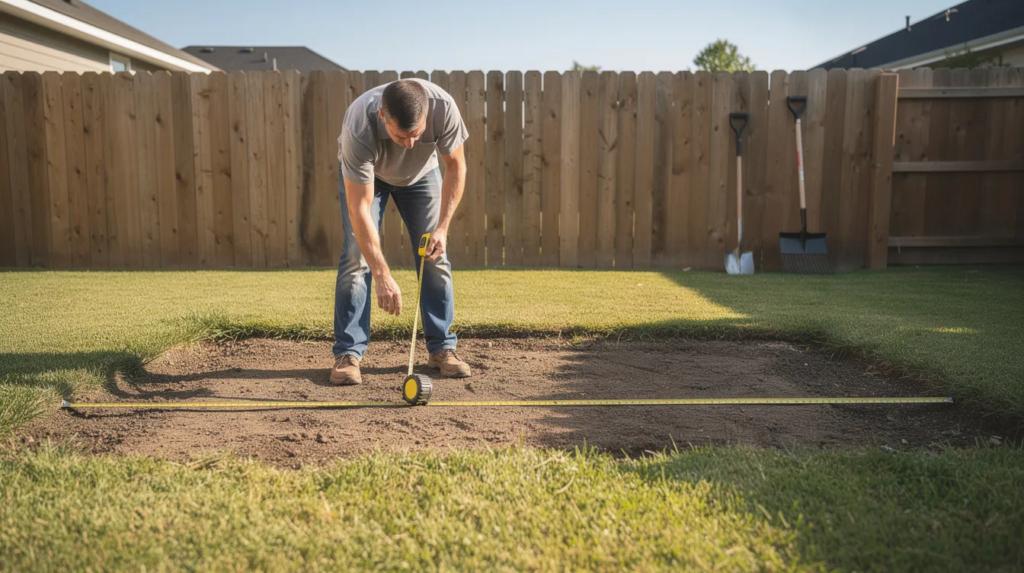
Estimating quantity correctly for the right depth is the fastest way to control overall cost. Crushed rock typically weighs about 1.5 tons per cubic yard, and one ton of gravel covers approximately 80 to 100 square feet at about 2″ deep.
Depth guidelines:
- Light-use driveway over firm soil: 3–4″ deep
- Heavy-use or soft ground: 4–6″
- Decorative landscape cover: 2–3″ over weed barrier
Quick example: A 20 ft × 40 ft driveway at 4″ depth needs about 10 cubic yards (length × width × depth ÷ 27). At 1.5 tons per cubic yard, that’s roughly 15 tons. At a mid-range $35 per ton plus $100 delivery, the estimated material-plus-delivery total is about $625.
Order 5–10% extra for compaction, edge spillage, and settling. Use Crushed Stone Calculator’s free tools to run your numbers before contacting a supplier.
Typical Crushed Rock Pricing by Project Type
While material is sold per ton or per cubic yard, your project type determines total cost.
- Driveways: Crushed rock is often used for road gravel applications. A typical 2-car driveway using 3/4″ minus base (4″) topped with clean stone (2″) runs roughly $500–$1,200 in material plus delivery.
- Patio and walkway bases: Crushed rock is suitable for paver and wall block bases. A 10×10 ft patio at 4″ deep needs about 1.2 yd³ (~$40–$80 material). Crushed rock is commonly used as a base for asphalt and concrete slabs too.
- Drainage: Crushed rock provides excellent drainage in retaining walls and French drains. A 50 ft trench using clean 3/4″ stone costs roughly $30–$60 in material.
- Decorative landscaping beds: A 500 sq. ft. bed at 3″ deep with lava rock or decorative stone can run $200–$800+ depending on the products selected.
- Structural backfill: Crushed rock is ideal for structural backfill behind walls and around foundations.
These are approximate. Actual quotes depend on local pricing, haul distance, and extra services.
How to Compare Quotes and Avoid Common Crushed Rock Pricing Mistakes
Quotes can look similar but hide important differences. Always check these details:
- Confirm units: Is the price per ton, per cubic yard, or per truckload? Is sales tax included?
- Material type: Specify whether you need crushed stone, recycled concrete, crusher run, or decorative rock.
- Minus vs. clean: 3/4″ minus compacts well for driveways; 3/4″ clean stone drains freely. Misordering wastes money.
- Total delivered price: Request material + delivery + fees, not just the base price.
- Common mistakes: Underestimating depth, forgetting base-plus-top-layer needs, assuming a pickup truck can safely haul full loads, and not asking about minimum order sizes.
Use the calculator to estimate tonnage, then get apples-to-apples quotes from at least two local companies.
What to Ask Your Local Supplier Before You Order
A quick phone call with the right questions prevents surprise charges. Before you order, find out:
- Current price per ton or per cubic yard for the exact product name you need
- Whether the rock is clean, has a binder, or is a minus product
- Delivery fee structure, minimum load size, and maximum load per truck
- Material origin — limestone, granite, recycled concrete, or lava rock — and whether it suits your project
- Lead time, cancellation rules, and payment methods
- Whether they stock the material or need to special-order it
Keep your calculator results handy when calling so you can verify that the quoted tonnage and depth align with your project estimate. Visit the Crushed Stone Calculator website page for tools that help you prepare these numbers in advance.
Using Crushed Stone Calculator Tools to Plan Your Budget
Crushed Stone Calculator is a free online resource that helps homeowners and small contractors estimate quantities and costs for outdoor projects across the U.S.
Enter your length, width, and depth — say a 40 ft × 20 ft driveway at 4″ deep — and select a material type like 3/4″ crushed stone, crusher run, or pea gravel. The calculator outputs cubic yards, tons, optional bag counts, and a rough cost estimate if you input a local price per ton. It can also add a 5–10% waste factor and help plan multi-layer systems.
Use these numbers as a starting point, then adjust if a supplier gives specific density data. Final ordering quantities may still vary due to site conditions and compaction.
FAQ: Crushed Rock Pricing and Planning
Is crushed rock cheaper by the ton or by the yard?
Most suppliers standardize pricing either per ton or per cubic yard. Since crushed rock typically weighs about 1.3–1.5 tons per cubic yard depending on type, you need to convert quotes to a common unit for a fair comparison. Neither unit is inherently cheaper – it depends on how each supplier structures their price list.
How much does 3/4″ crushed rock cost for a typical 2-car driveway?
A 20 ft × 40 ft driveway at 4″ deep requires roughly 10 cubic yards or about 15 tons of 3/4″ minus. At $35–$45 per ton plus a $100–$150 delivery fee, expect roughly $625–$825 for base material alone. Adding a 2″ decorative top layer increases cost. Local rock type and depth choice shift the final numbers.
Can I mix different sizes of crushed rock to save money?
Many base products like 3/4″ minus and AB road rock are already engineered blends of stone plus fines for proper compaction. Mixing random leftover sizes on site won’t compact or drain correctly and can cause problems. Ask your supplier for a designated base product instead.
How often will I need to add more crushed rock to a driveway?
Most gravel and crushed stone driveways need top-ups every 1–3 years. High-rainfall areas, freeze–thaw regions, and driveways without edging may need more frequent replenishment. Use the calculator to estimate a 1–2″ refresh layer rather than a full rebuild.
Does 3/4″ crushed rock work for both driveways and drainage?
Not interchangeably. The 3/4″ minus version (with fines) compacts for driveways and base layers. The 3/4″ clean version (no fines) allows water to flow freely and is preferred for drainage and French drains. Using minus around a perforated pipe can clog the system, while clean stone as a driveway surface feels loose. Always specify which type you need when requesting a crushed rock price quote.