Table of Contents
If you are planning a driveway, patio, or drainage project this year, understanding the current quarry stone price is the first step toward making smart decisions with your budget. Quarry stone is durable and suitable for both residential and commercial spaces, from landscape base layers to decorative features and even countertops. This guide gives you real 2026 numbers, explains what drives those numbers, and shows you how to avoid overpaying.
Fast Answer: Typical Quarry Stone Prices in 2026
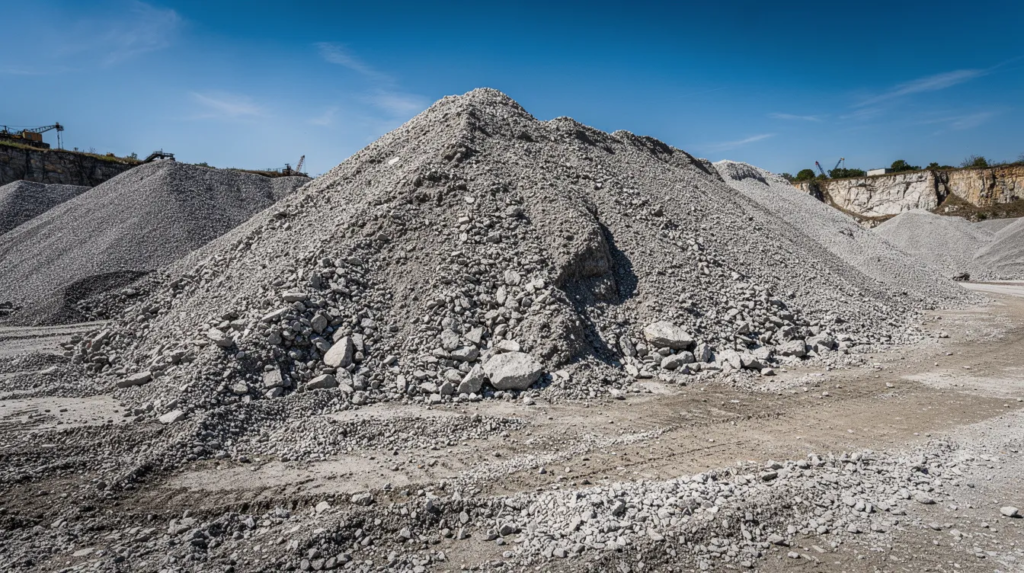
Here are realistic delivered price ranges across U.S. suburban areas in 2026. These are estimates that vary by region, distance, and stone type—not guaranteed quotes.
- Crushed quarry stone (base, 3/4″ minus): about $28–$55 per ton delivered.
- Clean 3/4″ or 1″ crushed stone: about $32–$60 per ton delivered. The wash and screening process pushes cost upward compared to raw base.
- Quarry stone riprap (6″–12″+): about $55–$110 per ton delivered. Larger, heavier stone costs more to handle and haul.
- Decorative quarry stone / river rock: about $70–$160 per ton delivered. Specialty colors, rounded shapes, and aesthetic grading drive premiums.
- Bulk screenings / stone dust: about $20–$40 per ton picked up at the quarry, before delivery.
Note that basic crushed stone or gravel prices range from $10 to $50 per ton before delivery fees at many quarry gates, so transport is often the biggest cost adder.
What does this mean for a real project? A cubic yard of crushed stone weighs roughly 1.35–1.4 tons loose. Adding a new base layer to a standard 2-car driveway (20 ft × 20 ft, 4 inches deep) requires about 6.9 tons of base stone (about 7.6 tons with a 10% order allowance). At $35/ton delivered, the material cost is approximately $240. Swap that for decorative stone at $90/ton, and you are looking at roughly $620 for the same area—just for material.
For a 12 ft × 20 ft patio base at 6 inches deep, you would need about 6.2 tons. At $45/ton for clean stone, that is around $280 in material only.
You can plug your own project dimensions into the Crushed Stone Calculator to see cubic yards, tons, and an estimated total cost based on the price per ton you enter.
Important: local sales tax, fuel surcharges, and minimum-load fees can add 10–25% on top of the “headline” price per ton, especially on small orders or long hauls.
Main Factors That Change Quarry Stone Price
Quarry stone pricing varies based on material quality and quantity, and prices are hyper-local. Two neighbors in different ZIP codes can pay very different rates in 2026 because of quarry distance, stone type, and project logistics.
- Distance from quarry: More miles mean more fuel and driver time. A 10-mile haul might add only a few dollars per ton, while a 45-mile haul can add $8–$25 per ton to the delivered price.
- Stone type and source rock: Common stone types include limestone, granite, pea gravel, and crushed stone. Limestone and dolomite make up about 70% of U.S. crushed stone production and tend to be the least expensive. Harder rocks like granite or traprock, and colored decorative stone, demand a premium.
- Stone size and processing level: Screenings and crusher run require less processing and sit at the low end of the price scale. Sized products like #57 drainage stone or large riprap need more crushing and screening, which increases cost.
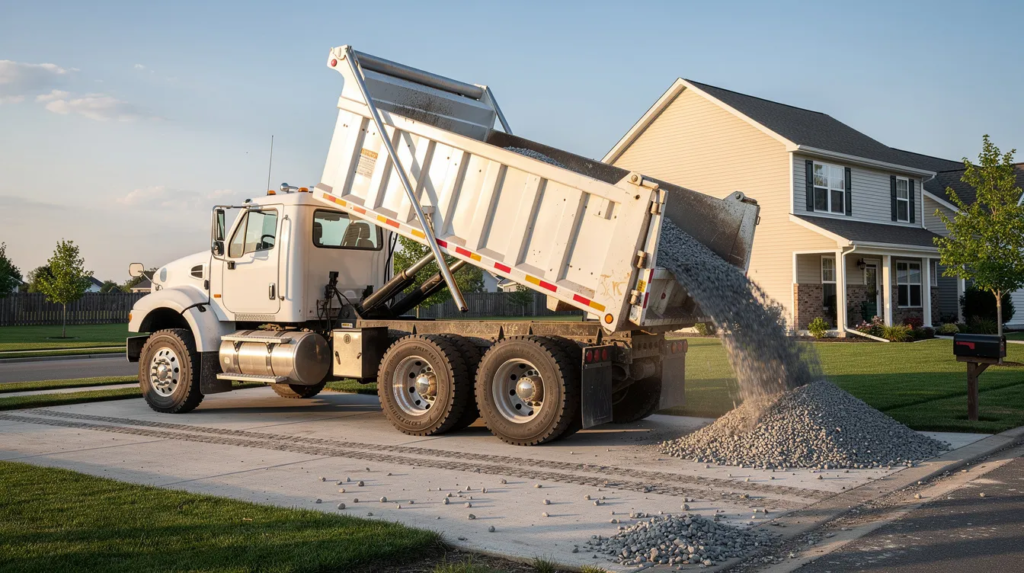
- Order quantity: Common U.S. dump trucks carry 6–10 tons (single-axle) or 18–25 tons (tri-axle). Small loads pay more per ton because fixed delivery charges are spread across less material. Many quarries enforce minimum order or delivery fees.
- Delivery complexity: Delivery prices depend on location and access conditions. Tight gates, steep grades, soft yards, or narrow alleys may force smaller trucks or extra labor, sometimes doubling the delivery premium.
- Fuel and seasonal demand: Spring and summer usually see peak demand for stone, leading to higher prices. Diesel surcharges can shift the cost of crushed stone per ton by 5–15% within a few months.
Old online prices may not reflect current market rates. Treat anything published before early 2025 as informational only and always confirm current rates with a local supplier before placing an order.
How to Get an Accurate Quarry Stone Quote (And What to Ask)
A precise quarry stone price depends on the details you provide. Good questions up front prevent surprise costs on delivery day.
Prepare this information before calling:
- Exact material description: say “3/4 inch crushed limestone base” or “1–3 inch granite drainage stone,” not just “gravel.”
- Intended use: driveway base, French drain, patio base, decorative landscaping, etc.
- Project dimensions and depth in inches. Use the Crushed Stone Calculator to compute cubic yards and tons before calling so you can explore options with real numbers.
- Delivery address and access limitations: gate width, overhead lines, soft lawn, steep driveway.
Checklist of pricing questions to ask:
- Is the price per ton or per cubic yard, and does it include sales tax?
- Quotes should include loading, transport, and unloading costs—ask whether delivery is a separate line item.
- What is the minimum order and minimum delivery fee for my ZIP code?
- Are there extra charges for Saturday delivery, time limits on unloading, or multiple drop points?
- How long is the quote valid? With 2026 fuel volatility, some quotes expire in 7 days.
Also ask whether the quote covers loose material dumped at the curb only, or if spreading and grading are available and how payment for those services is structured (per hour or per load).
For larger projects (40+ tons), you can sometimes negotiate a per-ton discount or split deliveries over multiple days to match site access and cash flow.
Estimating How Much Quarry Stone You Need (So You Don’t Overpay)
Ordering too little leads to an expensive second trip. Ordering too much ties up cash in a pile you don’t need. Properly estimating volume and weight keeps the price per usable ton under control.
- Rectangular areas: length × width × depth (in feet), divide by 27 for cubic yards. Example: a 40 ft × 12 ft driveway at 4 inches deep = 40 × 12 × 0.333 = 160 cu ft ÷ 27 = ~5.9 cubic yards.
- Depth guidelines by project type:
- Gravel driveway resurfacing (existing base): 2–3 inches.
- New gravel driveway over soil: 4–6 inches of base plus 2–3 inches of top course.
- Patio or walkway base under pavers: 4–6 inches compacted, then sand on top.
- French drain: trench 8–12 inches wide, 18–24 inches deep, partially filled with drainage stone.
- Convert to tons: most crushed quarry stone runs 1.3–1.5 tons per cubic yard loose. From the driveway example above, 5.9 yd³ × 1.4 = ~8.3 tons.
- Compacted vs loose volume: compacted stone occupies 10–15% less space. Your measurements give the finished compacted depth, so ask your supplier how much loose stone to order, or you may come up short after compaction.
- Add a waste and safety factor: tack on about 10% to account for leveling variations, spillage, and irregular edges—especially on DIY jobs.
The Crushed Stone Calculator lets you enter project dimensions, select a material type, and instantly see cubic yards, tons, and an optional estimated cost. Try it before requesting a quote so you know roughly how much quarry stone you should be paying for.
Practical Tips to Keep Your Quarry Stone Cost Under Control
You cannot control quarry base pricing, but you can control order timing, load size, and project planning to avoid paying more than necessary.
- Order full truckloads. A tri-axle load (roughly 18–25 tons) is useful for early price comparisons. Spreading a $350 delivery fee across 18 tons works out to about $19/ton for hauling; the same fee on a 7-ton load is $50/ton.
- Combine orders. Coordinate with neighbors or bundle your driveway, shed pad, and garden bed into one delivery to cut per-ton cost and hit minimums.
- Schedule weekday deliveries. Evening and weekend runs often carry overtime or after-hours charges from haulers.
- Use the right stone for each layer. For hidden base layers, ordinary crushed quarry stone is fine. Save decorative quarry stone or river rock for visible surfaces where appearance matters.
- Prepare the site. Clear access, mark the dump area, and have tools ready so the driver can unload quickly without standby fees.
In some regions, picking up 1–3 tons directly from the quarry in a utility trailer can be cheaper per ton for small DIY jobs—but check your vehicle’s weight rating and your state DOT rules before loading up.
Before contacting suppliers, price out your project using the Crushed Stone Calculator, then request 2–3 local quotes using the same stone type and quantity. That expertise in your own numbers makes comparisons apples-to-apples and keeps you from overpaying.
Careful planning, clear specifications, and the right calculator tools make quarry stone pricing predictable—even with 2026 fuel and construction cost volatility. Find the information you need, run the numbers, and you will walk into every supplier conversation with the confidence to get a fair deal.
Last reviewed: October 2026
.